


Aperol Spritz Recipe: The 3-2-1 Rule and the Ideal Balloon Glass
Prosecco, Aperol, sparkling water — and, most importantly, the right glass. Everything you need to know to make a spritz worthy of the best Italian terraces.
The Aperol Spritz, a global phenomenon born in Veneto
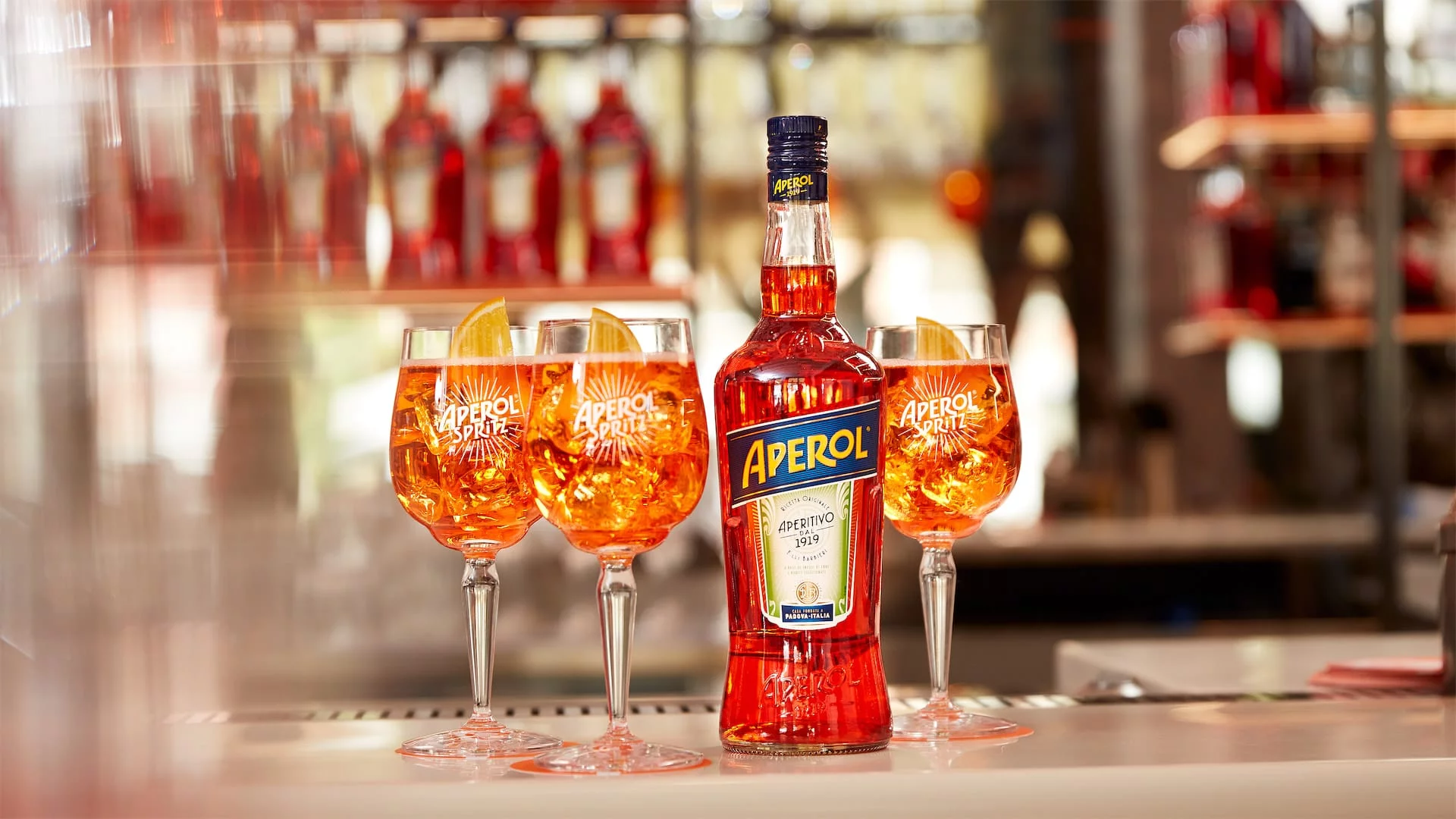
All it takes is a sunny terrace, a carafe of water, and a few ingredients for the ritual to begin. For two decades, the Aperol Spritz has embodied the art of the Italian aperitivo, that suspended moment between afternoon and dinner that in Veneto is called the aperitivo. Its bright orange color, generous bubbles, and perfect balance of bitterness and freshness make it the most recognizable summer cocktail on the planet.
From Venetian origins to global conquest
Aperol was invented in 1919 by the Barbieri brothers in Padua, in the Veneto region. This bitter aperitif made from bitter oranges, rhubarb, and gentian has an alcohol content of 11°, making it one of the most accessible aperitifs in its category. The birth of the Spritz as a cocktail came later: it was in the 1950s that Venetians began to mix their local amaro with regional sparkling wine, creating a drink that would become their social signature.
The real global boom occurred in the 2010s, driven by a powerful marketing strategy from the Campari Group (owner of the brand since 2003). The result is striking: according to LSA Conso data, Aperol sales have increased twelvefold in sixteen years, now accounting for 24% of the Campari Group's turnover. According to Drinks International, the Spritz is among the ten best-selling cocktails in the world — a status that is undisputed on French terraces every summer.
The Spritz as a summer social ritual in France
In France, the Aperol Spritz has remarkably imposed its rhythm. Its bright orange color, natural photogenic qualities, and simple preparation have made it the most shared cocktail on Instagram since the late 2010s. Its moderate alcohol content — barely 8-9° in the glass — also makes it perfectly suited for long aperitif sessions on terraces, where conviviality takes precedence over intoxication.
This success also relies on a mystery of taste balance. The Aperol Spritz is sweet, bitter, and slightly tart all at once, with an effervescence that refreshes without ever being heavy. It is this unique aromatic profile that allows it to appeal to both cocktail enthusiasts and novices looking for an accessible summer drink — and it is precisely to preserve this profile that the choice of glass matters as much as the recipe itself. Before we dwell on that, let's dive into the preparation.
The classic Aperol Spritz recipe: the 3-2-1 rule
The beauty of the original Aperol Spritz recipe lies in its mechanical simplicity: it relies on a 3-2-1 proportional rule, easy to remember and perfect for preparing several glasses simultaneously during an aperitif with friends.
The exact ingredients and proportions
For one glass (approximately 30 cl of final content), you will need:
- 9 cl of prosecco — ideally choose a prosecco di Conegliano-Valdobbiadene, dry and fruity. Avoid French crémant or champagne, which are too mineral and unbalance the bitterness of the Aperol.
- 6 cl of Aperol — store in the refrigerator, never in the freezer (sugar solidifies below 0°C and alters the texture).
- 3 cl of neutral sparkling water — San Pellegrino, Perrier, or any other neutral sparkling water. Exclude tonic water, which unbalances the bitter profile.
- 3 to 4 large ice cubes — an essential condition for freshness and the cocktail's hold.
- Half an orange slice for garnish, slipped along the side of the glass.
To prepare a pitcher of Aperol Spritz for 4 people, mix the prosecco + Aperol + sparkling water directly in the pitcher, without ice. Only add ice cubes to each glass when serving — this prevents dilution from melting and ensures a perfectly dosed cocktail until the last glass.
Preparation steps, in the correct order
The assembly order of an Aperol Spritz is not insignificant: it determines the balance of aromatic layers in the glass and the optimal preservation of the bubbles.
- Choose the right glass — a large balloon wine glass of at least 30 to 35 cl (see our dedicated section below).
- Fill the glass with ice cubes — whole cubes, not crushed ice which dilutes too quickly.
- Pour the prosecco first (9 cl) — the sparkling wine at the bottom protects the bubbles when the Aperol is added.
- Add the Aperol (6 cl) — it will naturally mix with the prosecco, creating a beautiful orange gradient.
- Gently pour the sparkling water (3 cl) — in a stream over the back of a bar spoon to preserve the bubbles.
- Stir very gently — two or three turns of the spoon, no more. The goal is to mix without breaking the effervescence.
- Garnish with half an orange slice — organic orange with skin, slipped against the side of the glass. A green olive is optional, but very typical in Veneto.

Classic mistakes to avoid
Even simple, the Aperol Spritz recipe has a few pitfalls that most amateurs overlook until a Venetian bartender corrects them.
- Using tonic water instead of sparkling water: tonic adds extra bitterness that competes with Aperol and completely unbalances the taste profile.
- Adding Aperol first: if you pour Aperol before prosecco, the bubbles evaporate much faster on contact with the sweet liqueur.
- Stirring vigorously: breaking the bubbles ruins the texture and effervescence that define the Spritz.
- Neglecting the quality of the prosecco: a cheap sparkling wine that is too sweet or too mineral is enough to distort the overall balance.
- Serving in the wrong glass: this is the most common mistake — and precisely the subject of the next section.
The Aperol Spritz glass: why the balloon glass is essential
In our complete guide to choosing your cocktail glass, we explore in detail how the shape of a container directly influences the aromatic experience. Nowhere is this truer than for an Aperol Spritz, a cocktail whose sensory richness largely depends on the diffusion of aromas at the opening of the glass.
The balloon shape: a generous aeration surface
The large balloon glass — also called a chalice or balloon goblet — is the universal reference for the Spritz. Its morphology meets several simultaneous physical requirements. Its generous bowl, with a capacity of 250 to 350 ml, offers enough space for ice cubes, prosecco, Aperol, and sparkling water without the glass being filled to the brim. Its wide opening allows the aromatic molecules of bitter orange, rhubarb, and Aperol herbs to diffuse towards the nose before each sip.
The Burgundy-style wine glass — wider and deeper — makes an excellent base for Spritz during convivial evenings. Its large aeration surface reveals all the aromatic notes of the cocktail, including the most subtle ones.
A large cocktail glass like the Orbe (235 ml) or the Margarita II (280 ml) from our cocktail glass collection offer exactly the open and rounded shape that a successful Aperol Spritz requires. Their elegant design adds an aesthetic dimension that transforms a simple aperitif into a visually staged moment.
Flute, tumbler, or balloon: the comparison
The question often arises: can you serve an Aperol Spritz in a champagne flute, a whisky tumbler, or a classic stemmed glass? Here's an honest comparison of the different options.
| Glass type | Capacity | For the Spritz | Verdict |
|---|---|---|---|
| Large balloon / chalice | 250–350 ml | Ideal volume for ice + liquid, wide opening for aromas | ★ Recommended |
| Burgundy glass | 400–600 ml | Excellent for parties, great aeration, very comfortable | ★ Excellent |
| Cocktail coupe | 150–200 ml | Trendy and Instagrammable, but too small for ice | Acceptable in a pinch |
| Champagne flute | 150–200 ml | Too narrow, traps aromas, unsuitable for ice | Avoid |
| Tumbler (whisky glass) | 200–350 ml | Stable and practical, but without stem or suitable opening | Only in a pinch |
To learn more about glass formats and their uses, our article on the best glasses for an aperitif on the terrace this summer details each family with concrete examples of cocktails and occasions. If you want to delve deeper into the subject of glass shapes in a more general context, our guide to choosing your wine glass will give you the basics of aromatic physics applied to glassware.
Must-try Spritz variations to know
The Aperol Spritz paved the way for a whole family of sparkling cocktails based on bitter aperitifs and sparkling wine. These variations share the same philosophy — lightness, freshness, conviviality — but develop very different aromatic profiles depending on the aperitif used. You can also find a complete overview of easy cocktail recipes to make at home in our blog, with precise dosages and mixologist tips.
The Hugo Spritz: floral and sweet, the rising trend
Born in the South Tyrolean Alps in the mid-2000s, the Hugo Spritz became the great alternative to the Aperol Spritz in 2024-2025 for those who avoid bitterness. Its recipe is based on prosecco, a generous dose of elderflower syrup (or St-Germain liqueur), sparkling water, a few fresh mint leaves, and a lime slice. The result is floral, light, and slightly sweet, with almost no bitterness. It is served in the same large balloon glass as the Aperol Spritz, with a generous amount of ice.
The Hugo is a perfect entry point for guests who want to participate in the Spritz ritual without enjoying the bitter side of Aperol. For the necessary equipment, a complete cocktail kit with a bar spoon, muddler, and jigger will allow you to prepare these two variations with the precision of a professional bar.
The Campari Spritz and the Select Spritz
The Campari Spritz uses the same 3-2-1 ratio as the Aperol Spritz but replaces Aperol with Campari, its more bitter and stronger cousin (25° alcohol). The result is significantly more intense, with distinct notes of red orange zest, quinine, and medicinal herbs. This version is better suited for seasoned palates and Negroni lovers. The Select Spritz, an authentically Venetian variation based on Select (an amaro produced in Venice since 1920), offers an intermediate profile between Aperol and Campari, with more spicy complexity.
To explore these and other variations, our selection of designer cocktail glasses will accompany you in every setting — from the most classic Spritz to your home bar's signature creations.
Alcohol-free Spritz: same ritual, zero proof
The no-low (low or zero alcohol) trend has naturally given rise to alcohol-free versions of the Spritz. Alternatives like Crodino (an Italian alcohol-free bitter) or Lyre's Italian Spritz (zero alcohol) allow you to faithfully reproduce the original cocktail's bitter-fruity profile. They are paired with alcohol-free prosecco for a festive and convivial drink, served in the same large balloon glass with the same orange garnish. The upscale nature of these non-alcoholic alternatives now makes them a honest proposition for drivers or people who want to participate in the aperitif ritual without alcohol.
Our tips for enhancing your Spritz presentation
Preparing a successful Aperol Spritz is one thing. Presenting it like a professional is another. The art of the Italian aperitif includes a visual and ceremonial dimension that the container greatly contributes to creating. Here are the details that make the difference.
The question of ice: cubes or crushed?
Large ice cubes are always preferable to crushed ice for an Aperol Spritz. The reason is physical: a large cube melts two to three times slower than an equivalent amount of crushed ice, allowing the cocktail to stay cool without premature dilution. The ideal is to use large ice cube molds (4 × 4 cm or more) that maintain the temperature throughout the aperitif without altering the carefully respected proportions.
For large gatherings, a bartender's trick is to put glasses in the freezer 15 minutes before serving. The contact with the cold glass further slows down melting and ensures an optimal sensory experience from the first to the last sip. For a table presentation worthy of a great aperitif, our champagne glasses and wine glasses perfectly complement the cocktail glass collection for a cohesive and elegant table setting.
The garnish: orange slice or green olive?
The orange slice is the canonical garnish for an Aperol Spritz, and its presence is almost mandatory. It's not just aesthetic: by lightly pressing the slice against the rim of the glass before dropping it in, a few drops of orange essential oils are released, enriching the cocktail's aromatic bouquet. Choose a thick-skinned, untreated orange (organic preferred) to maximize this effect.
The green olive is the optional, typically Venetian garnish. In the bacari (Venetian wine bars), Spritz is systematically served with small green olives on a skewer, both decorative and edible. They provide a salty contrast that highlights the bitterness of the Aperol. In France, this practice is still rare but is worth adopting for maximum authenticity.
Table staging: harmony of glassware
A successful aperitif is also visually prepared. For a harmonious summer table, pair your large cocktail glasses with wine glasses of the same stylistic line. If you're serving rosé alongside the Spritz, a designer wine glass with contemporary lines creates immediate visual consistency. For festive occasions that include champagne and cocktails, a selection of carefully chosen champagne flutes ideally complements the service. And if you want to further equip your home bar, a complete sommelier set brings together all the essential accessories for stylish entertaining.
FAQ — Frequently Asked Questions about the Aperol Spritz recipe
Our cocktail glasses for an exceptional Spritz
Expert selection by our team — Gustave Montclair catalog


Exclusive reader offer
−10% on the entire catalog
Valid on all our glasses, carafes and accessories.
Sources
- Aperol.com — Official Aperol Spritz FAQ — aperol.com — 2026
- LSA Conso — "Summer brands: Aperol, a Spritz and that's it!" — lsa-conso.fr — 2024
- Navigli Aperitivo — "Authentic Aperol Spritz recipe: the true Italian version" — navigli-aperitivo.com — 2025


