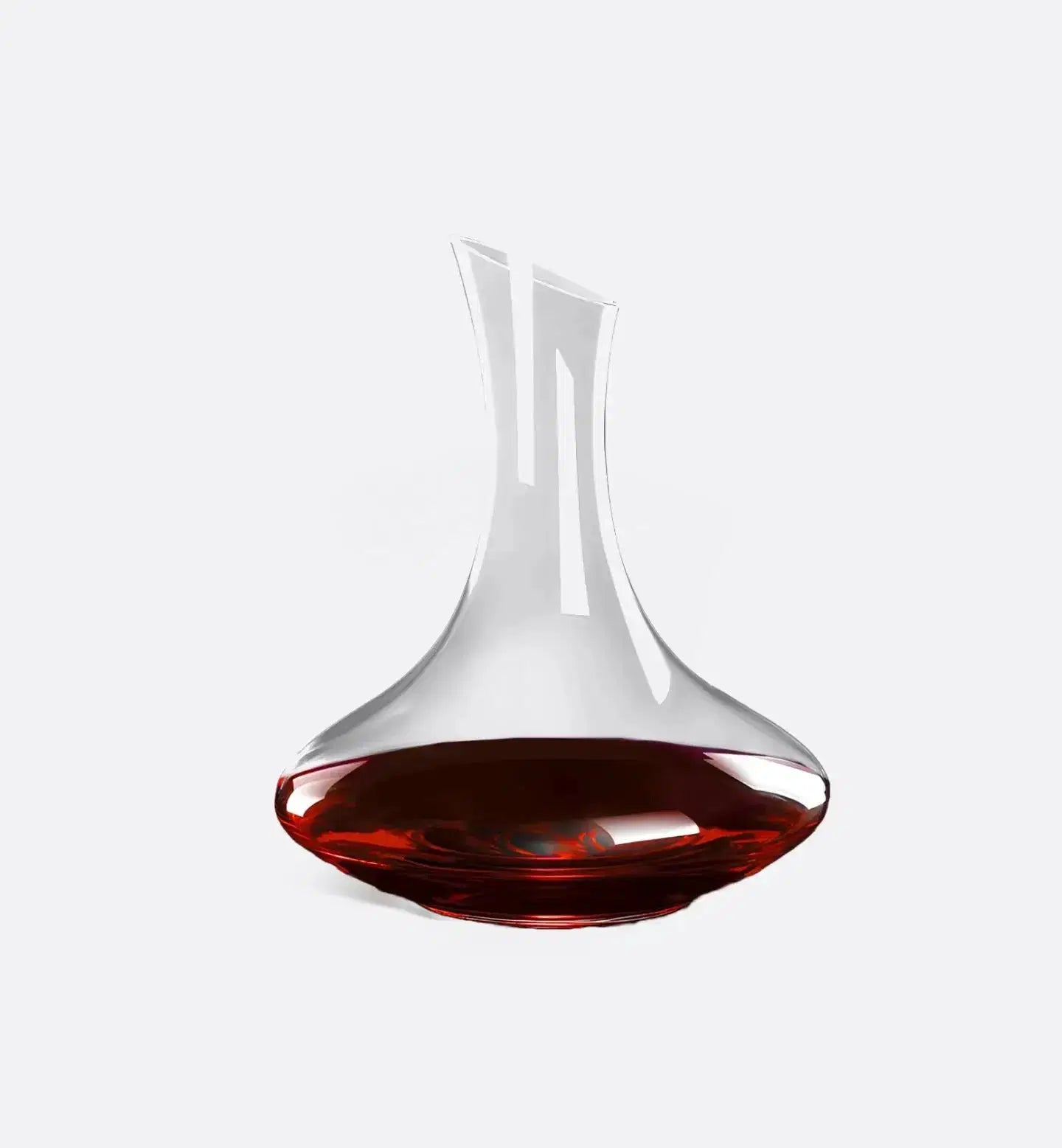
Wine carafe
Discover our collection of wine decanters, a refined setting that enhances your wine tasting experience with elegance and authenticity.


Discover our collection of wine decanters, a refined setting that enhances your wine tasting experience with elegance and authenticity.
Decanting a wine means giving it time to breathe before it offers you its best. Our lead-free crystal carafes combine a wide base, for good oxygenation, with a slim neck, to pour without losing a drop. Some shapes, like Orpheus or Aurora, are designed to adorn the table as much as to serve the wine.
A wine decanter (also called a decanting carafe) separates the wine from its sediment while aerating it, thanks to its flared bottom. Our models are made of lead-free crystal, for a sturdy yet brilliant finish. Capacity from 1.2 to 1.8 L depending on the models.
Our models at €45 (Ligna, Néora, Rays, Solen, Veloce, Éra) cover everyday use. The most elaborate finishes, with gilded patterns or a rotating base (Aurora, Majesté, Orphée II), are more like a permanent display piece for your sideboard. Also find our wine glasses to complete your set, or our sommelier gift sets for a ready-to-use gift.