


Crystal champagne glass: why it really makes a difference
The same champagne, a whole new pleasure: here's why crystal transforms the tasting experience, bubble after bubble.
Crystal or glass: a very real difference in the champagne glass
Placing a champagne coupe on a terrace table, at the hour when the light skims the tablecloth, isn't always enough to make a difference. It's when you bring the glass to your lips that everything truly unfolds – and that's precisely where the crystal champagne glass changes the game compared to a standard glass.
A crystal champagne glass is not simply a "prettier" glass. Its composition, density, and how it is crafted directly influence three things: the size of the bubbles, the clarity of the color, and the intensity of the aromas that reach the nose. Three criteria that, taken together, explain why the same bottle can seem alternately ordinary or memorable depending on the glass it is served in.
What truly distinguishes crystal from standard blown glass
Crystal differs from ordinary glass in its composition: the addition of metallic oxides (today often lead-free, for a more respectful and equally performing crystal) modifies the material's density and its way of refracting light. The result: a wall that can be worked thinner without losing solidity, and significantly greater transparency than classic soda-lime glass.
This material difference is not just aesthetic. It concretely changes how champagne behaves once poured – from bubble formation to the perception of aromas on the palate.
Why this difference matters particularly for champagne
A still wine forgives an imperfect glass. Champagne, however, is a living product: its bubbles, color, and aromas evolve second by second in the glass. It is precisely this dynamic dimension that makes the container so decisive – a thinner, clearer, and better-crafted glass does not just "prettily" present the champagne, it reveals a part of it that standard glass overlooks.
- Finer, more regular bubbles that rise longer
- A clear color without any material haze
- Aromas concentrated towards the nose rather than dispersed
Nucleation and fine bubbles: the number one advantage of engraved crystal
The word may sound technical, but the principle is easy to observe in a glass. Nucleation is the phenomenon by which dissolved carbon dioxide in champagne is released as bubbles, from micro-asperities present at the bottom or on the walls of the glass.
How a champagne bubble is born
Without an anchor point, the gas would largely remain dissolved in the liquid – which is what happens in a perfectly smooth and clean glass. Each bubble needs a tiny surface flaw, invisible to the naked eye, to form and detach in a regular stream towards the surface.
In a crystal glass, the material allows for much more precise and regular engraving than on a standard blown glass. It is this regularity that produces a fine, continuous, almost hypnotic stream of bubbles – rather than a cloud of coarse bubbles that fades after a few minutes.
Engraving at the bottom of the glass, a gesture that changes everything
On the most elaborate crystal flutes, a discreet engraving at the bottom of the bowl is precisely designed to multiply these nucleation points uniformly. The result is immediately visible: a centered, dense, and regular stream of bubbles that continues to animate the glass long after serving – whereas a standard glass, less precisely crafted, often produces larger and more scattered bubbles.
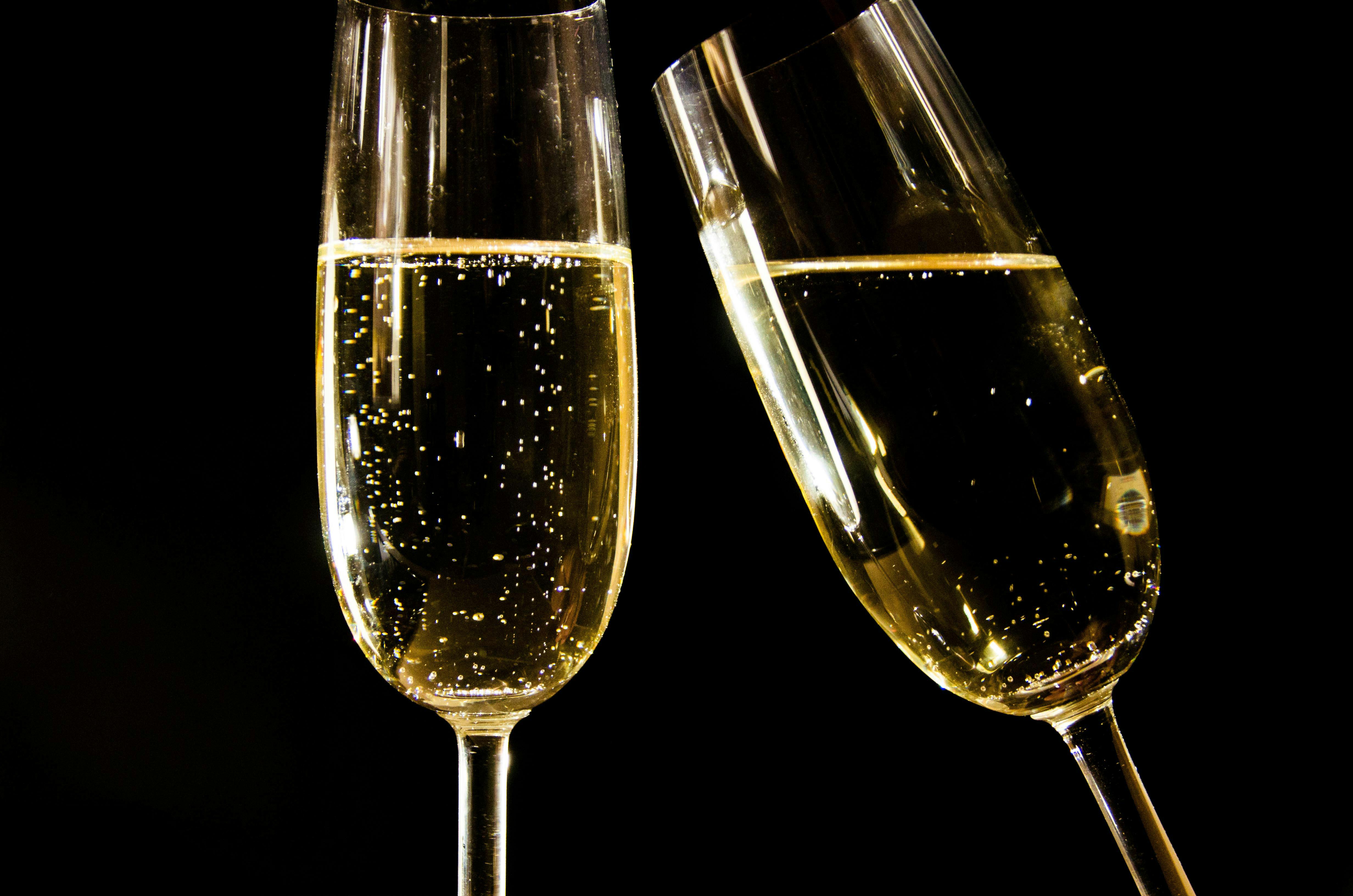
The clarity of crystal, a window to the color of champagne
Even before the first sip, the eye already tastes. The color of a champagne — its hue, its reflections, the liveliness of its effervescence — is an integral part of the pleasure of tasting, provided the glass truly lets the light pass through.
What transparency reveals
A crystal champagne glass offers significantly greater transparency than a standard glass, even a colorless one. You can more finely distinguish the golden nuances of an aged champagne, the silvery reflections of a Blanc de Blancs, or the salmon tint of a rosé — details that fully contribute to the anticipation of pleasure.
Standard glass, often duller
Common glass, produced in larger quantities and designed for everyday use, almost always lets a slight material haze filter through. Nothing shocking in itself for everyday use — but in a context where one seeks to enhance a moment (a wedding, a festive dinner, a summer terrace), this detail changes the overall perception of what is served.
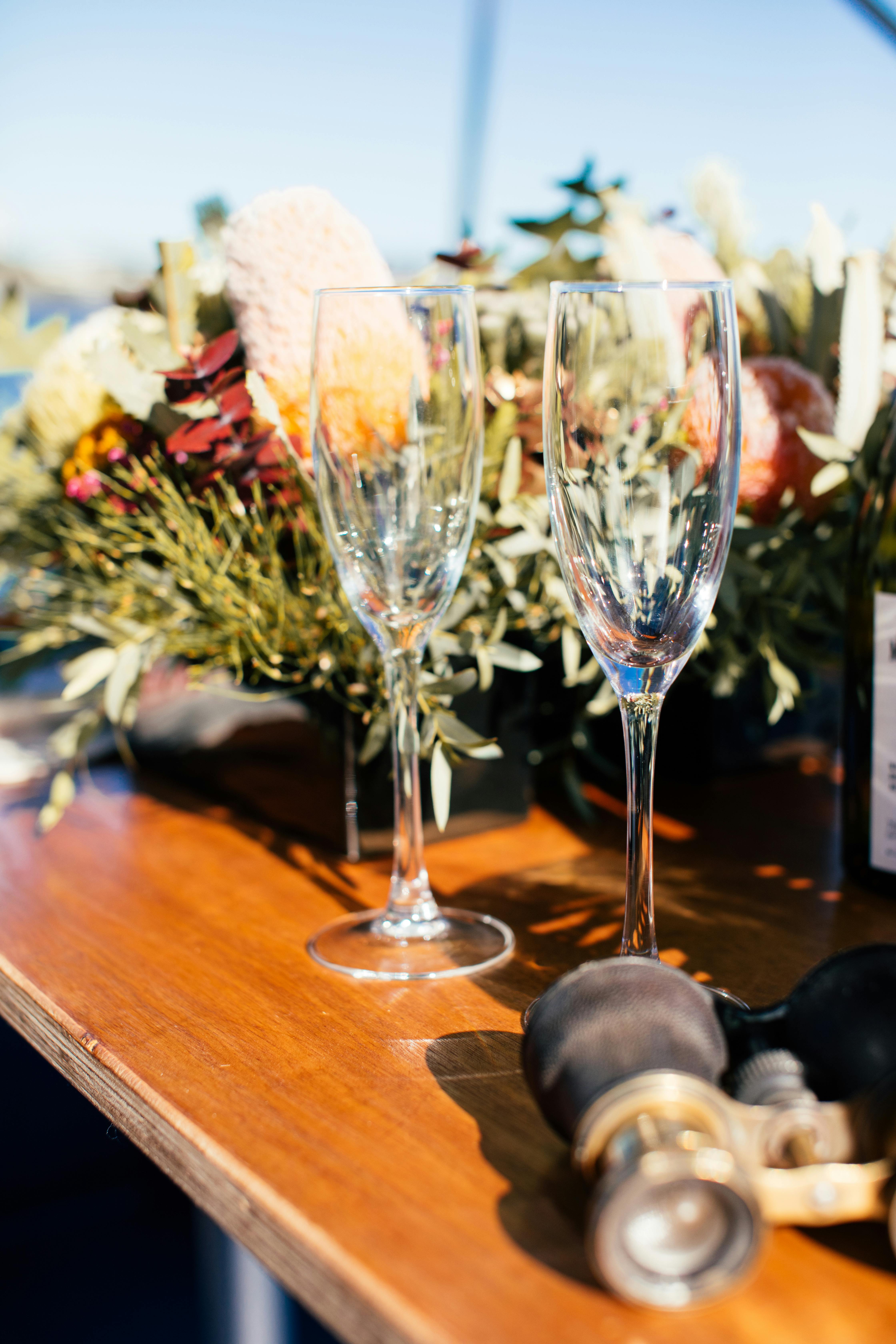
Thin wall, aromatic perception: the champagne's nose is at the rim of the glass
We often associate the nose of champagne with the shape of the glass — narrow flute, wide coupe, intermediate tulip. But the thickness of the wall is too often overlooked. Yet, it plays a direct role in how aromas concentrate before reaching the nose.
Why a thin wall changes the concentration of aromas
A thin wall, like that allowed by crystal, lets the champagne warm up more gradually when in contact with the hand and releases aromatic compounds more regularly. The rim of the glass, when thin, also guides the liquid more precisely towards the tongue and palate — a detail that seems anecdotal but is clearly felt in comparative tasting.
Flute, coupe or tulip: which shape for which use
- The flute concentrates aromas and preserves effervescence the longest — the most versatile format for everyday use
- The champagne coupe charms with its visual elegance and its place in grand occasions, at the cost of effervescence that fades faster
- The tulip combines the best of both: a bowl narrowed at the top that concentrates aromas while offering more surface for observing the color

Crystal flute vs standard glass flute: the comparison
To clearly summarize what distinguishes the two options, here is a concise comparison — useful when choosing between a classic champagne flute and a crystal piece.
| Criterion | Crystal Flute | Standard Glass Flute |
|---|---|---|
| Fineness of bubbles | Fine and regular stream, lasting effervescence | Larger, often less regular bubbles |
| Clarity of color | High transparency, detailed color visible | Slight material haze depending on quality |
| Wall thickness | Thin, concentrates aromas towards the nose | Thicker, dilutes perception more |
| Tactile sensation | Clear resonance, "precious" feel | Duller, heavier in the mouth |
| Maintenance | Hand washing recommended | Generally dishwasher safe |
| Recommended use | Special occasions, gifts, tableware | Daily use, outdoor, large number of guests |
Neither option is "wrong" — it all depends on the moment. A standard glass remains relevant for a casual lunch on the terrace or a large gathering. But when it comes to enhancing a deserving bottle, crystal naturally justifies its investment.
How to choose your crystal champagne flute
Once convinced by the interest of crystal, you still need to know what to look for when choosing your champagne flute — or champagne coupe, depending on your preferences.
The criteria for a good crystal flute
- The fineness of the rim: the thinner it is, the more pleasant and precise the contact with the mouth
- The presence of an engraving at the bottom of the bowl: this ensures a regular stream of bubbles
- The height of the bowl: high enough to allow aromas to concentrate without being crushed
- The quality of the base finish: a stable and well-balanced base prevents unpleasant surprises on a set table
- Service consistency: ideally as a complete set, for a harmonious table on special occasions
Our flagship references: Gold Rim, Classic and Sun
At Gustave Montclair, three champagne glasses from the crystal collection are regularly found on the most elegant tables. The Gold Rim plays the card of elegance with its golden rim, perfect for a wedding or New Year's Eve. The Classic opts for a refined silhouette suitable for all tables, from intimate dinners to festive meals. The Sun, with its subtle reflections, adds a more contemporary touch without ever sacrificing the finesse of crystal.
FAQ — Frequently asked questions about crystal champagne glasses
Our favorite crystal champagne flutes
Expertly selected by our team — Gustave Montclair catalog


Exclusive reader offer
−10% off the entire catalog
Valid on all our glasses, carafes, and accessories.


