

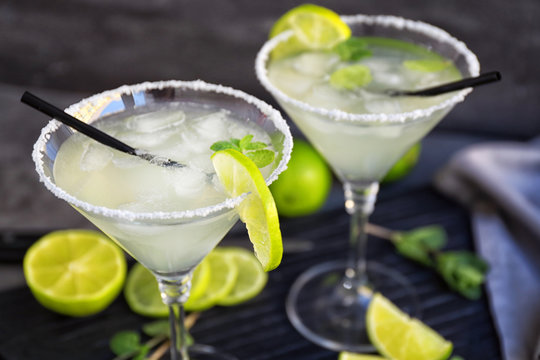
Margarita Recipe: Step-by-Step Guide and Ideal Glass
Master the original recipe, its frozen and fruity variations, and choose the glass that enhances every sip.
There are popular cocktails, and then there's the Margarita. This blend of tequila, triple sec, and lime juice, served in an iconic glass with a salted rim, has been one of the most ordered cocktails in the world for decades. Its silhouette is instantly recognizable, and its taste is a perfect balance of acidity, sweetness, and the earthy depth of blue agave.
Whether you're an amateur bartender or a host looking to impress your guests, making a successful Margarita at home is entirely within your reach — provided you know the right ingredients, the correct shaking technique, and, most importantly, the right glass. This guide covers everything: the original step-by-step recipe, the frozen version, the salt-free variation, and a comparison of the traditional Margarita coupe versus the modern rocks glass. You'll also find our selection of cocktail glasses designed to enhance every preparation.
The Origins of the Margarita: A Cocktail Born in 1948
Few cocktails can trace their birth certificate with such precision. The Margarita is one of them — or almost. Its history intertwines golden legend, Mexican vacationing, and a strong-willed woman whose first name would become world-famous.
Margaret Sames and the Birth of a Mexican Cocktail
The most commonly cited version places the cocktail's creation in Acapulco, on Mexico's Pacific coast, in 1948. Margaret Sames, nicknamed Margarita, wife of a wealthy American businessman, is said to have created this mixture during a private reception for her guests. The cocktail — named in her honor by enthusiastic guests — then spread through wealthy vacationer networks between Mexico and the United States.
Other claims exist: Texan or Californian bartenders also dispute paternity of the recipe, and some mixology historians link it to an evolution of the Daisy, a classic late 19th-century cocktail whose name literally translates to "daisy" — or Margarita in Spanish. What is certain is that the cocktail has established itself as a symbol of conviviality and sunny celebration, largely transcending its Mexican origins.
From the Pacific Coast to the World
In the 1950s and 1960s, the popularity of tequila and Mexican culture in the United States propelled the Margarita into bars and restaurants worldwide. Today, it consistently ranks among the top 5 most consumed cocktails in international bars. Its frozen variation, conceived from the late 1970s with the democratization of the bar blender, further expanded its audience by offering a slushy version particularly popular in summer. Whether served on the rocks, as a slush, or in a carefully frosted coupe, the Margarita remains a concentrate of Mexican art de vivre.
Essential Ingredients for an Authentic Margarita
The Margarita has only three liquid ingredients — and it is precisely this simplicity that makes it an ideal canvas for expression. Each component plays a precise role: removing one or replacing it with a lower-quality variant radically changes the result. Here's what you really need to understand before grabbing your shaker.
Tequila Blanco: The Purist's Choice
Tequila is the beating heart of the Margarita. For a classic recipe, the natural choice is a 100% agave tequila blanco: unaged, it preserves the herbaceous, slightly briny, and floral aromas of Jalisco blue agave. These bold notes balance perfectly with the acidity of lime.
Tequila reposado — aged in oak barrels for two months to a year — brings woody and vanilla nuances that add more depth to the cocktail. It's an excellent choice if you want a Margarita with more complex flavors. Conversely, avoid mixto tequilas (containing less than 51% agave), which are less refined on the palate and often responsible for hangovers.
Triple Sec or Cointreau: The Essential Orange Touch
The second pillar of the recipe is an orange liqueur. Standard triple sec is the economical version, but Cointreau — a double-distilled orange liqueur — is the absolute benchmark for a balanced and elegant Margarita. Its dry, fruity, and slightly bitter aromatic profile perfectly rounds out the lime while harmonizing with the tequila.
Grand Marnier, richer and with cognac notes, offers an alternative for palates that appreciate a fuller texture and woody aromas. As a curiosity, blue curaçao — which shares the same aromatic base — produces a visually spectacular, bright blue Margarita without fundamentally altering the taste.
Fresh Lime Juice: Never from a Bottle
This point is non-negotiable: lime juice must be freshly squeezed. The difference between industrial lime juice (pasteurized, often loaded with preservatives) and freshly squeezed lime is dramatic: one provides a flat and sometimes bitter acidity, the other a vibrant freshness and irreplaceable floral aromas. Count one whole lime for two glasses of Margarita.
For a Margarita for 2 people, gather:
- 10 cl of 100% agave tequila blanco (5 cl per glass)
- 6 cl of Cointreau or triple sec (3 cl per glass)
- 4 cl of freshly squeezed lime juice (2 cl per glass)
- Plenty of ice cubes
- Fine salt or fleur de sel for rimming
- 1 lime sliced into rounds for garnish
Before preparing your cocktails, place your glasses in the refrigerator (or in the freezer for 5 minutes). A cold glass keeps the Margarita fresh longer and significantly improves the first sip. This is the detail professional bartenders know that amateurs often forget.
Classic Margarita Recipe: Detailed Steps
The classic Margarita is prepared in four stages: rimming the glass, preparing the ingredients, shaking, and serving. Each step has its rules, and mastering them is what separates a decent Margarita from a memorable one.
Rimming the Glass, the Signature Step
Start by preparing your glasses even before touching the shaker. On a flat plate, pour a thin layer of fine salt or fleur de sel. Rub the outer rim of your glass with a lime wedge to slightly moisten it, then invert the glass and dip it into the plate of salt with a slight rotating motion.
Pro tip: only salt the outside rim, never the inside. The Margarita should deliver the taste of salt when your lips touch the rim, not within the cocktail itself. You can also rim only half of the edge — this allows each guest to choose their salt intake with each sip. For a variation, replace the salt with cane sugar or even a salt-chili mixture for a spicier Mexican touch.
Shaking: Technique and Timing
Fill your shaker halfway with ice cubes. Pour in the tequila, Cointreau, then freshly squeezed lime juice, in that order. Close tightly and shake vigorously for 10 to 15 seconds. The goal is twofold: to quickly chill the mixture and to dilute it slightly — which softens the whole and improves the balance.
You know shaking is sufficient when the outside of the shaker is frosted and the wall is cold to the touch. A common mistake is to shake too gently or too briefly: the cocktail remains warm and the flavors are not homogeneous. Go for it.
Serving: Strain and Pour Without Losing the Salt
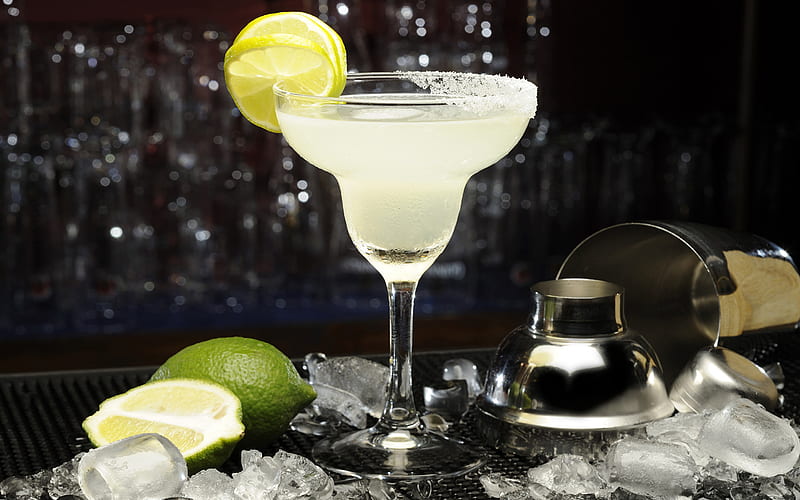
Pour the contents of the shaker into your rimmed glass, holding back the ice cubes with the integrated strainer or a small bar strainer. Be sure to pour gently, tilting the glass slightly — the liquid stream should not hit the salted rim, at the risk of dropping salt crystals into the cocktail. Finish with a lime wheel placed on the rim of the glass and serve immediately.
The table below summarizes the three most common versions of the Margarita to help you adapt the recipe according to the occasion:
| Version | Tequila | Triple Sec | Lime Juice | Technique | Salt |
|---|---|---|---|---|---|
| Classic Reference | 5 cl blanco | 3 cl Cointreau | 2 cl fresh | Shaker + strain | Rimmed edge |
| Frozen | 4–5 cl blanco | 2 cl triple sec | 2 cl fresh | Blender + crushed ice | Rimmed edge (optional) |
| Virgin (non-alcoholic) | 5 cl orange juice + agave syrup | 2 cl bitter orange syrup | 2 cl fresh | Shaker + strain | Rimmed edge |
Must-Try Margarita Variations
While the classic recipe is unbeatable, the Margarita is also one of the most versatile cocktails there is. Its three basic components allow for an infinite number of variations, from the most understated to the most creative. Here are three universally popular variations.
The Frozen Margarita: Slushy Texture and Maximum Freshness
The Frozen Margarita was born in the 1970s with the popularization of the bar blender. Instead of shaking with ice cubes, all ingredients are blended with crushed ice, producing a creamy texture halfway between a granita and a smoothie. This is the ideal version for summer days or festive evenings on the patio.
To succeed, a few rules apply. The key is the texture: too much ice, the cocktail becomes watery; not enough, it remains liquid. The right proportion is about 150 to 200 g of crushed ice per glass. Blend at maximum speed for 15 to 20 seconds until a homogeneous consistency is obtained, without chunks. Serve immediately in a Margarita glass or a wide coupe — the texture changes quickly at room temperature.
The Salt-Free Margarita: For Delicate Palates
The salted rim is a Margarita signature, but it is by no means mandatory. Many enthusiasts prefer the salt-free version (also called "naked" in bar English) which allows the aromas of tequila and lime to express themselves more freely, without saline interference. It's a matter of personal taste. The technique remains strictly identical — only the rimming step is omitted. For an even smoother version, some replace the salt with a thin layer of cane sugar, which adds a slight caramelized touch to each sip.
Fruity Margaritas: Strawberry, Mango, and Passion Fruit
This is probably the direction contemporary mixology is taking to reinvent this classic. The Strawberry Margarita is the most popular: 4 to 5 fresh strawberries (or 30 ml of puree) blended with classic ingredients. Mango Margarita brings an intense tropical sweetness that pairs beautifully with reposado tequila. For a more exotic touch, passion fruit — tart and floral — is a revelation.
In any case, you can adapt these variations in both shaken (strained, smooth) and frozen versions. Here are the combinations that work best:
- Strawberry Margarita: 5 fresh strawberries + classic recipe, frozen version recommended
- Mango Margarita: 30 ml mango puree + reposado tequila + Cointreau + lime
- Chili-Lime Margarita: classic recipe + a few jalapeño slices in the shaker, no salt on the rim
- Passion Fruit-Basil Margarita: passion fruit pulp + 4 basil leaves + classic recipe, ideal shaken
For a fruity Margarita, prefer homemade purees or fresh fruits over industrial syrups. The difference in aromatic freshness is immediate. If you use very sweet fruits (mango, passion fruit), slightly reduce the amount of triple sec to maintain the characteristic acid-sweet balance of the cocktail.
Which Glass for a Margarita? Classic Coupe vs. Rocks Glass
The choice of glass is not an accessory aesthetic detail: it determines how the rimming adheres, how the aromas are released, and how your cocktail is presented at the table. Two schools clash — the tradition of the Margarita coupe and the modernity of the rocks glass — and both have their legitimate supporters.
The Margarita Coupe: The Iconic Shape
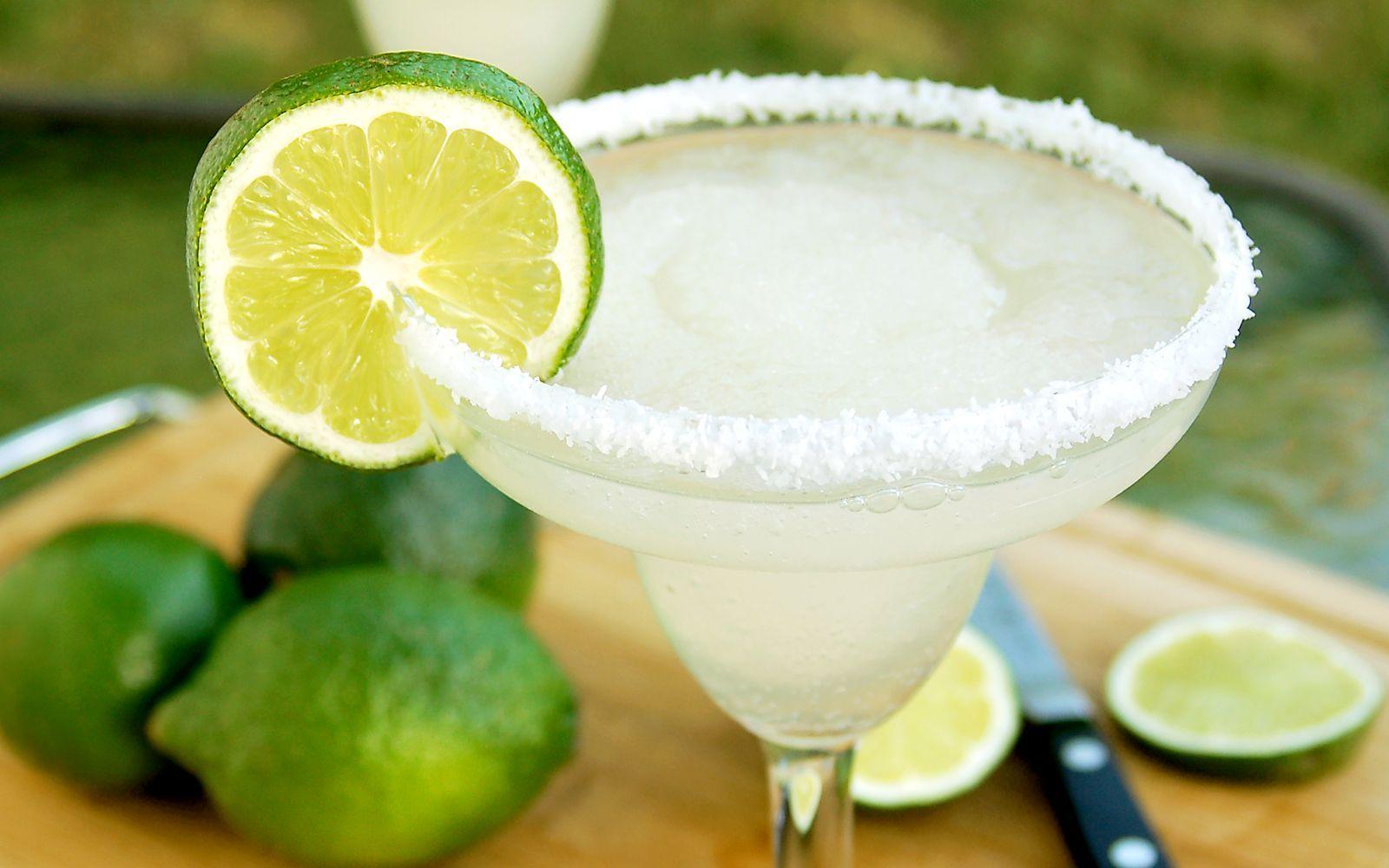
The classic Margarita coupe is recognizable by its double flared funnel silhouette, mounted on a slender stem. Its wide, slightly flared rim is precisely designed to receive the salt or sugar crust that is the visual signature of the cocktail. This angled shape also facilitates garnish with a lime wheel and amplifies the olfactory perception of citrus aromas upon the first approach of the glass.
The ideal capacity is between 185 and 300 ml for a classic serve, and can go up to 400–500 ml for frozen versions with a lot of ice. It is in a coupe of this type that the presentation of the Margarita is the most spectacular — and the most faithful to Mexican tradition.
The Rocks Glass: The Modern Alternative
Since the 2000s, many bartenders in high-end cocktail bars have adopted the rocks glass (or old fashioned glass / tumbler) to serve the Margarita "on the rocks" — that is, directly over a large square ice cube or a large ice sphere. This format reduces dilution, preserves aromas longer, and offers a cleaner, less "festive," more sophisticated presentation.
The rocks glass is particularly well-suited for reposado Margaritas or fruit versions that deserve to be savored slowly. Salt rimming also works very well with it, applied to the rim of a straight-sided glass. If you're wondering which shape to choose based on your habits, our comprehensive guide how to choose your cocktail glass will help you decide based on your mixology practice.
Our selection of Gustave Montclair cocktail glasses
At Gustave Montclair, we have designed a collection of cocktail glasses specifically for discerning mixology enthusiasts. Each model combines precise shapes and glass craftsmanship to enhance both presentation and tasting. Our Margarita cocktail glasses respect traditional proportions while offering a contemporary design that stands out from generic glasses.
Beyond Margarita glasses, our cocktail kits include shakers, jiggers, bar spoons, and strainers — everything you need to prepare a professional Margarita at home. To complete your bar with other distinctive pieces, also explore our champagne glasses for your festive aperitifs or our whiskey glasses for Old Fashioned evenings. If you wish to elevate your table setting further, our article on the best glasses for outdoor aperitifs this summer provides concrete ideas for every summer occasion.
The question of the container also applies to wine. Our guides on how to choose your wine glass and what is the best wine glass extend this reflection on the importance of the container in the tasting experience. And if you are hosting wine lovers, consider our wine carafes and our sommelier kits — great complementary gift ideas for your cocktail glasses.
FAQ — Frequently Asked Questions about the Margarita recipe
Our cocktail glasses — ready for your next Margarita
Expertly selected by our team — Gustave Montclair catalog


Exclusive reader offer
−10% off the entire catalog
Valid on all our glasses, carafes, and accessories.
Sources
- Cointreau — Official Margarita recipes and cocktail history — cointreau.com — 2024
- Destination Cocktails — Margarita and Frozen Margarita recipes, origins, and techniques — destinationcocktails.fr — 2025
- Cocktail.fr — Classic Margarita recipe and variations — cocktail.fr — 2024


