

Classic mojito ingredients: what exactly do you need?
The mojito is listed by the International Bartenders Association (IBA) as an official cocktail in the "Contemporary Classics" category. Its reference recipe is precise: six ingredients, whose proportions have been codified by decades of professional practice behind the bars of Havana.
White rum: the Cuban base
The golden rule is simple: a 40° Cuban white rum, light and dry, which will not mask the vegetal aromas of mint or the acidity of lime. The two absolute references are Havana Club 3-year-old and Bacardí Carta Blanca, both born in Cuba and designed for this specific cocktail. A brown or aged rum will bring woody and caramel notes which, while interesting for a sophisticated variation, profoundly alter the balance of the classic mojito.
Mint, lime, and cane sugar
Mint is the second most important ingredient after rum. Opt for Moroccan mint (or spearmint), with large leaves and a sweet aroma — this is the variety found in all professional bars. Peppermint, which is too camphorated, unbalances the cocktail. The lime must be fresh and squeezed at the time of preparation: never from a bottle. As for sugar, white cane sugar in powder form is the reference because its slightly abrasive texture helps release the essential oils of mint during muddling. Cane syrup (liquid) also works very well and has the advantage of dissolving instantly.
Crushed ice: the often-forgotten parameter
Ice is not a decorative accessory in a mojito: it is an ingredient in its own right that regulates temperature and controls dilution. The professional principle is counter-intuitive: the more ice you add, the less diluted the cocktail will be. A large amount of ice keeps the temperature low, which slows down melting and preserves the taste throughout the tasting. It is precisely for this reason that the glass must be large enough — we will come back to this in detail.
Break your ice cubes in a clean cloth before putting them in the glass. Crushed ice — irregular shards rather than large cubes — packs better, cools faster, and releases mint aromas more efficiently during mixing.
| Ingredient | Quantity | Note |
|---|---|---|
| Cuban white rum | 5 cl | Havana Club 3-year-old or Bacardí Carta Blanca |
| Lime juice | 3 cl | Freshly squeezed — about ½ lime |
| Cane sugar | 2 tsp | Or 2 cl of cane syrup |
| Fresh mint leaves | 6 to 8 leaves | Moroccan or spearmint preferred |
| Sparkling water / Club soda | 8 to 10 cl | To fill the glass to the top |
| Crushed ice | As desired | Fill the glass at least ¾ full |
Mojito recipe step by step
The beauty of the mojito lies largely in the order of preparation. Contrary to popular belief, it's not a simple matter of mixing everything in a glass. Each step has a precise sensory logic that conditions the final balance of the drink.
The exact sequence of actions
Here are the steps in the optimal order, as practiced in professional bars:
- Place the mint leaves and lime wedges at the bottom of a large highball cocktail glass.
- Add the cane sugar directly onto the mint. The sugar's texture will help extract the oils without tearing the leaves.
- Pour a splash of sparkling water (about 2 cl). This initial water helps the sugar dissolve before the ice comes into play.
- Gently muddle with a muddler — 4 to 5 presses are enough. The goal is to release the aromas, not to tear the leaves.
- Squeeze and pour the lime juice.
- Add crushed ice until the glass is at least ¾ full.
- Pour the rum over the ice.
- Stir with a bar spoon, moving from bottom to top, to homogenize the mixture.
- Top up with sparkling water to within 1 cm of the rim. Add a few more ice cubes if necessary.
- Garnish with a fresh mint sprig and serve immediately with a straw.
How to muddle mint without damaging it
This is the step most often botched by amateurs. The temptation is to muddle energetically to "properly extract the mint" — which is exactly what not to do. Over-torn leaves release chlorophyll, which gives a vegetal bitterness and a cloudy greenish color, very far from the bright mojito you are trying to achieve. Four to five light presses with a muddler are more than enough. You should hear a slight crackling of the stems, not a pesto-making sound.
To fully equip your home bar, our cocktail kit collection includes professional-grade muddlers, long bar spoons, and strainers suitable for all types of preparation — everything you need to make a perfect mojito on your first try.

What glass for a mojito? The highball changes everything
This is the core of the matter, and the difference that separates a mediocre homemade mojito from a drink worthy of a Havana bar. The choice of container is not a question of aesthetics or snobbery: it is a technical data point that directly influences the temperature, dilution, release of aromas, and freshness duration of your cocktail.
Our complete guide on buying a cocktail glass details these sensory mechanisms — the shape of a glass directly dictates how aromas diffuse, how ice cubes maintain temperature, and how flavors are distributed on the palate.
The highball glass: the professional's choice
The mojito belongs to the family of long drink cocktails or highballs — that is, cocktails where a spirit base is lengthened with a significantly larger proportion of non-alcoholic liquid, served over a lot of ice. This definition mechanically dictates the type of container: a tall, cylindrical glass, with a capacity between 25 and 40 cl is required.
The tall cylindrical shape of the highball offers three decisive advantages for a mojito:
- Sufficient ice capacity: a 30 to 40 cl glass can hold crushed ice shards up to ¾ of its height, which keeps the cocktail at a low temperature throughout the tasting.
- Controlled contact surface: the straight walls limit the evaporation of sparkling water and preserve bubbles longer than a flared glass.
- Visual presentation: the layers — ice, mint leaves, lime wedges, rising bubbles — naturally arrange themselves in the height of the glass and create an appetizing visual effect that you cannot achieve in a short glass.
Highball vs ordinary glass: the comparison
| Glass type | Capacity | Shape | Mojito result |
|---|---|---|---|
| Highball / Long drink | 25–40 cl | Tall cylindrical | ✅ Ideal |
| Collins | 30–45 cl | Slender, slightly taller | ✅ Ideal |
| Vase / Large capacity | 35–40 cl | Slightly curved, tall | ✅ Very good |
| Old Fashioned / Tumbler | 25–35 cl | Short and wide | ⚠️ Acceptable but not ideal |
| Cocktail glass (V, stemmed) | 10–20 cl | V-shaped, stemmed | ❌ Too small, not suitable |
| Ordinary glass / tumbler | Variable | Stemless, variable | ⚠️ Only passable in a pinch |
The ideal capacity for a mojito
If you're looking for a versatile cocktail glass that works equally well for a mojito, Gin & Tonic, Cuba Libre, or Aperol Spritz, the target capacity is between 30 and 40 cl. Below 25 cl, you'll be forced to limit the ice and aromatics, which degrades the final quality. Above 45 cl, the cocktail risks being too diluted or visually unbalanced.
At Gustave Montclair, our cocktail glass collection includes several large-capacity models — including the Vase (380 ml) and the Ovale (270 ml) — designed precisely for this type of long cocktail, generous with ice. Pieces that also work to host your guests with style, far beyond just the mojito.
The best mojito variations
Once the classic recipe is mastered, the mojito offers a generous field for experimentation. Its structure — citrus acidity, sugar, mint freshness, alcoholic base — lends itself to many fruity or non-alcoholic variations, all served in the same type of long drink glass.
Strawberry mojito: the summer variation
Add 4 to 5 fresh strawberries cut into quarters when muddling, along with the mint and lime. The strawberries release their juice under the muddler and naturally integrate into the mixture. The result is a rosy cocktail, slightly sweeter, that retains all the freshness of the classic mojito. Slightly reduce the sugar (1.5 tsp instead of 2) to compensate for the fruit's natural sugar. Serve in the same highball glass, garnished with a strawberry slice on the rim.
Non-alcoholic mojito: the mocktail
The virgin mojito (or non-alcoholic mojito) is one of the easiest refreshing drinks to make. Simply omit the rum and replace it with extra sparkling water (5 cl) or unfiltered white apple juice to add body and a slight sweet complexity. All other steps — muddling the mint, lime, sugar, ice — remain the same. The result: a drink as visually appealing and refreshing as the original, perfect for guests who don't drink alcohol.
Passion fruit mojito
Cut a passion fruit in half and scrape the inside directly into the glass when muddling. The pulp and seeds blend harmoniously with the mint and lime. This variation, very popular in tropical bars, brings an exotic acidity that pairs remarkably well with white rum. You can also try it with mango or lychee juice for other summer variations.
For a friends' aperitif with different variations, prepare a large quantity of the common base (rum + lemon + sugar) and keep it chilled. Then offer your fresh fruits nearby so each guest can customize their drink when serving. A single bartender kit is enough for the entire evening.
Mojito for an aperitif: the recipe for 6 people
Preparing individual mojitos on demand is time-consuming as soon as the group exceeds 4 people. The professional solution is to prepare a large quantity of mojito base, keep it in the refrigerator, and then quickly assemble each glass at the time of serving.
For 6 glasses, gather the following proportions:
- 30 cl of Cuban white rum (the equivalent of ½ of a 70 cl bottle)
- 18 cl of freshly squeezed lime juice (about 6 limes)
- 3 tbsp of cane sugar dissolved in a little warm water
- A bunch of fresh mint (about fifty leaves)
- 50 to 60 cl of very cold sparkling water, to be added at the last moment
- A large ice tray or crushed ice
Muddle the mint, lime, and sugar in a large container. Add the rum and juice. Mix and refrigerate for up to 2 hours in advance. When serving, fill each glass with ice, pour the mojito base (about 10 cl per glass), then top up with sparkling water. The result is perfectly consistent and will allow you to focus on your guests rather than on the shaker.
To complete your home bar equipment, our cocktail glass buying guide will help you choose the most suitable models for your uses—whether you entertain regularly or only in summer.
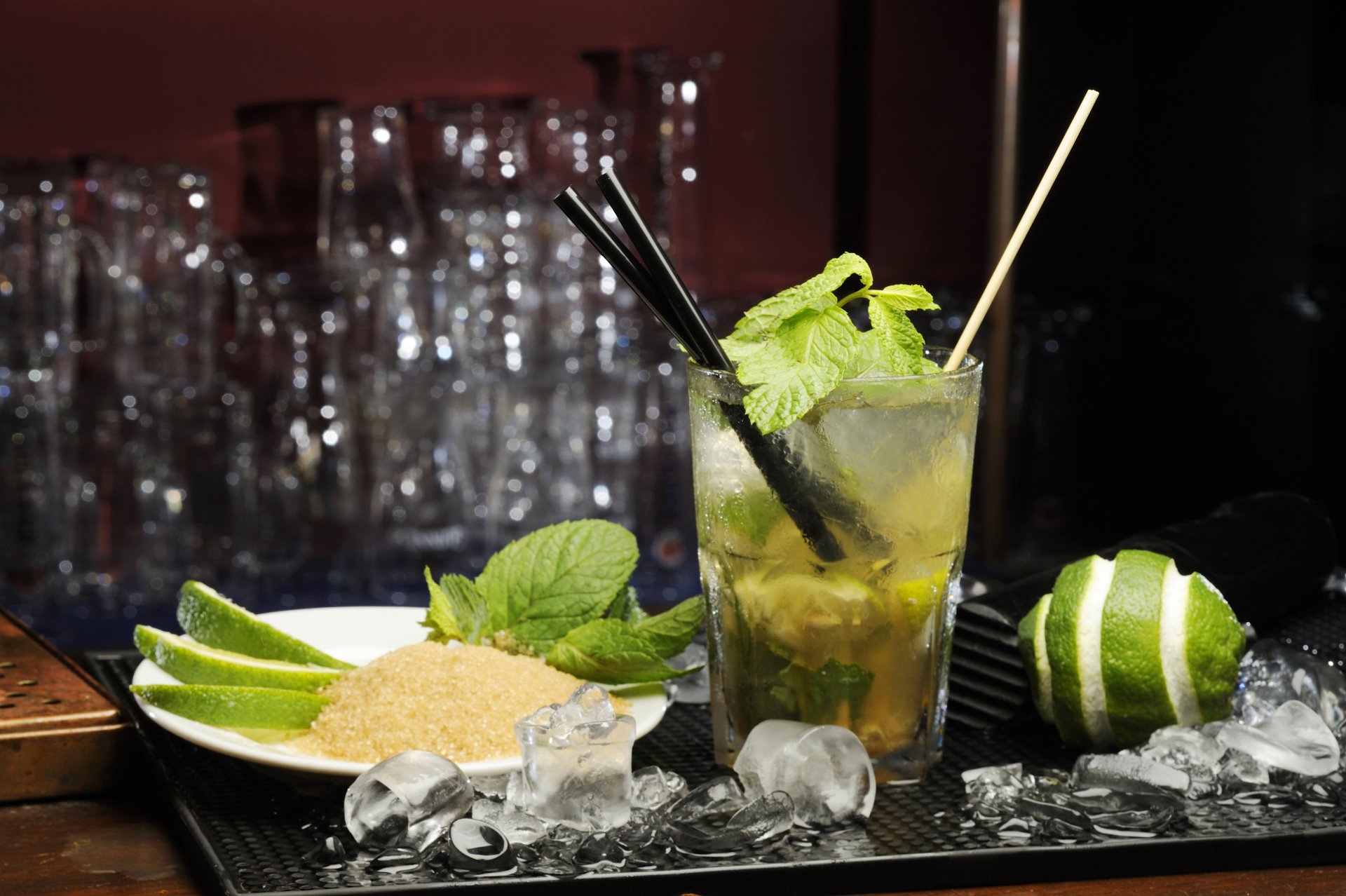
5 common mistakes that ruin a mojito
Even with good ingredients, certain actions or choices of material can compromise the result. Here are the five most frequent mistakes to absolutely avoid.
- Muddling the mint too hard. As mentioned: 4 to 5 light presses are enough. Torn leaves add bitterness and cloud the cocktail. If you see an intense green liquid, you've gone too far.
- Using too small a glass. This is the number one mistake among amateurs. A 15 cl glass cannot hold enough ice to maintain the temperature, and the cocktail dilutes too quickly. Invest in proper long drink cocktail glasses: the difference is felt immediately.
- Using too little ice. Counter-intuitive but true: less ice = more dilution. Fill the glass at least ¾ full. Crushed ice is preferable to large cubes because it packs better and cools more uniformly.
- Using bottled lime juice. Bottled juice has lost all the fresh acidity that balances the sugar in the rum. A fresh lime, squeezed on the spot, is non-negotiable.
- Adding sparkling water too early. If you pour the soda into the base before stirring with a spoon, you'll lose all the bubbles. Sparkling water should always be poured last, after mixing, just before serving.
To go even further in the art of serving drinks well, our article on choosing a wine glass explores similar mechanics applied to the world of fine wines—shape, opening, material—which also govern cocktail service.
FAQ — Frequently asked questions about mojitos and cocktail glasses
Our cocktail glasses for a perfect mojito
Expert selection by our team — Gustave Montclair catalog


