

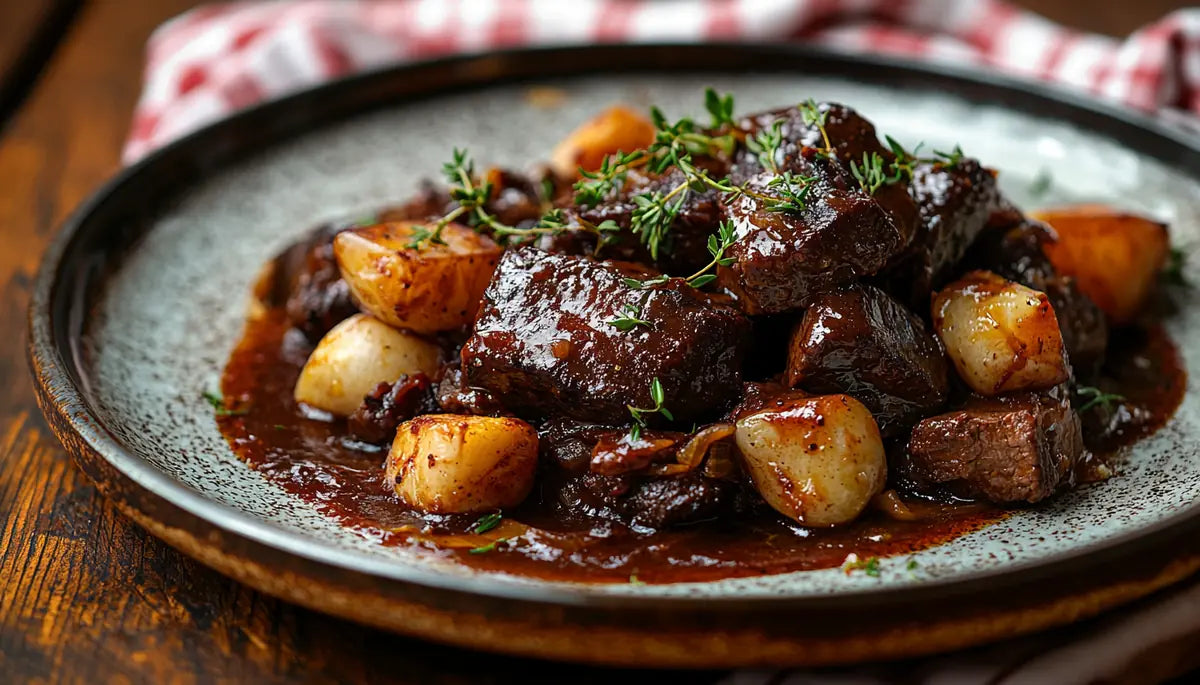
Wine Decanter and Bourguignon: The Complete Guide to Enhance Your Tasting Experience
What wine for your beef bourguignon? What decanter to choose? Everything you need to know to transform this iconic dish into an exceptional tasting moment.
Beef bourguignon is one of the most emblematic dishes of French gastronomy — a patient stew where meat, vegetables, and wine blend into a harmony of deep flavors. If the recipe is demanding, the choice of wine for bourguignon is just as much so, and too often overlooked. Yet, it is this choice that determines the richness of the sauce, the roundness of the tannins, and the final balance of the dish.
But the quality of the tasting doesn't stop at selecting the bottle. Accompanying your bourguignon with a properly aerated wine, poured from a beautiful decanter, transforms an ordinary dinner into a true sensory ceremony. In this complete guide, we explore the most suitable grape varieties and appellations, decantation techniques, and our selection of Gustave Montclair wine decanters designed to reveal the full complexity of a great red.
What wine to choose for a bourguignon?
The most instinctive answer is also the most accurate: a Burgundy wine. The logic of the terroir dictates that the region that gave its name to the dish also provides the most obvious pairing. But the spectrum of possibilities is much wider, and understanding why certain wines work better than others will allow you to make informed choices based on your budget and tastes.
Burgundy wines: the essential reference
Burgundy produces wines based on Pinot Noir, a grape variety of great finesse, renowned for its aromas of black cherry, undergrowth, and sweet spices. Its moderate tannic structure makes it an ideal companion for slow-cooked meats: it doesn't overpower the flavors, it amplifies them. Among the most suitable appellations, Gevrey-Chambertin is often cited first — full-bodied, aromatic, with a long finish that naturally dialogues with the veal stock and mushrooms. Pommard offers a franker power and firmer tannins, ideal if your bourguignon spends a long time simmering in the pot. For more modest budgets, a good Burgundy Pinot Noir from a regional appellation will do very well, served from a wine decanter to open it before serving.
Bordeaux and Rhône: characteristic alternatives
A Saint-Émilion based on Merlot will bring a fruity roundness and a velvety texture that softens the fat of the braised meat. On the Rhône side, Grenache and Syrah-based cuvées — such as a Gigondas or a Crozes-Hermitage — offer warmth, spicy notes, and aromatic richness that pair well with the thyme and bay leaf in the marinade. These powerful wines particularly benefit from prolonged aeration in a wine decanter before being served. To understand all the mechanisms of oxygenation, our guide on wine decantation vs. aeration covers the entire question.
The golden rule: cook and drink the same wine
If there's one rule to remember, it's this: use the same grape variety and region for cooking as for serving at the table. Not the same bottle — it would be a shame to waste a grand cru in the pot — but a coherent aromatic profile. This consistency creates a continuity between the dish and the pairing that guests feel without always being able to explain it. Avoid using poor-quality wines for cooking at all costs: flaws are amplified by heat and end up in your sauce.
| Appellation / Region | Main grape variety | Aromatic profile | Bourguignon pairing |
|---|---|---|---|
| Gevrey-Chambertin (Burgundy) | Pinot Noir | Black cherry, spices, undergrowth | ★★★★★ Reference |
| Pommard (Burgundy) | Pinot Noir | Red fruits, firm tannins, mineral | ★★★★★ |
| Burgundy Pinot Noir | Pinot Noir | Fresh, fruity, light | ★★★★★ Budget |
| Saint-Émilion (Bordeaux) | Merlot | Plum, velvety, roundness | ★★★★★ |
| Gigondas (Rhône) | Grenache / Syrah | Spices, garrigue, warmth | ★★★★★ |
| Crozes-Hermitage (Rhône) | Syrah | Black pepper, olive, black fruits | ★★★★★ |
Decantation and aeration: why it's essential
Bourguignon is a dish of patience — it deserves a wine treated with the same care. Taking out a bottle and pouring it directly into glasses is missing out on a large part of its aromatic potential. Decanting and aerating are two simple gestures that profoundly change the tasting experience.
Aeration: releasing aromas
When a red wine is poured into a wine decanter, it comes into contact with the oxygen in the air. This controlled oxidation — called aeration — releases volatile aromatic compounds, softens tannins, and integrates the alcohol into the overall structure of the wine. A young, tight Pinot Noir can thus reveal its aromas of black fruits, spices, and woodiness, which it jealously kept in the bottle, within 30 to 45 minutes. The more powerful and tannic the wine, the longer and more beneficial the aeration will be.
Decantation: separating sediment
Decantation is a more precise operation, intended for older wines that have formed a sediment at the bottom of the bottle — tartrate crystals or polymerized tannins. It involves slowly pouring the wine into the decanter, leaving the sediment in the bottle, with the help of a candle or light placed under the neck. This sommelier's gesture is perfectly accessible at home with the right wine decanter. To go further, our comparison crystal decanter vs. glass decanter helps you choose the right material for your use.
How long to decant?
A young, tannic wine — a Pommard less than five years old — will benefit from being aerated for 60 to 90 minutes. A wine 8 to 12 years old at full aromatic maturity needs only 20 to 30 minutes. A fragile old vintage should not stay in the decanter for more than 10 to 15 minutes, at the risk of losing its delicate aromas due to excessive oxidation.
What is a wine decanter?
A wine decanter is much more than a simple container for serving wine. It is a tasting tool designed to optimize contact between the wine and air, thereby accelerating oxygenation and revealing aromas that would otherwise remain locked in the bottle for hours. Understanding the different shapes and their uses will allow you to make the best choice according to the profile of your wines.
Shapes and uses: which decanter for which wine?
Decanters with a wide base and narrow neck — sometimes called balloon decanters — maximize the contact surface between the wine and air. They are particularly suitable for powerful wines like a Gigondas, a young Pommard, or a full-bodied Côtes-du-Rhône. Decanters with a more open neck, with a straight or slightly flared silhouette, are better suited for fine and elegant Pinot Noirs that only need moderate aeration. For quality white wines or rosés that one wishes to chill while aerating, narrower decanters are to be preferred.
Capacity is also an important criterion: a 1.5 to 2-liter decanter allows an entire bottle (75 cl) to be decanted with space for optimal oxygenation, and to serve several guests without having to transfer. This is the ideal format for a family dinner centered around beef bourguignon. Discover also our guide on how to choose your wine glass to complete your table setting.
The material: glass or crystal?
Quality blown glass offers perfect transparency to appreciate the wine's color, satisfactory resistance to daily shocks, and easy maintenance. Crystal, finer and more brilliant, further magnifies the presentation but requires more care. At Gustave Montclair, our wine decanters are designed from high-quality glass, striking the right balance between visual elegance, functionality, and durability. To delve deeper into this choice, our article crystal decanter vs. glass answers all your questions about the material.
Maintenance: an often underestimated criterion
A beautiful decanter that is difficult to clean is a decanter quickly abandoned. Too sinuous shapes or too narrow necks complicate rinsing and promote tannin deposits inside the glass. Gustave Montclair models are designed to remain accessible for daily maintenance: a rinse with hot water after each use, air drying, and your decanter regains its shine. For deep cleaning, a few glass beads and a little warm water are enough to remove the most stubborn residues.
Our decanters — Gustave Montclair Selection
For each wine profile and table style, Gustave Montclair offers a decanter designed to enhance the tasting experience. Here is our selection of six models, each with its own characteristics, to help you find the one that will best accompany your next bourguignon.
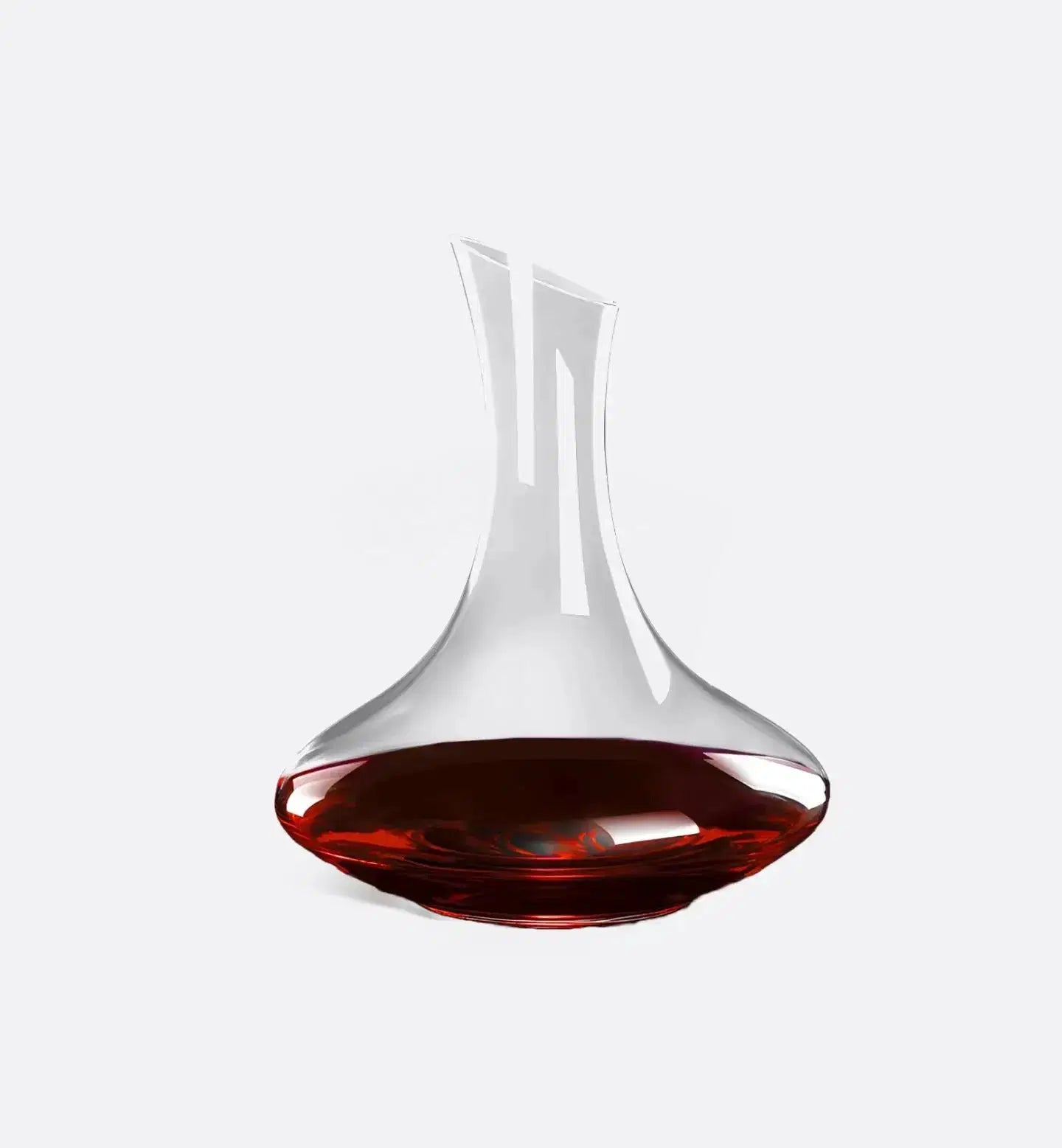
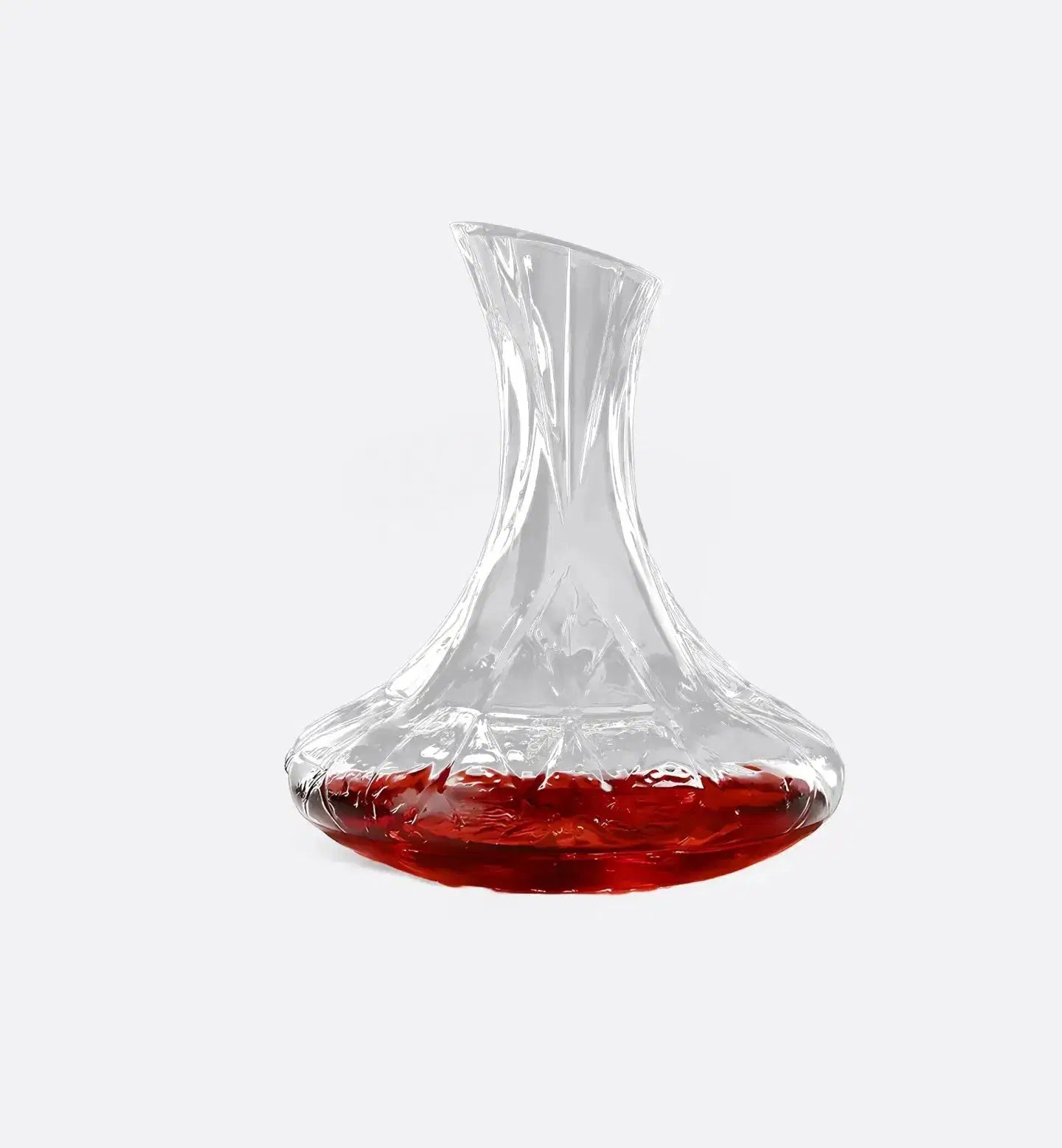


Hesitating between several models? Find our complete range on the wine decanters collection page. To complement your service, also consider our selection of wine glasses designed for each grape varietal, or our sommelier sets which offer a complete range of wine accessories — a perfect gift idea for wine lovers.
Service, temperature, and food pairings
Even the best wine in the world, poorly served, disappoints. A few simple rules ensure that your Burgundy wine pairing reaches its full potential.
Serving temperature, a decisive parameter
Red Burgundy wines are ideally served between 16 and 18 °C. Below this range, tannins seem more astringent, and aromas are closed. Above 20 °C, alcohol dominates, and aromatic nuances fade. If your natural cellar is at 12–14 °C, take the bottle out an hour before serving. If your apartment is warm in summer, lightly chill it 20 minutes before pouring it into your decanter. The wine will quickly stabilize to room temperature once in the decanter.
The decanter at the center of the table: an aesthetic as much as a functional role
A beautiful wine decanter placed on the table doesn't just aerate the wine: it contributes to the decor, it invites conversation, it signals to your guests that you've thought of every detail of their experience. This is precisely the philosophy that guides the creation of Gustave Montclair models — objects that combine contemporary design, quality materials, and the pleasure of service.
Food pairings: going further than the main course
Beef bourguignon is often accompanied by starches — mashed potatoes, fresh tagliatelle, creamy polenta — which further soften the wine's tannins and create a harmonious ensemble. If you offer a cheese platter at the end of the meal, an Époisses or an aged Comté will wonderfully extend the regional pairing initiated by your wine choice. For special occasions, pair your decanter with suitable wine glasses — our collection of wine glasses offers shapes designed for each grape varietal, from the finest to the most generous.
FAQ — Frequently asked questions about the decanter and beef bourguignon
Our Wine Decanters — Gustave Montclair Collection
Expert selection by our team · 6 models for all wine styles
Exclusive reader offer
−10% off the entire catalog
Valid on all our glasses, decanters, and accessories.
Sources
- Bureau Interprofessionnel des Vins de Bourgogne (BIVB) — Burgundy Food and Wine Pairings — bivb.com — 2024
- Organisation Internationale de la Vigne et du Vin (OIV) — Report on Service and Decanting Practices — oiv.int — 2023
- Institut Français de la Vigne et du Vin (IFV) — Red Wine Serving Temperatures Guide — vignevin.com — 2024


