


What is the best champagne glass? The complete guide
Flute, tulip, or coupe: discover which glass will truly enhance your bubbles, aromas, and tasting experience—and how to choose the ideal model.
Choosing the best champagne glass is one of the most crucial decisions for enhancing your tasting experience. More than just a container, the glass acts as a precision instrument: its shape, volume, and finesse directly influence how bubbles form, how aromas are released, and how champagne expresses itself on the palate. Sensory experiments conducted by several major champagne houses reveal that glass shape can significantly alter aromatic perception according to blind tasting protocols—a fact that fully justifies taking the time to consider it before investing in your glassware.
Whether you want to master the art of tasting, prepare a memorable reception, or simply understand why the same champagne can seem so different from one glass to another, this complete guide will provide all the answers. We will analyze the main families of glasses, their respective advantages and disadvantages, fundamental technical criteria, and high-end models from our Gustave Montclair collection of champagne flutes and glasses. To deepen your knowledge of glassware in general, our complete guide to choosing your wine glass perfectly complements this reading.
Why the shape of the champagne glass changes everything about the tasting experience
When talking about the best champagne glass, it is first necessary to understand the physical and sensory mechanisms that come into play as soon as the wine touches the crystal. The shape influences three fundamental and inseparable parameters: bubble dynamics, wine oxygenation, and the concentration of aromas towards the taster's nose. Every millimeter of curvature, every centiliter of volume, every degree of rim opening shapes a radically different gustatory and olfactory experience.
Nucleation sites and bubble dynamics
The dissolved carbon dioxide in champagne rises to the surface from microscopic anchor points, called nucleation sites—slight natural asperities present on the inner wall of the glass, or sometimes intentionally etched by the glassmaker to create a spectacular visual effect. In a champagne flute with a narrow, vertical wall, the bubbles travel a long distance before bursting at the surface, causing them to grow progressively as they rise. Upon reaching the nose, the effect can become slightly aggressive and mask the subtle aromas of the wine.
Conversely, a slightly wider glass in the middle—like the tulip—allows for a shorter ascent of the bubbles, which remain finer, tighter, and perceived as distinctly more delicate and silky on the palate. This is one of the major reasons why professionals have progressively abandoned the traditional flute in favor of more open shapes since the late 2010s. The champagne coupe, an emblem of Art Deco glamour, has a very large exposure surface that accelerates bubble evaporation and dissipates aromas too quickly into the atmosphere.
Controlled oxygenation and aroma release
A glass slightly tapered at the top creates a true chamber for concentrating aromatic molecules in the neck, amplified by body heat released during tasting. This configuration is precisely that of the tulip, which allows the champagne to open up and oxygenate moderately while keeping the aromas close to the taster's nose. As G.H. Mumm emphasizes in its service guide, a good glass should be "transparent, placed on a thin, elegant stem" to allow for an optimal tasting experience. Conversely, an overly flared coupe quickly disperses olfactory molecules into the atmosphere and accelerates the loss of effervescence, severely penalizing vintage champagnes with delicate aromas.
This question of controlled oxygenation becomes particularly important with more complex and aged champagnes. A great vintage will reveal infinitely richer nuances in a tulip than in a narrow flute. The same principle applies to our wine carafes and decanters: exposing the wine to a measured dose of air to reveal its qualities without exhausting them. To delve deeper into this topic, our article on wine decantation and aeration provides useful complementary insights.
The stem of the glass and thermal management
The stem of the glass plays an often underestimated functional role, yet it is essential to the quality of the tasting. By holding the glass by the stem rather than the bowl, the taster avoids warming the champagne with the heat of their palm. According to Laurent-Perrier's recommendations, champagne should be served between 8 and 10°C for fresh cuvées and between 10 and 12°C for great vintages. A glass with a long, thin stem naturally facilitates this thermal constraint and helps preserve the effervescence and freshness of the tasting from the first to the last glass. The shape, volume, and proportions therefore constitute an inseparable triptych for identifying the best champagne glass according to your uses.
Flute, tulip, coupe: a complete comparison of the main shapes
Three main families of glasses dominate the world of champagne, each corresponding to a distinct tasting profile and a different aesthetic. Understanding their differences will allow you to choose not only based on your tastes, but also on the occasion and the champagne being served. The following table summarizes the essential characteristics of each shape.
| Shape | CO₂ Retention | Aromatic Expression | Recommended Use |
|---|---|---|---|
|
Flute 150–200 ml |
★★★★★ | ★★★★★ | Toasts, aperitifs, festive occasions |
|
Tulip 200–300 ml |
★★★★★ | ★★★★★ Recommended | Tasting, vintages, prestige cuvées |
|
Coupe 150–250 ml |
★★★★★ | ★★★★★ | Festive cocktails, Art Deco themes |
|
White wine glass 300–400 ml |
★★★★★ | ★★★★★ | Complex grand vintages, sommeliers |
Sources: G.H. Mumm — Service Guide (2023) · Laurent-Perrier — Service Recommendations (2025) · Gault & Millau — Which shape enhances champagne? (2026)
The champagne flute, popularized from the 1930s onwards and a true icon of modern celebration, offers the undeniable advantage of preserving effervescence for longer thanks to its narrow opening. The ascent of bubbles in long vertical columns creates a much-appreciated visual spectacle during toasts. Its main drawback: this very narrowness prevents aromas from developing fully, as the bubbles rise too directly under the nose, disturbing olfactory perception.
The champagne coupe, emblem of Art Deco receptions and associated with a certain idea of glamour since the Belle Époque, seduces with its wide bowl and evocative festive aesthetic. It is perfectly suited for champagne-based cocktails and events where visual appeal is paramount. Its main disadvantage: the rapid dispersion of bubbles and aromas due to the large surface area in contact with air—champagne served in a coupe flattens two to three times faster than in a tulip.
The tulip glass represents the current consensus among professionals, almost unanimously. Its shape, slightly rounded in the middle and tapered towards the top, cleverly combines the advantages of the flute and the coupe: it preserves effervescence while allowing complex aromas to develop freely. For enthusiasts wishing to build a complete and refined service, our Gustave Montclair tulip champagne glasses represent a durable and elegant investment. An examination of a crystal carafe vs. glass carafe comparison illustrates the same attention to material, which also applies to the most demanding champagne flutes.

Essential criteria for choosing your champagne glass
Beyond the general shape, several technical criteria distinguish an ordinary champagne glass from a truly high-end model. Here are the decisive parameters to carefully examine before any purchase, whether for yourself or as a gift for an enlightened connoisseur.
Volume and proportions: the perfect balance
A champagne glass should have a volume between 150 and 300 ml to allow for optimal tasting conditions. A volume that is too small forces frequent refilling and does not leave enough space for the wine to express itself, while a glass that is too large dilutes the effervescence and gives an impression of flat champagne. In practice, tradition dictates filling the glass about one-third full—i.e., between 8 and 10 cl—to leave sufficient space for the aromas to develop and the bubbles to retain all their finesse. Our Gustave Montclair collection offers models between 148 ml and 250 ml, covering all profiles, from convivial aperitifs to expert tastings.
The thinness of the wall: a decisive detail
A thin wall, ideally less than 2 mm for quality models, significantly improves sensory perception in the mouth. The contact between the rim of the glass and the lips is more natural and precise, which better directs the wine to the different taste zones of the tongue. The perfect transparency of the glass also allows full appreciation of the robe, color, and liveliness of the bubbles—all visual pleasures that are an integral part of the champagne experience. A thick glass, conversely, creates a physical and thermal barrier that detracts from the harmony of the tasting.
Nucleation points: the signature of great glasses
Some glasses incorporate slight etchings inside the bowl, called nucleation points or sites. These micro-reliefs generate regular, fine, and persistent columns of bubbles that transform the tasting into a true visual and tactile spectacle. This is precisely the characteristic of Gustave Montclair's Sillage model, whose etched spiral produces captivating light play and a remarkably regular ascent of bubbles. This type of etching demonstrates demanding craftsmanship and is a true differentiator for the most discerning connoisseurs.
The material: glass, crystalline, or crystal?
Contrary to popular belief, the material has no direct impact on the intrinsic taste of champagne. However, lead-free crystal offers superior transparency, incomparable brilliance, and increased wall thinness that enhance every moment of tasting. For daily use or large receptions, quality crystalline combines durability and refinement at an accessible price-quality ratio. For collectors and special occasions, mouth-blown crystal models represent the pinnacle of glass art. Our detailed comparison of crystal vs. glass carafes develops these material nuances in detail to help you make the most informed choice.

Our selection of Gustave Montclair champagne glasses
Gustave Montclair offers a selection of high-end champagne glasses with carefully differentiated profiles, allowing every enthusiast to find the model that precisely matches their tasting style and aesthetic preferences. Each piece is designed with particular attention to proportions, glass fineness, and overall elegance, to offer a complete experience—visual as well as sensory. You will find our entire range in the complete collection of champagne glasses.
Sillage Champagne Glass — 250 ml
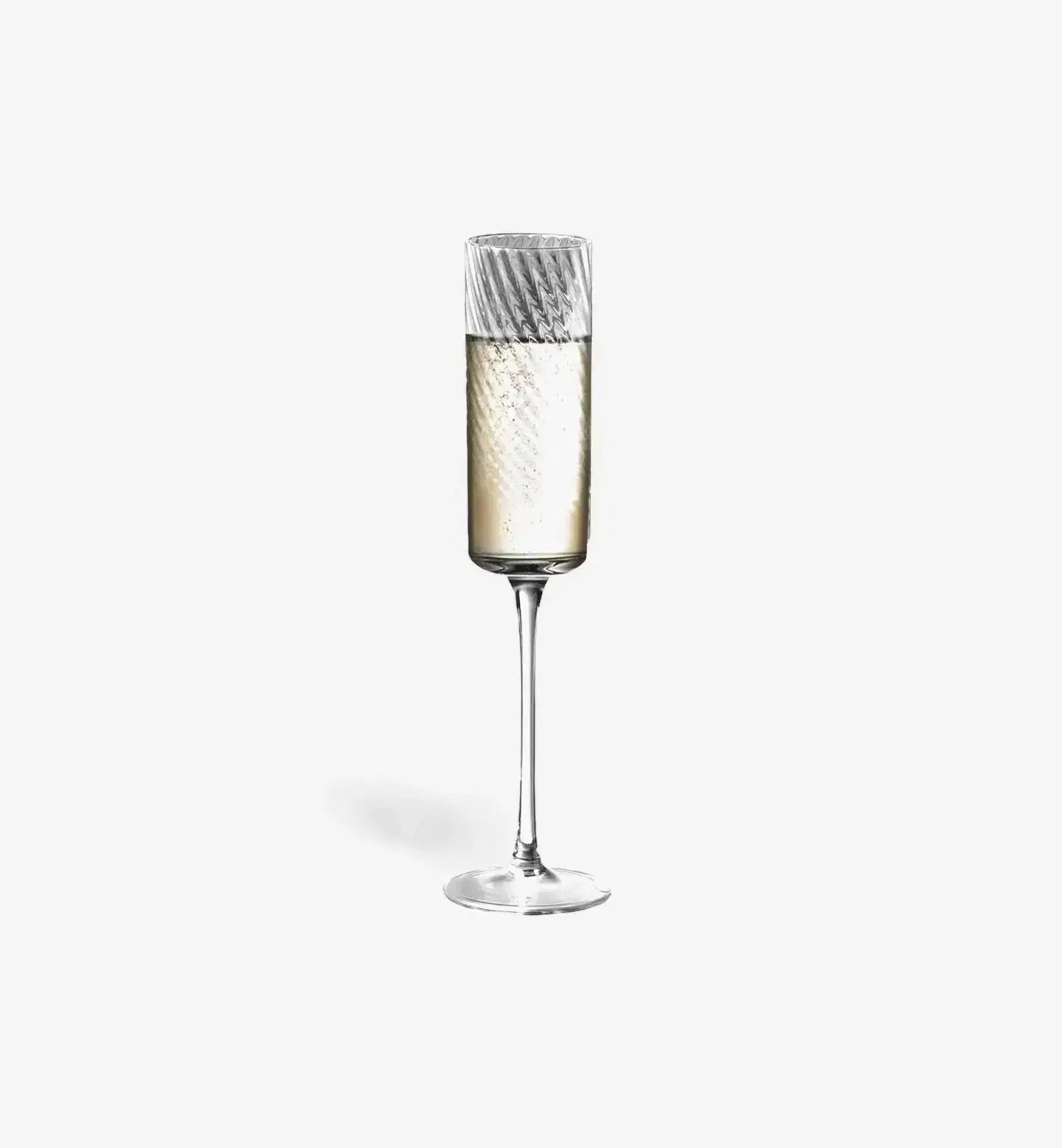
The Sillage model stands out with its spiral pattern engraved along the entire height of the bowl. This artisanal engraving generates regular and persistent columns of bubbles that rise with unparalleled elegance, creating a true visual spectacle at the heart of the glass. Its 250ml volume offers ample space for champagne to aerate slightly and reveal its full aromatic palette, from floral notes to the buttery touches of great vintages. With its slender silhouette and sculpted design, the Sillage is the ideal choice for grand occasions, exceptional receptions, and gifts for discerning enthusiasts. An essential bestseller in our range.
Sun Champagne Glass — 150 ml
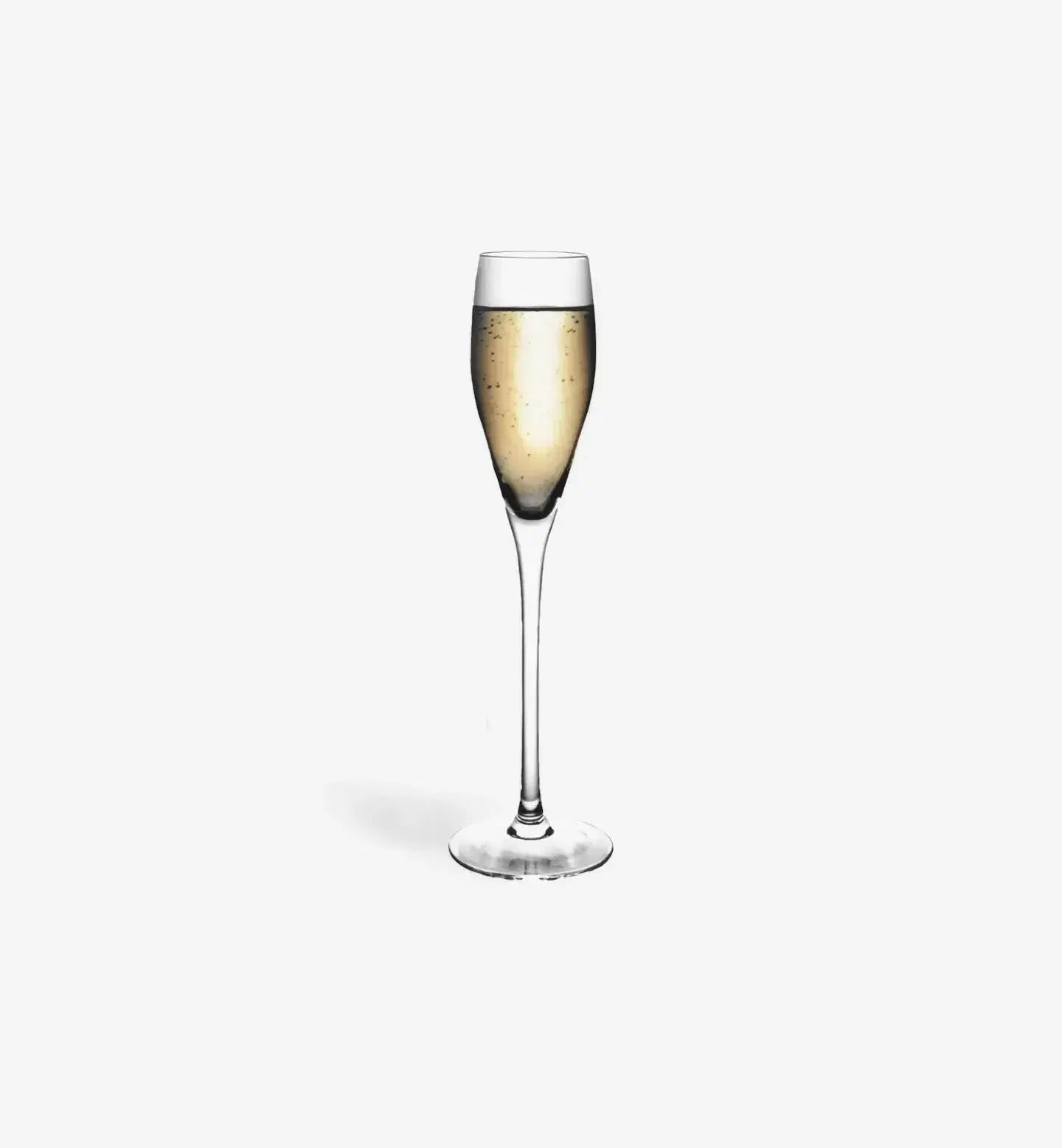
The Sun model embodies simplicity at its highest level of expression. Its pure form, without superfluous decoration, fully highlights the champagne it contains and leaves ample room for the natural brilliance of the wine. Its 150ml capacity makes it particularly suitable for toasts and standing aperitifs, offering an ideal portion that preserves freshness and effervescence until the last sip. It is the classic champagne flute par excellence, the one naturally found on the most refined tables at formal receptions.
Royal Champagne Glass — 148 ml
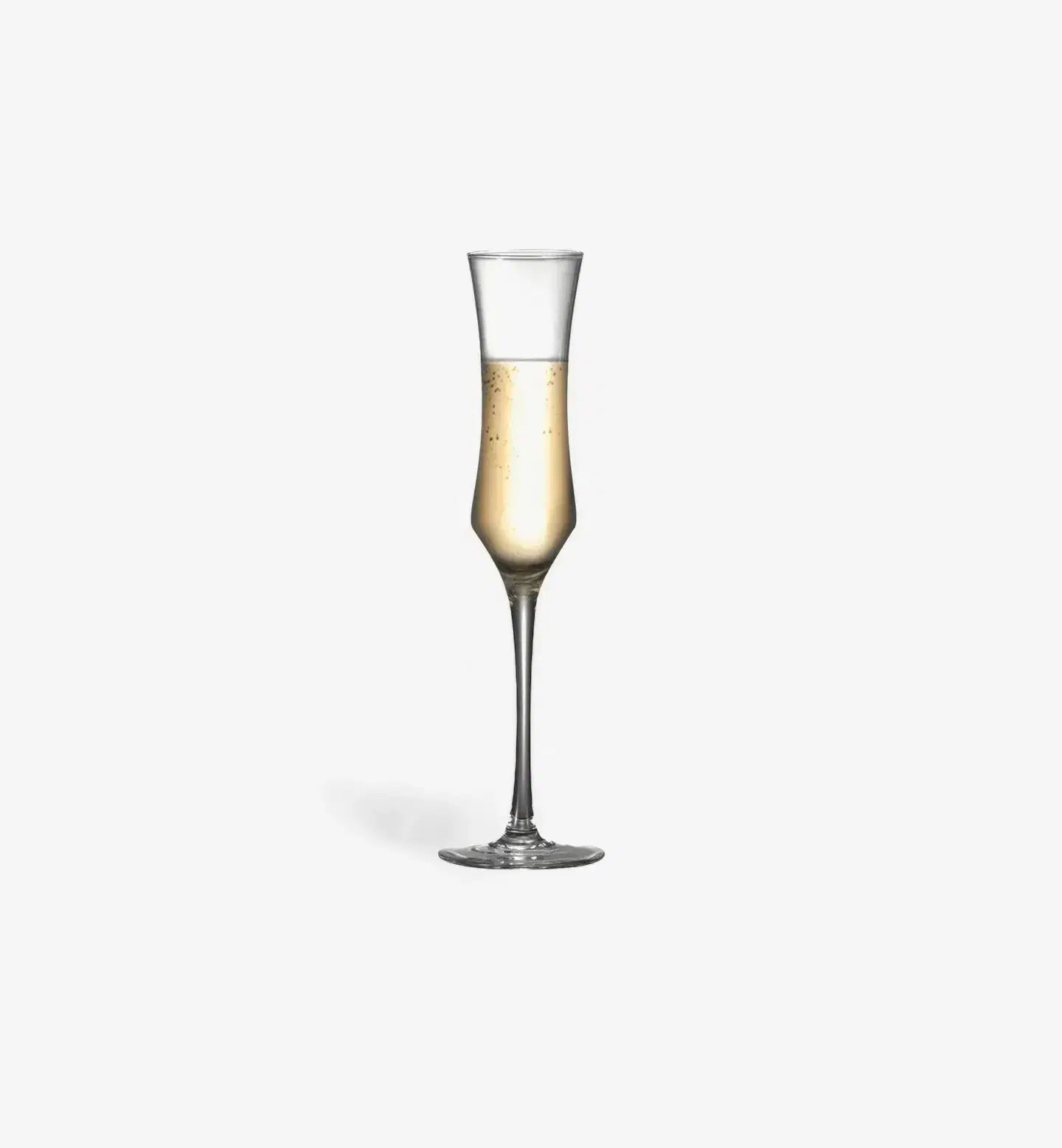
With its characteristic wavy curves extending along the entire height of the bowl, the Royal glass brings a unique and immediately recognizable character to your reception table. Its fluid silhouette, blending Champagne tradition with contemporary daring, creates a remarkable visual presence that catches the eye and sparks curiosity. The rise of the bubbles is particularly elegant, guided by the internal curves that subtly direct their trajectory. This model will appeal to enthusiasts seeking originality as well as those crafting carefully curated tables. It naturally pairs with a fine selection of wine tasting glasses for a harmonious and complete service.
Bloom Champagne Glass — 210 ml
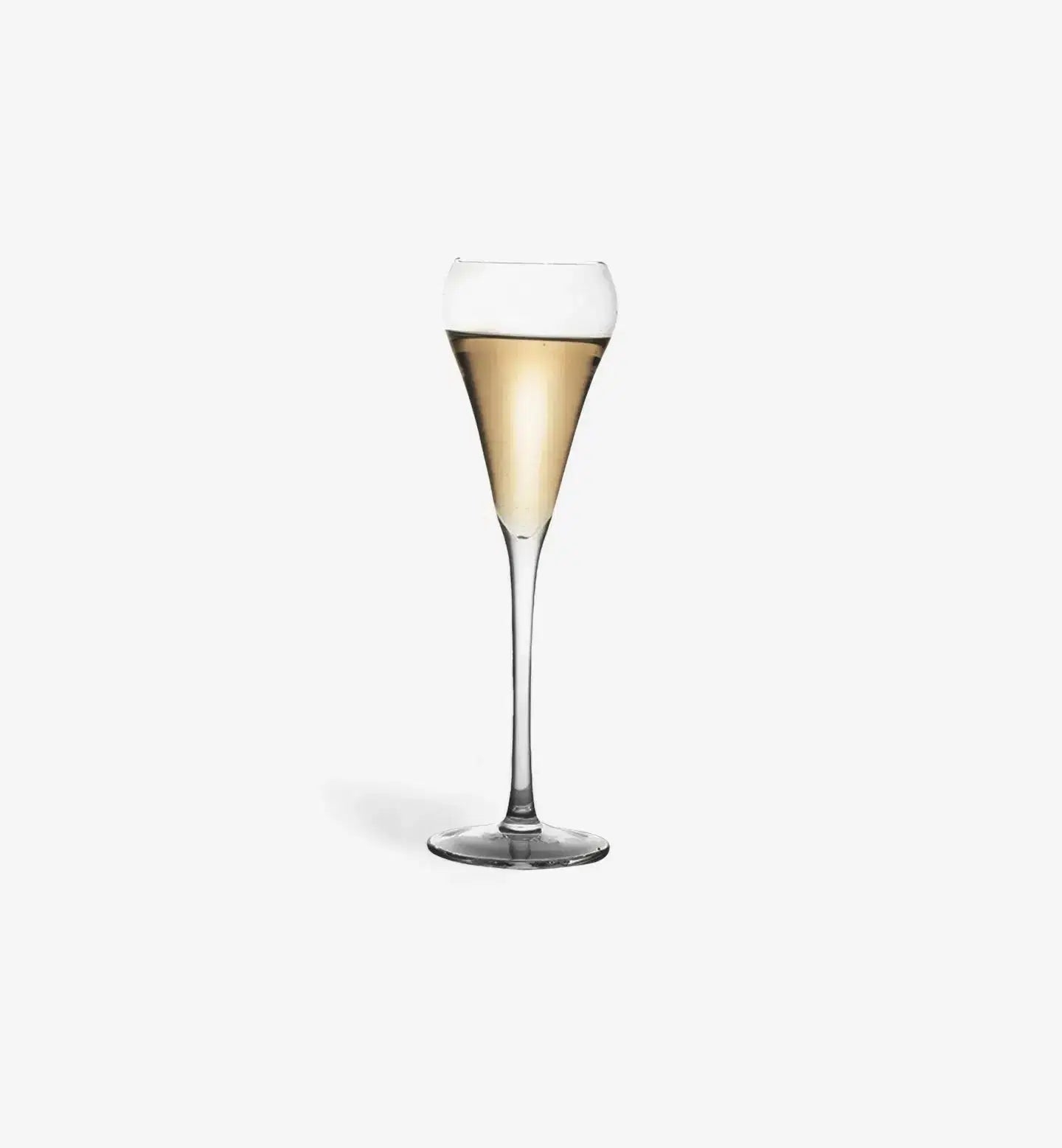
The slightly flared V-shape, narrowing towards the top of the Bloom glass, makes it one of the most effective models in the range for in-depth aromatic tasting. Its 210ml volume allows for slight oxygenation beneficial for complex champagnes, while its concentrated opening directs aromas to the nose with remarkable precision. Lovers of vintage champagnes and mineral Blanc de Blancs will find it their preferred glass, very similar to the standards used by professionals during blind comparative tastings. The Bloom is the tool of the demanding connoisseur.
Orée Champagne Glass — 250 ml
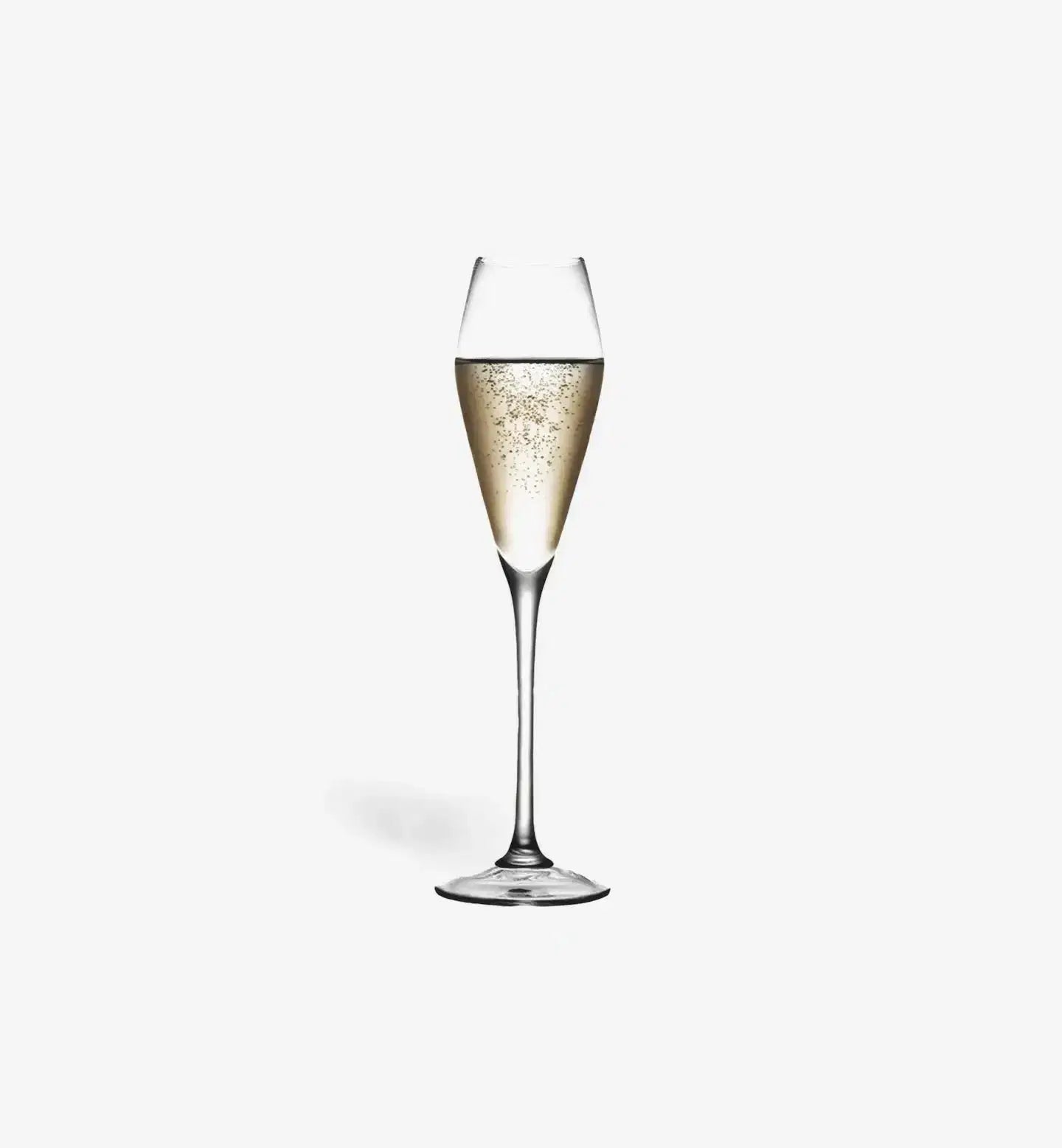
The Orée represents the absolute pinnacle of the Gustave Montclair range. Its remarkably thin and transparent wall, its slender silhouette, and its perfectly balanced proportions make it a connoisseur's choice for the most demanding tastings and the most solemn occasions. Whether for an exceptional gourmet dinner, a prestigious professional event, or a gift for a discerning enthusiast, the Orée elevates every cuvée and transforms every toast into a memorable moment. It also blends harmoniously into a complete sommelier set for a gift experience that is as refined as it is memorable.
Strié Champagne Glass — 195 ml
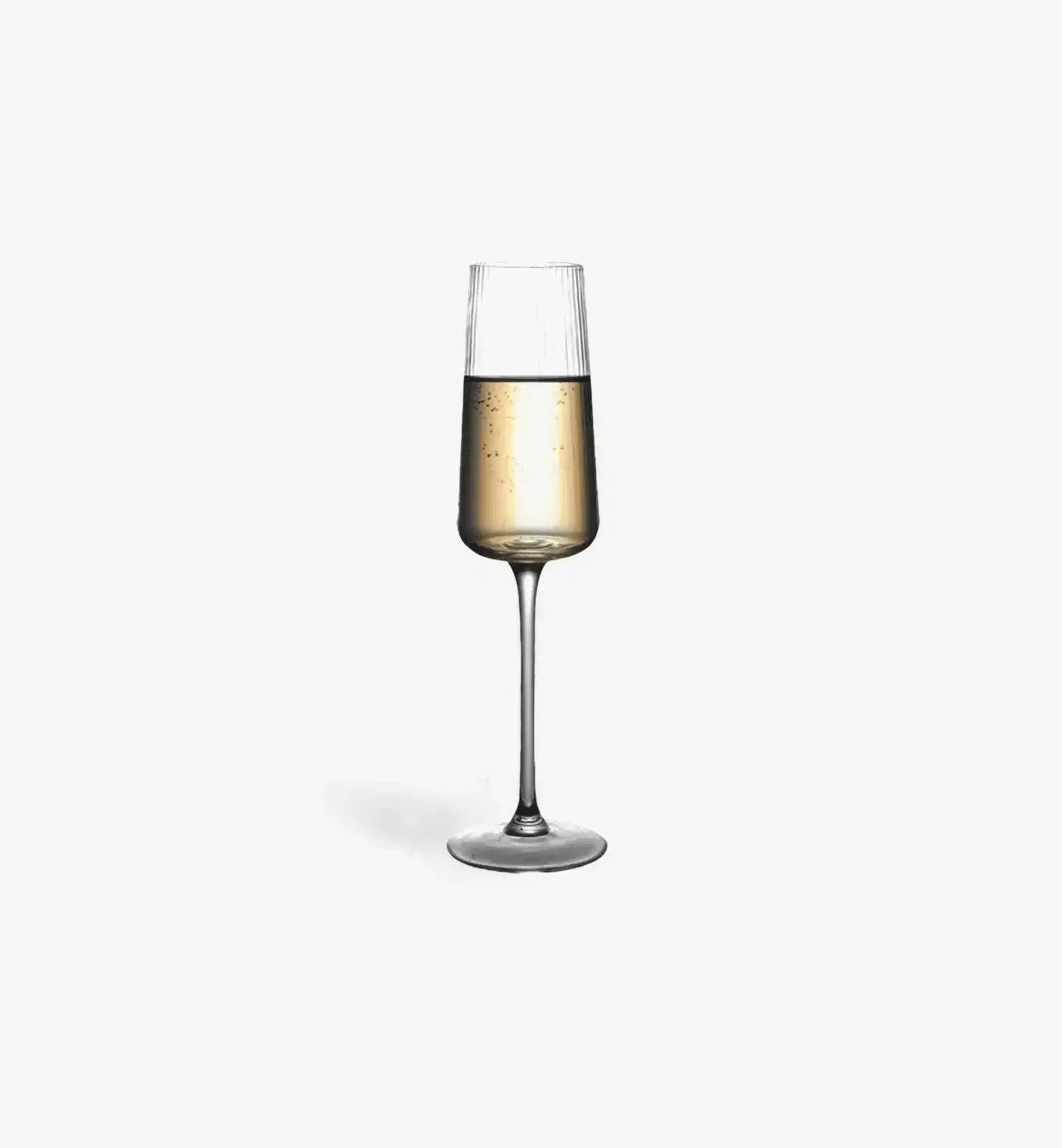
The Strié is distinguished by its vertical grooves engraved along the entire height of the bowl, which give it a distinct and immediately recognizable graphic personality. Its slender silhouette and 195ml volume make it an ideal format for convivial aperitifs and standing receptions, where visual elegance is as important as taste quality. The striated pattern amplifies the optical effect of the rising bubbles, creating a captivating spectacle that is sure to catch the eye and animate conversations. Refined without being ostentatious, the Strié naturally blends into contemporary or classic decor and makes for a highly appreciated original gift for enthusiasts.
Serving Tips to Enhance Every Tasting
Regardless of the model chosen, a few simple actions can optimize each tasting and get the best out of your champagne glass. Pour champagne slowly, tilting the glass slightly to preserve effervescence and limit foam formation. Fill to about a third of the capacity to allow aromas to develop freely. Always hold the glass by the stem, never by the bowl, so as not to warm the wine with the natural heat of your hand. Avoid glasses straight from the cupboard that may retain odors — rinse them with cold water before serving. Finally, prefer hand washing with lukewarm water to keep nucleation sites intact and ensure a regular stream of bubbles tasting after tasting. To go further, our article on decanting vs. aerating wine provides useful additional insights.
Why Choose Gustave Montclair for Your Champagne Glasses?
Gustave Montclair was born from a sincere passion for beautiful and useful objects — those that transform a simple meal into a refined moment of sharing that is remembered for a long time. Our commitment is to offer glassware and table accessories of impeccable quality, carefully selected to combine aesthetics, functionality, and durability. Each model in our range meets precise criteria for wall thinness, hand feel, and aromatic expression, defined in collaboration with tasting professionals.
Our catalog covers all glassware and table accessory needs: from wine decanters to reveal the best of each bottle, to original cocktail glasses for creative evenings, as well as premium whiskey sets for spirits enthusiasts and professional cocktail kits for mixology lovers. Complete your table setting with our metal bottle holders to display your beautiful bottles with style. Browse our entire blog to discover all our practical guides, or find out about our history and commitments on the About Us page.
FAQ — Frequently Asked Questions About Champagne Glasses
Our selection of high-end champagne glasses
Expertly selected by our team — Gustave Montclair catalog
Exclusive reader offer
−10% off the entire catalog
Valid on all our glasses, carafes, and table accessories.
Sources
- Gault & Millau — Which glass shape best enhances champagne? — fr.gaultmillau.com — 2026
- G.H. Mumm — How to choose the best glass for tasting champagne — mumm.com — 2023
- Laurent-Perrier — What glasses for champagne? — laurent-perrier.com — 2025


