

Decanter: Why Decant Your Wine? A Complete Guide
How long should you really decant a red wine, a white wine, or an old vintage? The answer lies in a simple chart, and a few sommelier gestures.
Decanting wine: what are we really talking about?
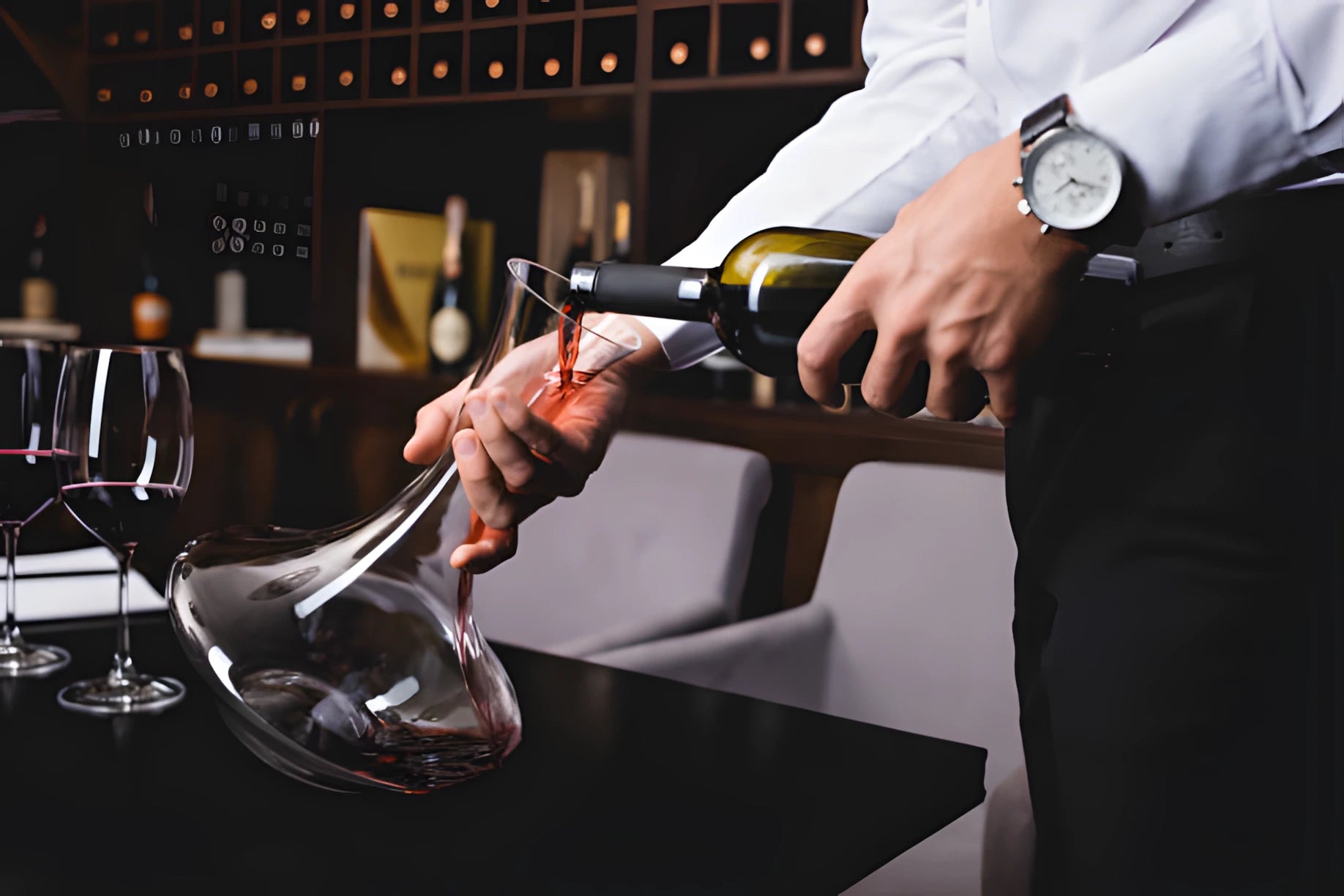
Decanting wine means transferring the contents of the bottle into an open container before serving. The gesture seems simple, but it actually serves two distinct purposes, which the Union des Œnologues de France carefully separates: one sensory, the other practical.
The first goal is to reveal the aromas and soften the tannins of a still young wine: this is called aeration. The second is to separate the wine from its natural deposits before serving: this is decantation, reserved for older wines. Confusing the two often leads to decanting a fragile wine for too long, or too little for a wine that would have deserved real oxygenation.
This guide first answers the most frequently asked question on the subject — how long to decant a wine according to its type and age — before detailing what truly distinguishes aeration from decantation, which wines to decant or avoid, and the gestures that make all the difference.
On a table set for dinner or an aperitif on a terrace, the decanter also plays a role that goes beyond mere technique: it establishes a ritual, slows down the service, and invites you to observe the color of the wine revealing itself in the light even before the first sip. It's a simple gesture to master, provided you know the following guidelines.
How long to decant wine? The chart by wine type
There is no universal duration: a tannic Bordeaux from five years ago and a light primeur wine have absolutely nothing to do with each other in the same decanter for the same amount of time. Here are the guidelines to know before opening the bottle.
| Wine Type | Recommended Duration | Objective | Practical Advice |
|---|---|---|---|
| Young & Light Red (Pinot Noir, Gamay) | 15–30 min | Light aeration | Slender decanter, serve at 16–18°C |
| Young & Tannic Red (Bordeaux, Malbec, Syrah) | 1h–2h | Soften tannins | Broad-based decanter, taste before serving |
| Powerful Red (Barolo, Amarone, Grand Rhône) | 2h–3h | Extended oxygenation | Decant at the very beginning of the meal |
| Old Red (> 15 years, with sediment) | 5–20 min | Decantation (sediment separation) | Slow pour in light, serve quickly |
| Aromatic White (Oaked Chardonnay, Viognier) | 20–40 min | Short aeration | Decanter chilled in refrigerator for 10 min beforehand |
| Champagne / Sparkling | Avoid | Preserve bubbles | Serve directly in flute or coupe |
These durations are starting points, not absolute rules: the power of a vintage, serving temperature, or the exact shape of the decanter will vary the result. Tasting the wine before and during decanting remains the best indicator, long before the timer.
To decant wine under good conditions, the shape of the container is almost as important as the duration: discover our selection of wine decanters designed for both rapid aeration and delicate decantation.
Aeration, to reveal young wines
Aerating a wine means deliberately exposing it to oxygen to stimulate its aromatic evolution. Young red wines from tannic grape varieties — Cabernet Sauvignon, Syrah, Malbec — particularly benefit from spending a few tens of minutes in a decanter before serving.
This contact with the air triggers beneficial micro-oxidation: it softens still firm tannins and releases aromatic compounds that the closed bottle was holding back. The OIV documents this phenomenon of progressive polymerization of tannins, which makes the wine rounder and more expressive on the nose and palate.
Some white wines also benefit from aeration: an oaked Chardonnay or an expressive Viognier open up more after 20 to 30 minutes in a decanter, especially when served in a wine glass with a wide opening that extends contact with the air.
The shape of the decanter plays a decisive role here: the larger the contact surface between the wine and the air, the faster and more intense the aeration. This is the whole point of choosing the right decanter, detailed below.

Decantation, for older wines and their sediments
Decantation meets a different need: separating the wine from its natural deposits before serving. With age, red wine develops tartrate crystals, polymerized tannins, and coloring pigments that settle at the bottom of the bottle — harmless, but unpleasant in the mouth if they end up in the glass.
Unlike aeration, the goal is not to expose the wine to oxygen but to separate it cleanly. The Bureau Interprofessionnel des Vins de Bourgogne recommends keeping the bottle upright for 24 hours before serving, allowing the deposits to settle at the bottom.
Decantation itself should take place just before serving — sometimes only a few minutes before — to preserve the fragile freshness of an old vintage, which would not withstand prolonged exposure to air.
Which wines to decant, and which to absolutely avoid?
Not all wines are suitable for decanting. Here's how to figure it out based on the style and age of the bottle.
Wines that benefit from decanting
- Young and tannic reds: Bordeaux from 5 to 15 years old, Côtes-du-Rhône, Malbec, Barolo clearly benefit from prolonged decanting.
- Aromatic whites: Oaked Chardonnay and Sauvignon Blanc express themselves better after 20 to 30 minutes of aeration.
- Old wines with sediment: a red wine over 15 years old deserves a brief and delicate decantation, just to remove the sediment.
Wines never to decant
- Champagnes, Crémants, and Proseccos: decanting eliminates the bubbles, and it's irreversible.
- Light, rosé, and primeur wines: designed to be drunk young and fresh, they have nothing to gain from oxygen. A Provence rosé, for example, loses its liveliness and fruity notes if it spends more than a few minutes in a decanter.

How to choose the right decanter?
The shape of the decanter directly influences the speed and intensity of aeration. Two main families stand out, and many enthusiasts end up owning both.
The broad-based decanter, for rapid aeration
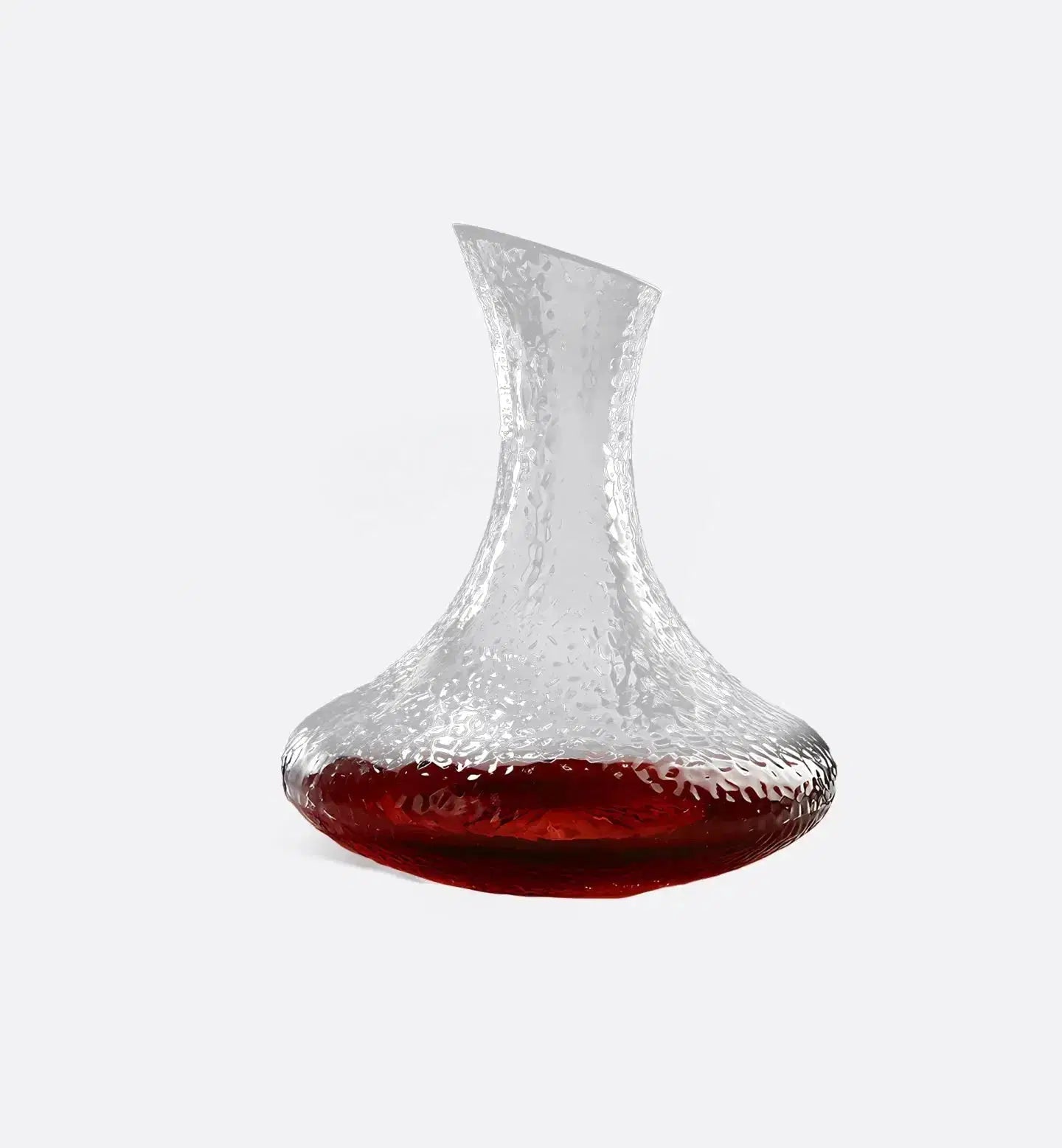
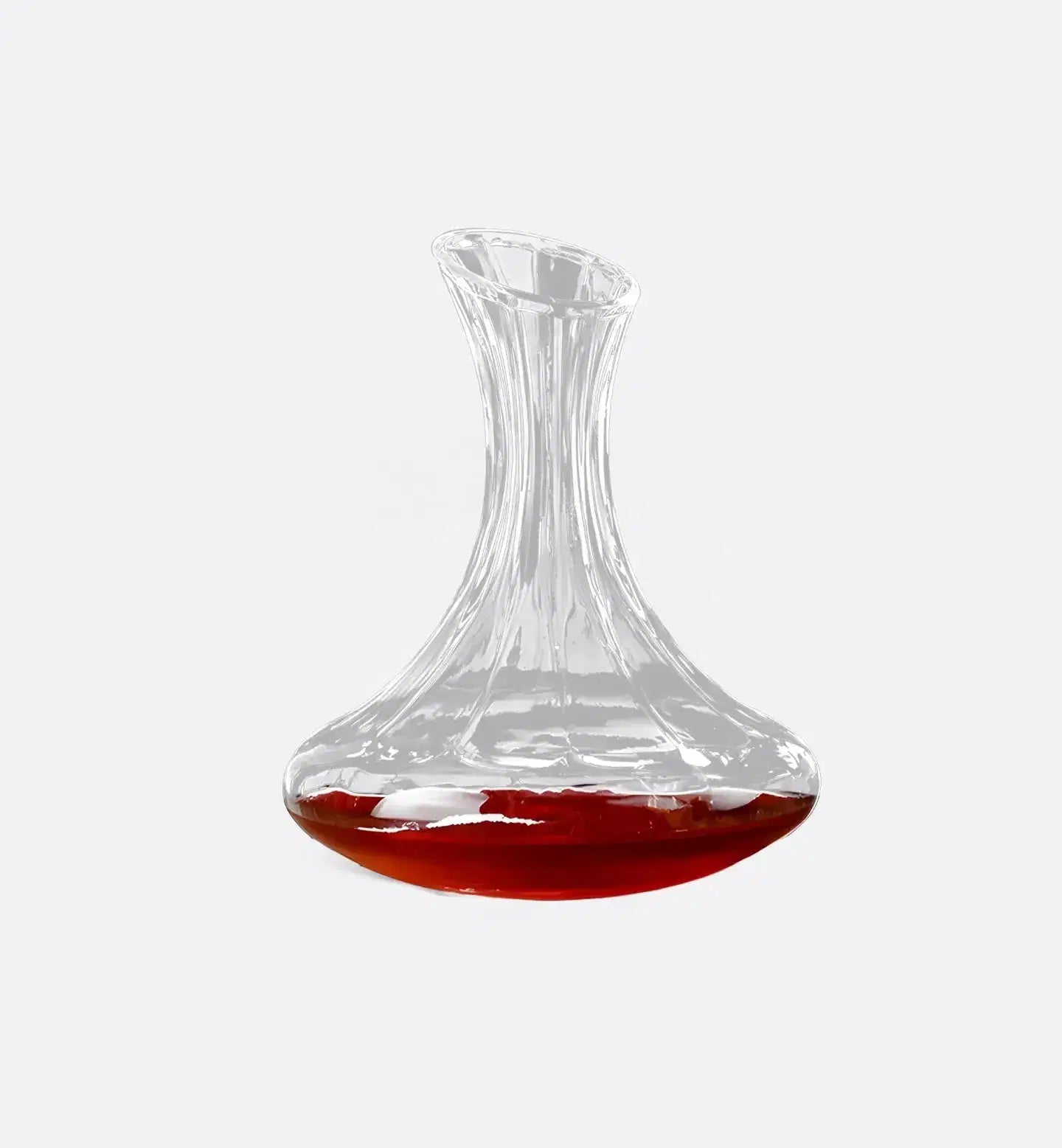
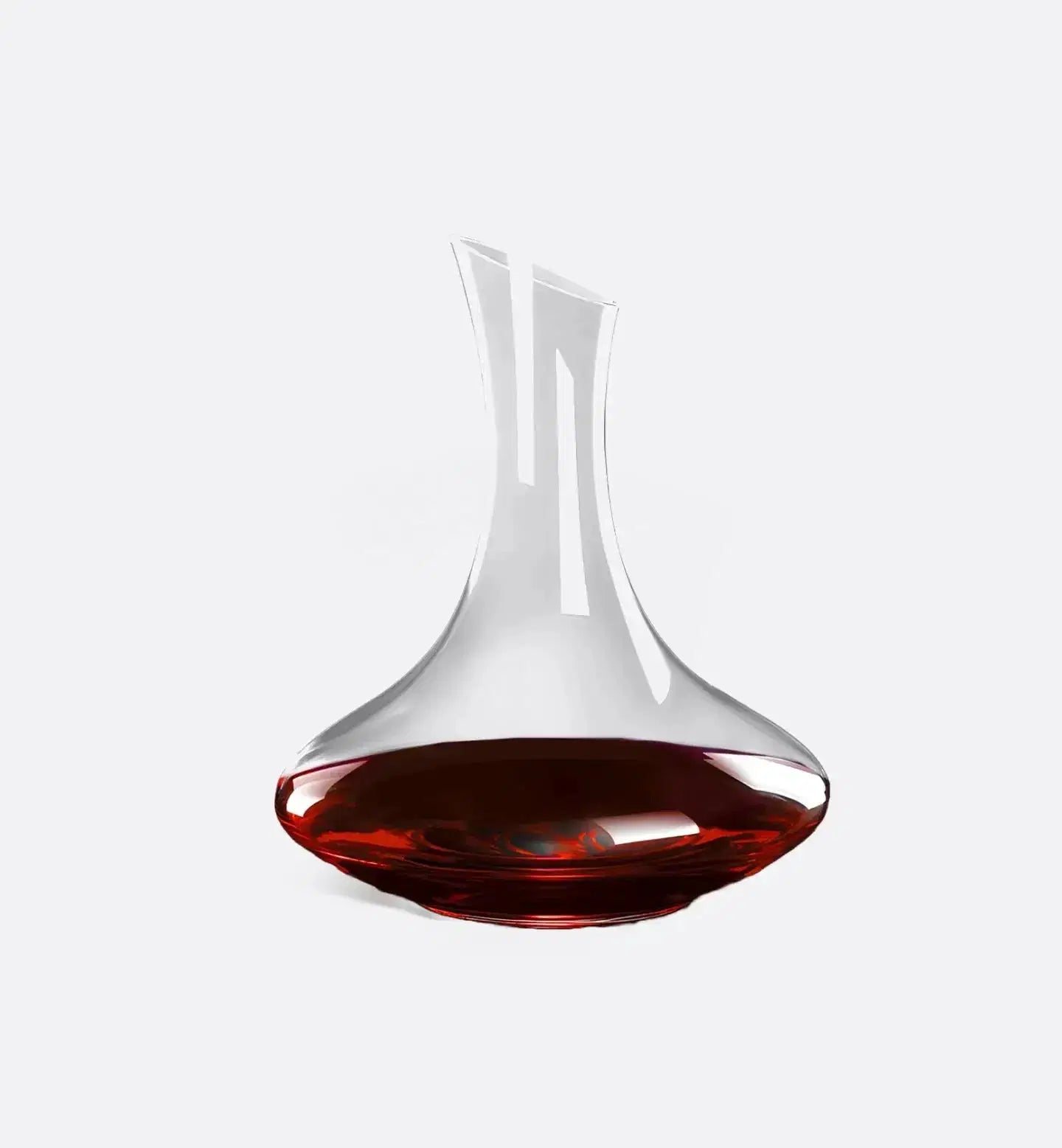
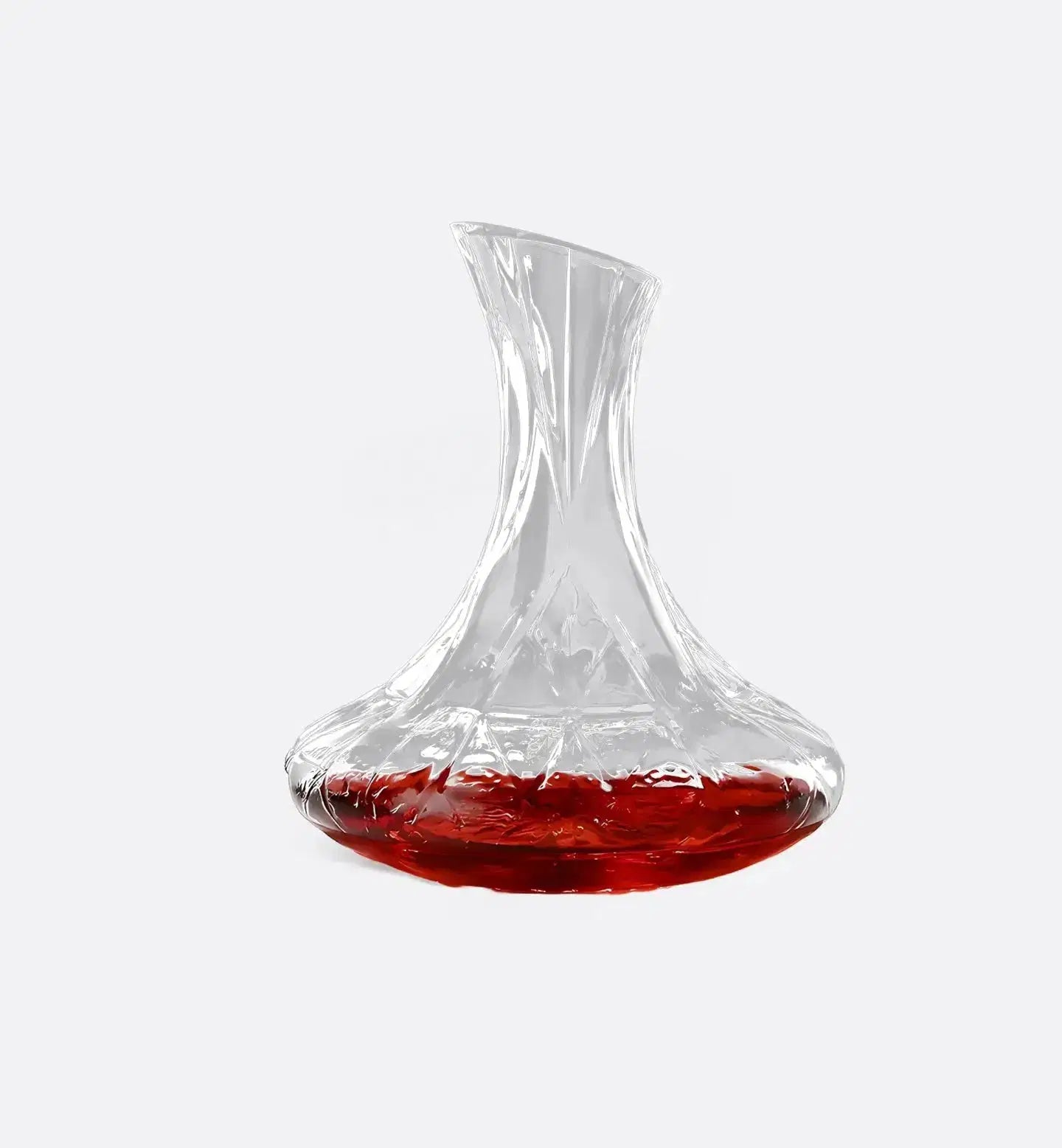
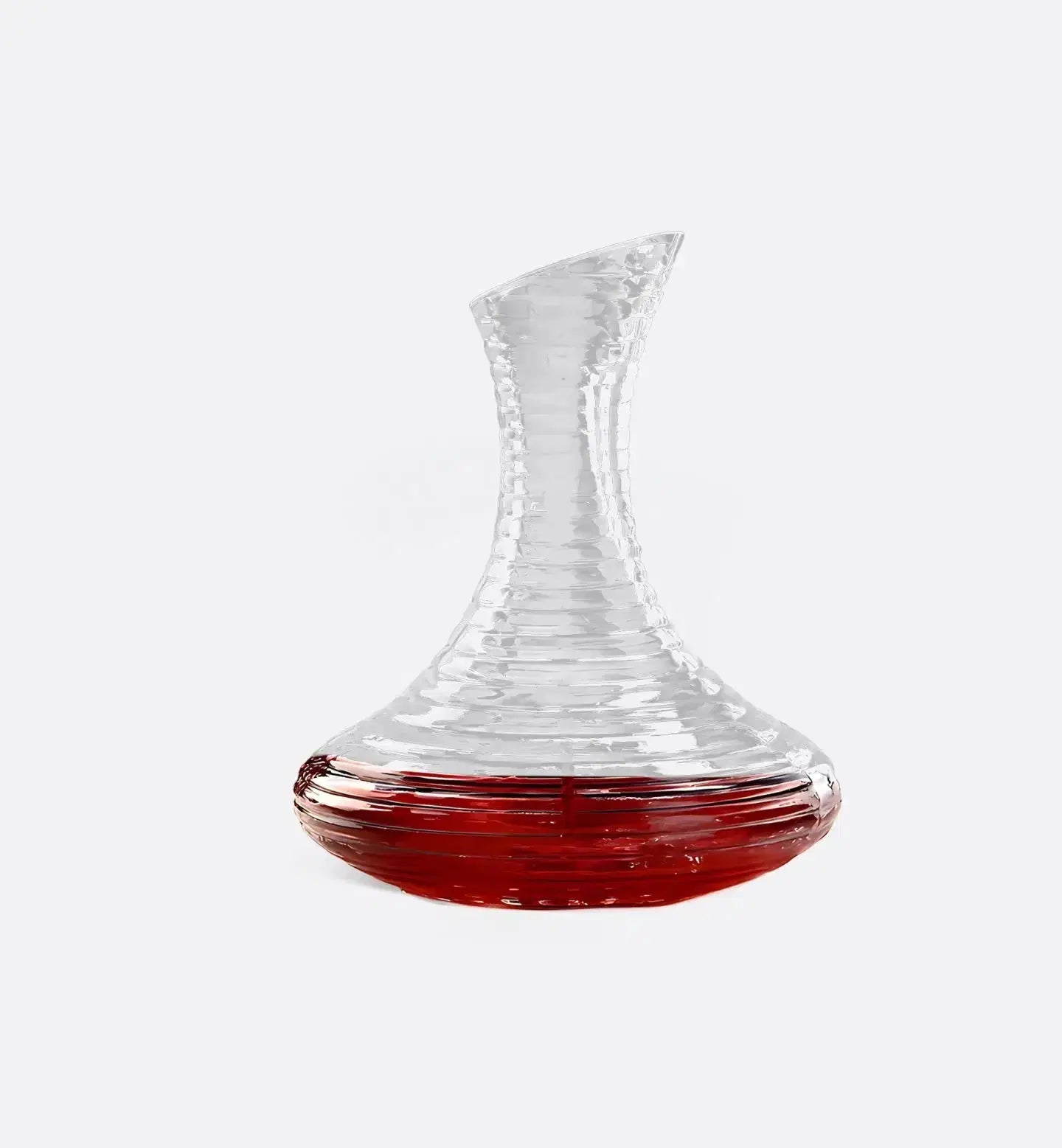
Its curved and flared body offers a large evaporation surface, which accelerates and amplifies aeration. This is the ideal choice for young, structured, and tannic wines that need rapid and intense oxygenation — our Éra, Veloce, or Ligna models are designed for this use.
The slender decanter with a narrow neck, for delicate decantation
It deliberately limits contact with air. It is suitable for older wines that primarily need to be clarified of their deposits, without prolonged exposure to oxygen, as well as for already evolved wines that one simply wishes to present in a decanter without further aerating them.
The material also matters: glass offers total aromatic neutrality and great lightness of service, while crystal, heavier in hand, visually enhances the color of the wine. Our article on crystal or glass decanters details this choice further.
Capacity also deserves close attention. A 1.5 to 1.8-liter decanter comfortably holds a full bottle without needing to fill it to the brim — a residual air space also promotes aromatic mixing when the decanter is slightly tilted before serving.
Sommelier techniques for proper wine decanting
Prepare the bottle in advance
For a wine with sediment (most often a red over ten years old), stand the bottle upright 24 hours before serving: the sediment will compact at the bottom, which greatly facilitates decanting. A young wine without sediment requires no particular preparation.
Rinse the decanter before use
A simple rinse with cold water removes stale odors or accumulated dust. Avoid dish soap, whose residual scent transfers to the wine. For a decanter that is rarely used, pour in a small amount of wine and swirl it around before emptying and filling it completely — this is called "seasoning" the decanter — it removes any unwanted aftertaste.
Pour slowly along the side
Whether for aerating or decanting, the movement should remain fluid and continuous, without jerking. For an old wine with sediment, slightly tilt the bottle over a light source (candle or lamp) and stop pouring as soon as the cloudiness approaches the neck, leaving the last few centiliters in the bottle.
Taste before serving
A few minutes after transferring, take a small amount in a tasting glass to assess the wine's evolution. If the tannins are still pronounced and the bouquet shy, wait. If the wine appears open and balanced, serve immediately.
Maintain your decanter after use
Rinse it with hot water immediately after service, without detergent, to prevent the wine from drying and leaving stubborn stains. For drying, invert it on an inclined stand, neck down — never insert a dishcloth, which leaves fibers and unwanted odors. For persistent deposits, lukewarm water with coarse salt or stainless steel cleaning beads easily takes care of them. Our guide on wine decanter care details each step.
To go further into the gesture itself, our dedicated guide explains how to decant red wine step-by-step, and our selection of sommelier sets gathers the accessories that accompany this serving ritual.
FAQ — Frequently Asked Questions about Decanters
Sources
- International Organisation of Vine and Wine — Guide to Oenology and Wine Service — oiv.int — 2024
- Bureau Interprofessionnel des Vins de Bourgogne (BIVB) — Tasting and Aeration Advice for Burgundy Wines — bivb.com — 2025
- Union des Œnologues de France — Recommendations on Wine Service and Presentation — oenologues-de-france.org — 2024
Our wine decanters for aeration and decantation
Expertly selected by our team — Gustave Montclair catalog

Exclusive reader offer
−10% off the entire catalog
Valid on all our glasses, decanters, and accessories.


