


Manhattan: classic recipe and which glass to use for this whiskey cocktail
Rye whiskey, sweet red vermouth, Angostura bitters, and a cherry — the true recipe for a perfectly stirred Manhattan, and the cocktail glass that enhances it.
What is a Manhattan?
The Manhattan is one of a handful of cocktails that have never needed reinvention. Whiskey, sweet red vermouth, Angostura bitters: three ingredients, a precise balance, and a deep amber color that catches the light as soon as you raise it towards a candle or a sunset on a terrace.
Unlike a fruity cocktail that you drink quickly, the Manhattan is meant to be savored slowly. It's a conversational cocktail, designed to accompany an evening with friends or a quiet moment after dinner. It is among the official cocktails of the International Bartenders Association, alongside the Old Fashioned and the Negroni — the same family of stirred cocktails, never shaken.
What distinguishes the Manhattan from other whiskey-based cocktails is precisely the addition of sweet red vermouth: where the Old Fashioned relies on sugar and bitters to round out the whiskey, the Manhattan uses a fortified and aromatic wine to bring both sweetness, a slight bitterness, and an almost spicy depth. It is this balance between alcoholic strength and aromatic roundness that explains why the Manhattan remains, more than a century after its creation, one of the most ordered cocktails in whiskey bars.
Its success relies on two things: strict adherence to proportions, and the cocktail glass in which it is served. A good Manhattan made poorly in the wrong glass loses half its charm.
The classic Manhattan recipe
Here is the recipe as it is prepared in bars that respect tradition — no frills, no added syrup, no improvisation on volumes.
Ingredients for a perfect Manhattan
- 6 cl (2 oz) rye whiskey — this is the historical base of the Manhattan; bourbon also works but will give a rounder, less spicy result
- 3 cl (1 oz) sweet red vermouth — sweet and aromatic, it provides structure and softens the whiskey
- 2 dashes Angostura bitters — the ingredient that gives the Manhattan its signature slightly spicy flavor
- 1 Maraschino cherry — the non-negotiable garnish, which slowly infuses the bottom of the glass
- Ice cubes — large, solid ice cubes, to dilute slowly without watering down the mixture
Step-by-step method
- Fill a mixing glass (or a large glass) with ice.
- Pour in the rye whiskey, sweet red vermouth, and two dashes of Angostura bitters.
- Stir with a spoon for 20 to 30 seconds, until the outside of the glass is cold to the touch.
- Strain directly into a pre-chilled cocktail glass.
- Garnish with a Maraschino cherry, placed at the bottom of the glass.
Why we stir a Manhattan (and never shake it)
This is the rule most often broken by beginners: a Manhattan is never shaken in a cocktail shaker. It is stirred, with a spoon, in a mixing glass filled with ice.
Stirred vs. Shaken: The difference that changes everything
A cocktail composed solely of spirits — no fruit juice, no egg white, no texture to emulsify — only needs to be chilled and slightly diluted. Shaking introduces air and tiny ice shards that cloud the liquid and break its silky texture. The Manhattan, on the other hand, should remain clear, almost oily to the touch of the glass.
The role of the shaker for other cocktails
The cocktail shaker obviously retains its usefulness — for a Daiquiri, a Whiskey Sour, or any cocktail containing lemon juice, syrup, or egg white, where emulsification and aeration provide the desired texture. If you're setting up your home bar, a good complete cocktail kit remains essential; just keep the mixing glass nearby for recipes like this one.
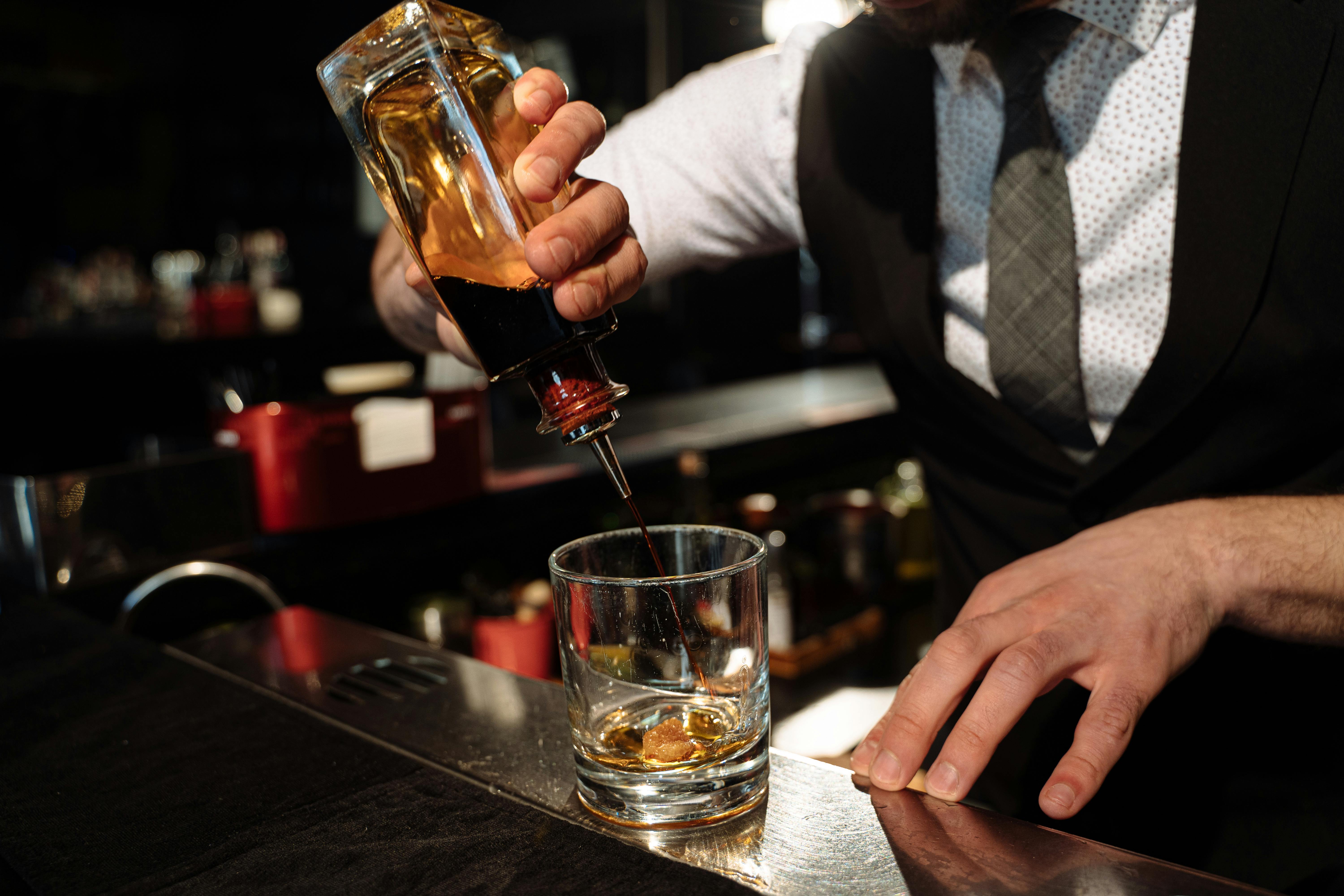
What glass to serve a Manhattan in?
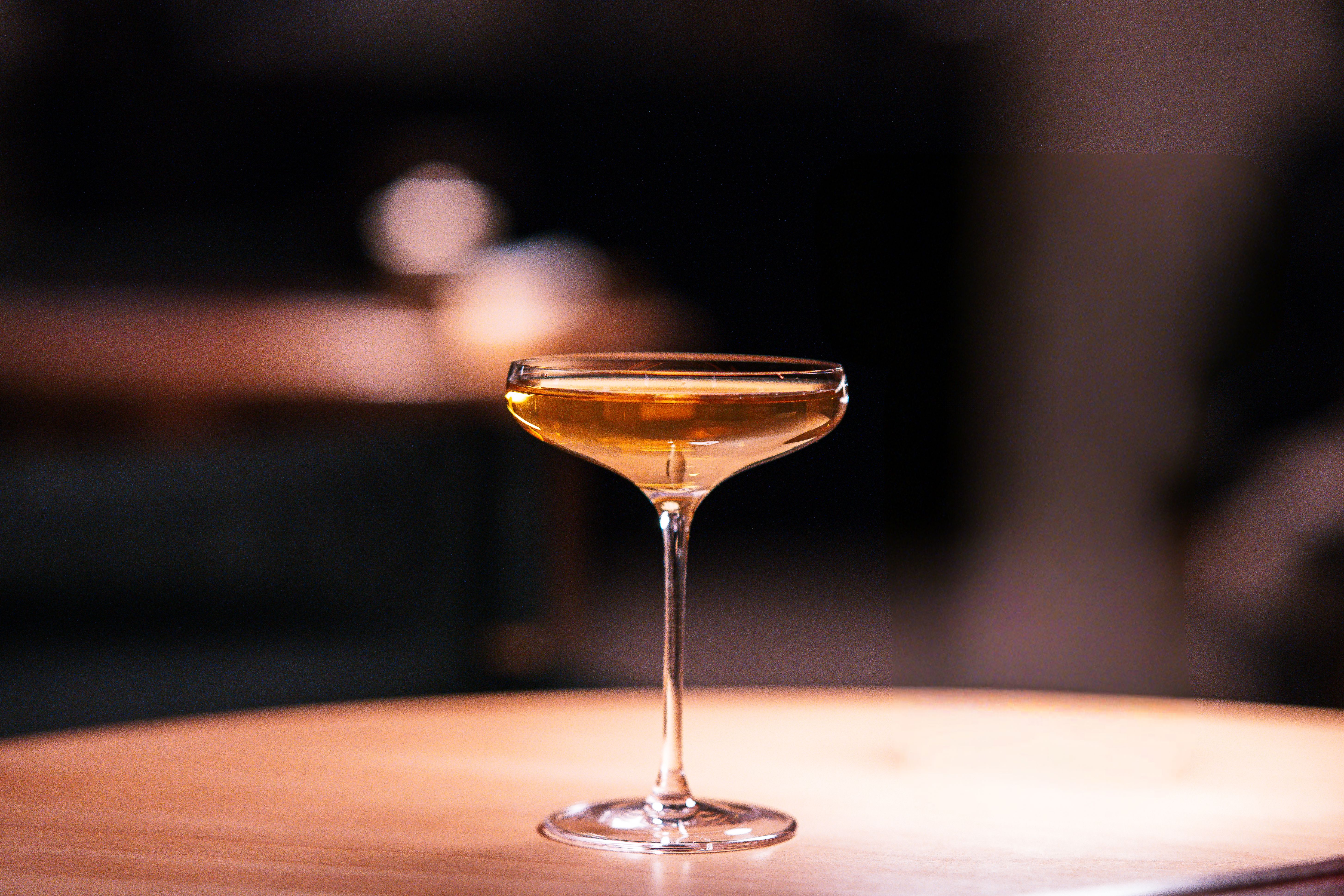
The Manhattan has no ice in the final glass: nothing distracts the eye from the liquid itself. It is precisely for this reason that the choice of glass matters as much as the recipe.
The cocktail glass, the Manhattan's showcase
The traditional format remains the stemmed cocktail glass, such as a coupe or goblet — never a flat-bottomed rocks glass. Its flared shape allows the aromas of whiskey and vermouth to breathe, while the stem allows you to hold the glass without warming the liquid with the palm of your hand.
At Gustave Montclair, the Calice cocktail glass and the Royal cocktail glass are two silhouettes particularly suitable for this type of service: a bowl wide enough to allow the Manhattan to swirl, and a stem long enough to remain elegant on a set table.
Why the shape of the glass changes the tasting experience
- A wide bowl exposes more liquid surface to the air, which opens up the aromas of the whiskey and vermouth
- A thin stem prevents heat from the hand from prematurely warming the cocktail
- A glass with a thin rim, rather than thick, leaves a cleaner sensation in the mouth with each sip
- A stable and slightly weighted base prevents accidents on a reception table, especially when multiple glasses are circulating at the same time
These details seem minor when taken separately, but they add up: a Manhattan served in an unsuitable glass — too small, too straight, or with too thick a rim — will give the impression of a heavier and less precise drink, even if the recipe behind it is impeccable.
Manhattan and whiskey: the right glass to extend the evening
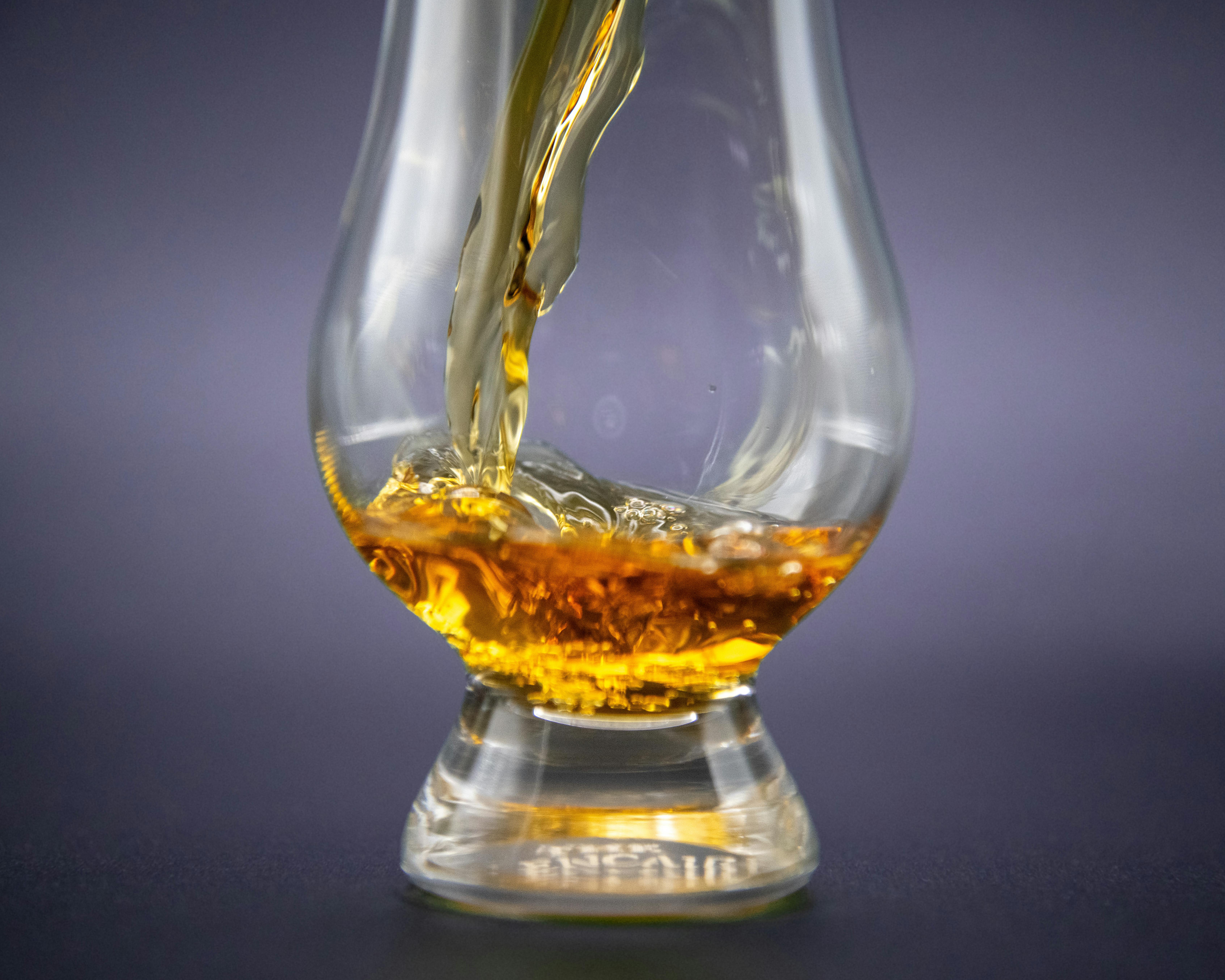
It is common for an evening to start with a Manhattan and continue with the same whiskey, this time enjoyed neat, on the rocks, or at room temperature. This is where a second type of glass comes in: the whiskey glass.
The whiskey glass, to then enjoy the rye on its own
Unlike the cocktail glass, the whiskey glass is short, wide, and stemless — designed to be placed on a coffee table, held in the hand, and to accommodate one or two ice cubes without losing stability. If you enjoyed the rye whiskey used in your Manhattan, this is an opportunity to discover it neat, without vermouth or bitters, in such a glass.
How to properly hold your glass depending on the service
The rule is simple to remember: a cocktail glass is held by the stem to preserve the freshness of the mixture, and a whiskey glass by the body, gently swirling it to release the aromas. These are two gestures, two glasses, two moments of the same evening — and our guide on how to properly taste whiskey details each of these steps.
Manhattan variations to know
Once the classic recipe is mastered, a few variations allow you to explore the same family of stirred cocktails — useful for varying pleasures without changing equipment.
The Perfect Manhattan
Simply replace sweet red vermouth with an equal parts mix of sweet red vermouth and dry (white) vermouth. The result is drier, less sweet, with an extra hint of bitterness — a variation appreciated by those who find the classic Manhattan too generous in vermouth.
Bourbon Manhattan, Rob Roy with Scotch
Replacing rye whiskey with bourbon yields a rounder, slightly vanilla-flavored Manhattan. By changing the base to Scotch whisky, you get a completely different cocktail: the Rob Roy, a direct cousin of the Manhattan, equally stirred and served in the same type of glass.
| Cocktail | Spirit Base | Vermouth | Recommended Glass |
|---|---|---|---|
| Manhattan | Rye Whiskey | Sweet Red | Cocktail Glass |
| Perfect Manhattan | Rye Whiskey | Sweet + Dry, equal parts | Cocktail Glass |
| Rob Roy | Scotch Whisky | Sweet Red | Cocktail Glass |
| Old Fashioned | Bourbon or Rye | None (sugar + bitters) | Whiskey Glass (rocks) |
To delve deeper into the latter, our article on the Old Fashioned and the perfect rocks glass details the recipe and the glass that corresponds to it — a very different service from that of the Manhattan, despite a common whiskey base. For lovers of shorter, more bracing cocktails, our guide to the Negroni complements this exploration of classic stirred drinks.
Hosting with a Manhattan
The Manhattan is particularly well suited for entertaining at home: it can be prepared in advance in small quantities, served one glass at a time, and requires no fresh fruit or last-minute crushed ice. It is also one of the few cocktails that benefits from being prepared ahead of time, as the whiskey-vermouth mixture keeps very well before the ice-stirring step.
- Prepare the whiskey-vermouth-Angostura mixture in a carafe, stored in the refrigerator, and stir over ice just before serving.
- Take your cocktail glasses out in advance so they have time to chill.
- Provide a small dish of maraschino cherries so that everyone can garnish their own glass.
- Always serve the Manhattan before dinner or at the end of the evening, never during the meal — it's an opening or closing cocktail, not a table wine.
- Allow for about one Manhattan per person per hour: it's a strong cocktail, meant to be savored slowly rather than rushed.
FAQ — Frequently Asked Questions about the Manhattan and its glass
Our cocktail glasses for a perfect Manhattan
Expert selection by our team — Gustave Montclair catalog


Exclusive reader offer
10% off the entire catalog
Valid on all our glasses, carafes, and accessories.


