


How to Create a Home Bar: The Absolute Essentials You Need
A space, a few well-chosen bottles, the right tools, and the right glasses: that's all you really need to entertain like a pro, without breaking the bank or making mistakes.
Creating a home bar doesn't require a dedicated room or an excessive budget. You just need to methodically gather a handful of elements that truly make a difference: a well-thought-out corner, a few versatile bottles, the tools that allow for precise measurements, and glasses adapted to what you're serving. The rest — boxes, collector's items, decorative objects — comes later, at your own pace.
This guide outlines, in order, everything you really need to get started without making mistakes: space, spirits, tools, glasses, presentation, and finally a budget guide depending on whether you're just starting out, entertaining regularly, or aiming for an impressive collection.
Space and furniture: where to set up your bar
A home bar doesn't need an entire room. A corner of a sideboard, a rolling cart, a low shelf in the living room, or a kitchen corner are perfectly sufficient, provided the space remains clear and visible — a bar hidden in a cupboard loses all its convivial appeal.
Three criteria are more important than the size of the space:
- A stable surface for preparing cocktails without fear of spilling a glass.
- Direct access from the living room or terrace, so as not to interrupt conversation with each service.
- Eye-level storage for bottles and glasses — the idea is also to be inviting, like a small display case.
A bar cart, serving trolley, or a simple open shelf perfectly fulfills this role. The key is to keep the visible objects — decanters, glasses, bottle holders — visually consistent with each other, as they create the first impression of your bar even before the first sip is served.

Essential spirits to always have on hand
There's no need to build an entire cellar on day one. A carefully selected range of versatile spirits already allows you to create most classic cocktails and satisfy most guests.
The indispensable base
Five families are enough to cover most desires:
- A quality gin, for refreshing classics (gin and tonic, Negroni).
- A neutral vodka, a versatile base for many cocktails.
- An amber rum, for richer, warmer recipes.
- A whisky, to be enjoyed neat or in an Old Fashioned or Manhattan.
- A red vermouth and a dry vermouth, essential for balancing many recipes.
Complements that make a difference
Beyond this base, a few secondary bottles can expand your repertoire without multiplying expenses: an orange liqueur like triple sec, an aromatic bitter to balance old-fashioned cocktails, and a quality tonic or soda for lengthening drinks.
The choice of bottles matters, but it's not enough to make a good bar: it's the combination with the right tools and the right glasses that transforms a shelf of spirits into a true entertaining space.
Indispensable tools: shaker, jigger, and more
A cocktail shaker remains the fundamental tool for any home bar. It allows you to mix, chill, and aerate a recipe in seconds — a simple action that radically changes the taste compared to a stirred mix.
Beyond the shaker, a few accessories complete the basic equipment:
- A jigger to respect recipe proportions, rather than estimating "by eye."
- A long bar spoon, for cocktails prepared without a shaker (like a Negroni).
- A strainer to filter ice and fruit when serving.
- A citrus press and a dedicated cutting board, for fresh juices and zests.
Rather than buying each piece separately, a cocktail kit generally brings together the shaker, jigger, and spoon in a single coherent set — a simple way to start without extensive searching or style incompatibilities. Our article on how to choose your mixology kit well details the criteria to consider before investing.

Essential glasses for a home bar
The right spirit served in the wrong glass loses some of its appeal: the shape of the glass directly influences how aromas concentrate, how the drink feels in hand, and how it presents itself on the table. A well-equipped bar covers at least four families of glasses.
The whisky glass, for neat tasting
A good whisky glass is recognized by its thick base and wide bowl, which allow the liquid to be gently swirled to reveal its aromas. It is the glass for leisurely tasting, for neat whisky as well as an Old Fashioned served on ice. Our guide on the Old Fashioned and the perfect rocks glass details the benchmarks for choosing yours.
The cocktail glass, for creativity
Unlike the whisky glass, the cocktail glass comes in many shapes depending on the recipe: flared coupe for a Martini, tall glass for a Mojito, wide tumbler for a Negroni. Having two or three different shapes in your bar will already cover most classics.
Champagne and wine glasses, to complete the service
A home bar worthy of the name is not limited to spirits. A few champagne flutes or coupes, as well as a set of wine glasses, allow you to entertain without having to pull out a different set depending on what your guests are drinking.
In summary, here are the families of glasses to prioritize:
| Glass type | Main use | Purchase priority |
|---|---|---|
| Whisky glass | Neat tasting, Old Fashioned | Essential |
| Cocktail glass | Negroni, Martini, Mojito | Essential |
| Wine glass | Red and white wine service | Recommended |
| Champagne glass | Aperitif, festive occasions | Recommended |
Presentation: decanters and storage as decorative elements
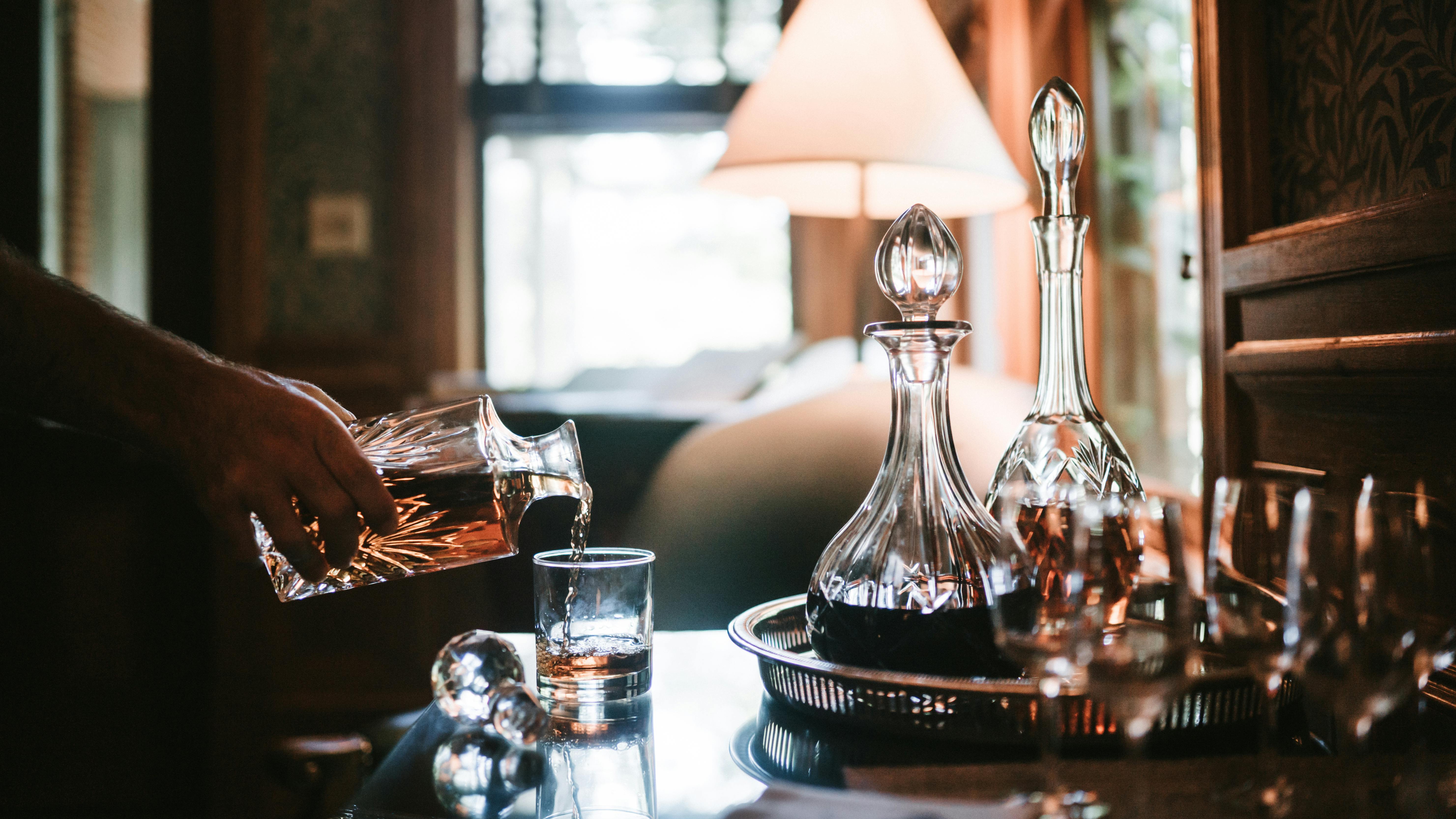
Once the basics are in place, presentation transforms a simple bar corner into a true entertaining space. This is where the whisky decanter comes into its own: beyond its serving function, it becomes a decorative object in its own right, prominently displayed on the shelf or cart.
The whisky decanter, the centerpiece
Transferring your whisky to a crystal whisky decanter immediately changes the perception of your bar: the material catches the light, the silhouette becomes an object in itself, and the act of serving gains in elegance. Our buying guide on the crystal whisky decanter covers the criteria to look for before choosing yours.
The bottle holder, to enhance the collection
If your bar also hosts wine bottles, a designer bottle holder provides the same touch of presentation as the decanter for spirits. Our comparison wood vs. metal bottle holders helps choose the style that suits your interior.
What budget for your home bar: starter, premium, or expert?
The budget for a home bar varies greatly depending on the level of equipment desired. Here are three tiers to help you assess and progress step-by-step rather than buying everything at once.
The starter tier: the essentials to begin
A complete cocktail kit, a set of whisky glasses, and a few cocktail glasses are enough to prepare classics and entertain with confidence. This is the basic setup that covers most needs for a beginner enthusiast.
The premium tier: the bar that entertains regularly
At this level, you add a whisky decanter for presentation, a second set of cocktail glasses to vary shapes according to recipes, and a bottle holder to visually structure the space. This is the ideal tier for those who regularly host friends.
The expert tier: the impressive collection
For the most invested enthusiasts, the approach is closer to collecting: several whisky decanters with different silhouettes, matching glasses in a complete series, and display pieces chosen for their character as much as for their use. This is a project built over time, purchase by purchase.
Regardless of the desired tier, the recommended purchase order remains the same: first tools (shaker, jigger), then essential glasses, then display pieces. This progression ensures a coherent bar, useful from day one and continuously enriched over time.
FAQ — Frequently Asked Questions about Essential Home Bars
Create your home bar
Expert selection by our team — Gustave Montclair catalog


Exclusive reader offer
10% off the entire catalog
Valid on all our glasses, decanters, and accessories.


