

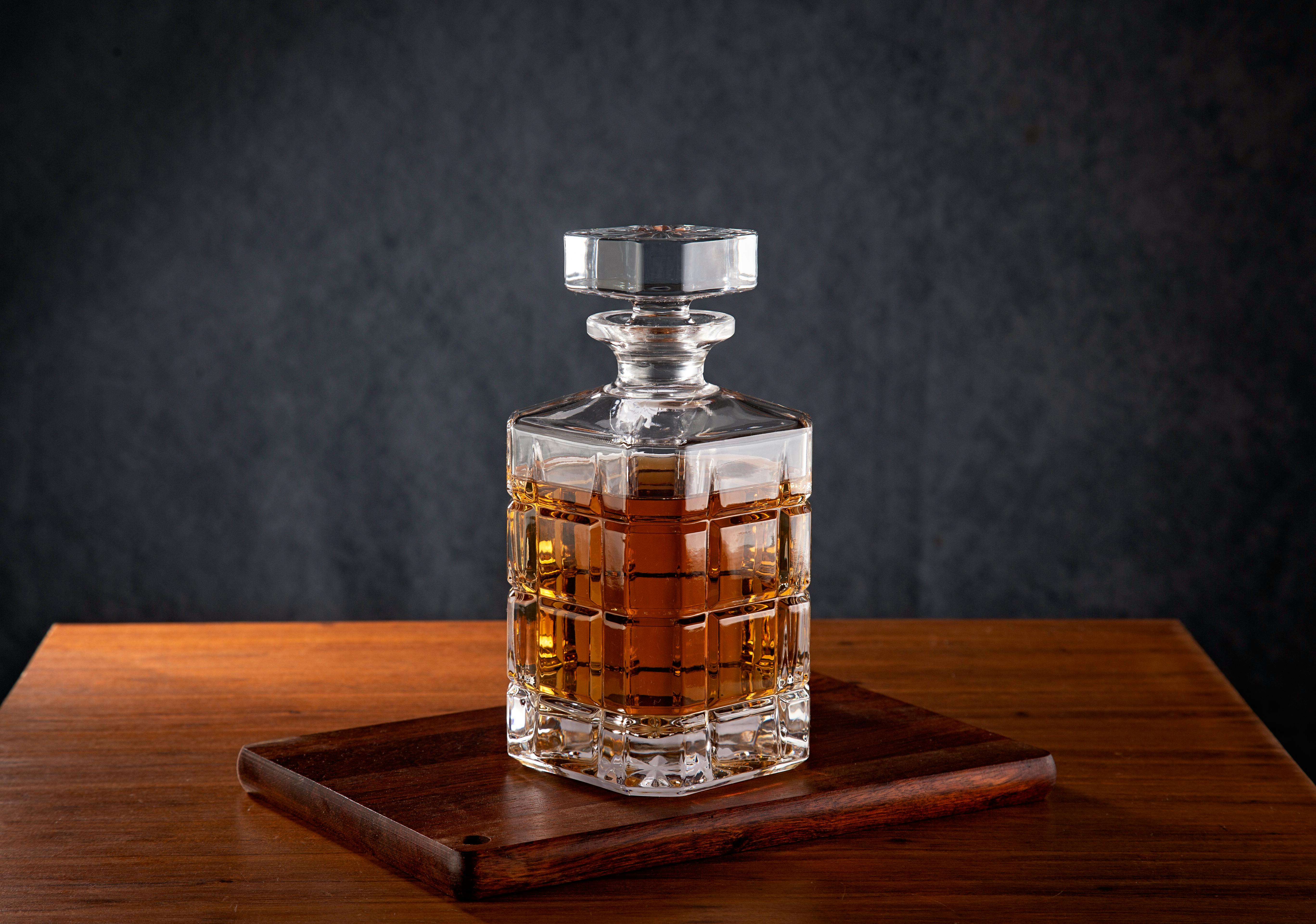
Crystal Whiskey Decanter: The Complete Buyer's Guide 2026
Crystal clarity, stopper sound, base stability: everything you need to check before choosing yours.
Why choose crystal for a whiskey decanter
A whiskey decanter is not just a simple container: it is the object that accompanies the ritual, from the first clink of the stopper to the poured glass. Crystal changes everything, compared to ordinary glass, on three very concrete levels.
First, clarity. Crystal contains lead oxide or, in more recent pieces, barium or zinc oxides that replace lead while maintaining the desired brilliance. This composition increases the refractive index: light passes through the material and breaks down, which gives the amber of whiskey reflections that simple glass never achieves.
Second, sound. Place a bent finger against the rim of a true crystal piece: it sings, a clear and prolonged sound. Standard glass produces a dull, echoing sound. This detail, often overlooked, is precisely what distinguishes a decanter designed for tasting from a simple decorative container.
Finally, prestige, less measurable but equally real. Giving or receiving a crystal decanter is to acknowledge that whiskey deserves the same care traditionally given to wine. On a tray or side table, it becomes the first piece that catches the eye.
Crystal has long been associated with major French houses, which have shaped the taste for hand-cut pieces intended for noble spirits. This tradition explains why a crystal decanter continues to evoke, almost instinctively, refinement and attention to detail—even when it now adorns a decidedly contemporary interior.
On a practical level, crystal also has an often-forgotten advantage: its aromatic neutrality. Once properly cleaned, it retains neither odor nor residual taste, unlike some porous materials which, in the long run, can transmit their own notes to stored whiskey.
Whiskey decanter shapes and what they say about you
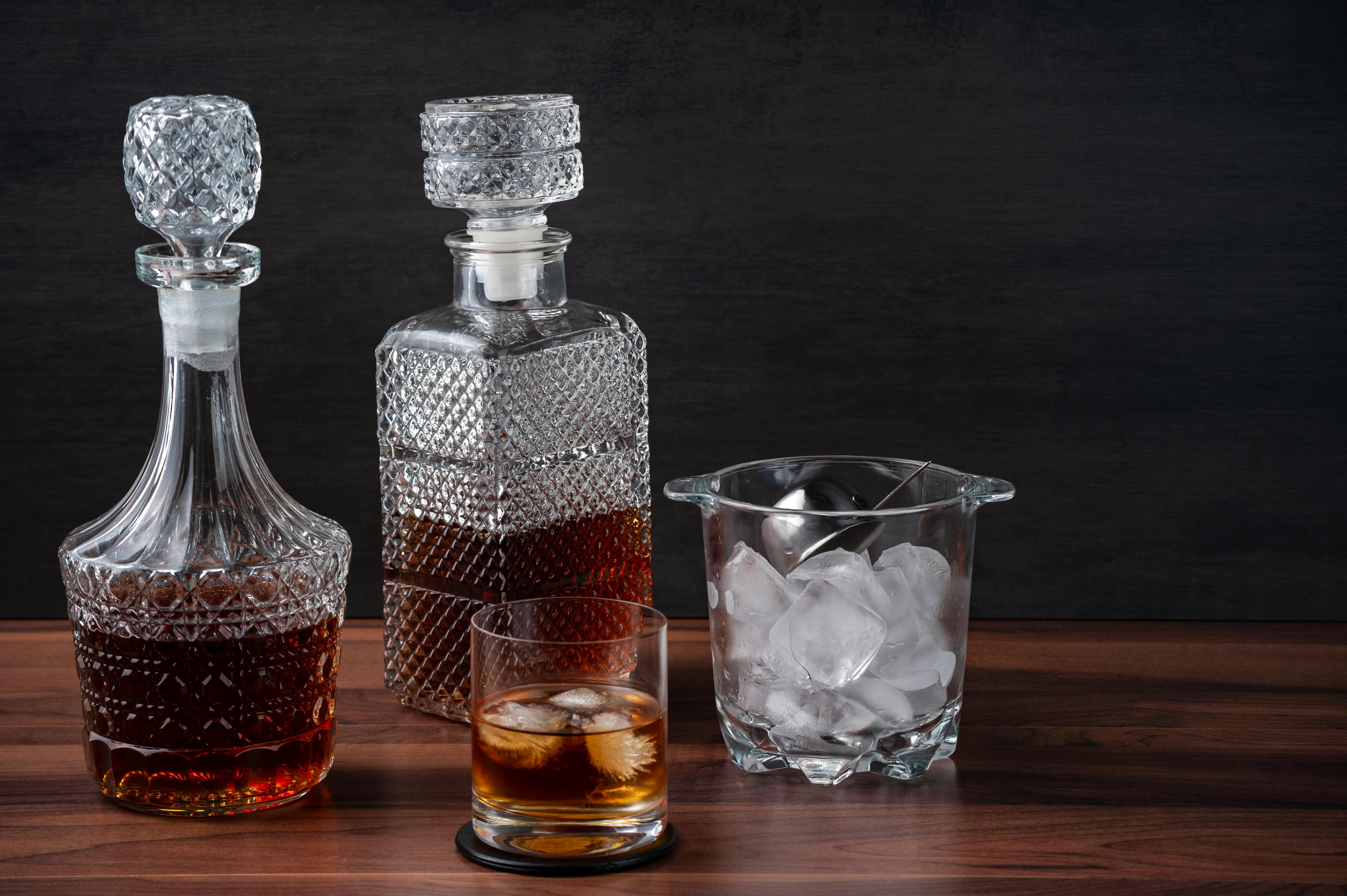
Three families of shapes dominate the whiskey decanter market. Each tells a different story on the table and in the hand.
Even before the material, it is often the silhouette that determines a love at first sight for a decanter: it defines where the piece will find its place, how it is handled when serving, and the image it projects on a set table. Understanding these three families helps guide the choice before focusing on the finishes.
The spherical decanter
Round, often placed on a base or a stabilizing ring, the spherical decanter showcases the liquid like a piece of goldsmithery. It captures light across its entire surface and is particularly suitable for both decorative and functional use, on an open bar or a visible shelf.
The angular and cut decanter
Clean facets, sharp edges: this family of shapes plays on light refraction and recalls the traditional cutting of major French crystal houses. It is the most sonorous choice in use, the one that "sings" most distinctly to the touch.
The classic decanter
Broad shoulders, narrowed neck, wide stopper: this historic shape remains the benchmark for a gift or a piece intended to last. It blends with any interior style, from the most contemporary to the most classic.
The choice of shape primarily depends on the intended use: a decanter meant to remain prominently displayed on a bar will benefit from being spherical or cut, while a piece stored in a cabinet between servings will favor the stability of a classic wide-based shape.
| Shape | Best use | Footprint |
|---|---|---|
| Spherical | Open bar, visible decorative piece | Medium, often requires a base |
| Angular / cut | Lovers of sound and play of light | Compact, wide and stable base |
| Classic (decanter) | Gift, cabinet storage | Small, very stable broad-shouldered shape |
Criteria for a quality whiskey decanter
Beyond aesthetics, a crystal whiskey decanter is judged on specific criteria. Here are those to systematically check before purchasing.
- Crystal thickness: a thin and regular wall guarantees optical clarity and avoids the "block" effect of some low-end pieces.
- Airtight stopper: the grinding between the stopper and the neck must be perfect to limit evaporation and oxidation of the whiskey over time.
- Base stability: a wide base and low center of gravity prevent any risk of tipping, particularly important for spherical shapes.
- Edge finish: the pouring spout must be clean, without sharp edges, for smooth and drip-free serving.
- Capacity: most whiskey decanters are between 700 ml and 1 liter, a size that corresponds to a standard bottle decanted in one go.
These criteria are not mutually exclusive: a beautiful decanter always combines all of them, without compromising one for the sake of another. It is often the thickness of the crystal that most quickly betrays a low-end piece: too thin, it appears fragile; too thick, it unnecessarily heavy to serve and obscures the desired clarity.
The stopper deserves special attention, as it is the most used part over time. Imprecise grinding allows air to pass through, which accelerates evaporation and, ultimately, slightly alters the concentration of whiskey stored for several months in the decanter.
Our selection of crystal whiskey decanters
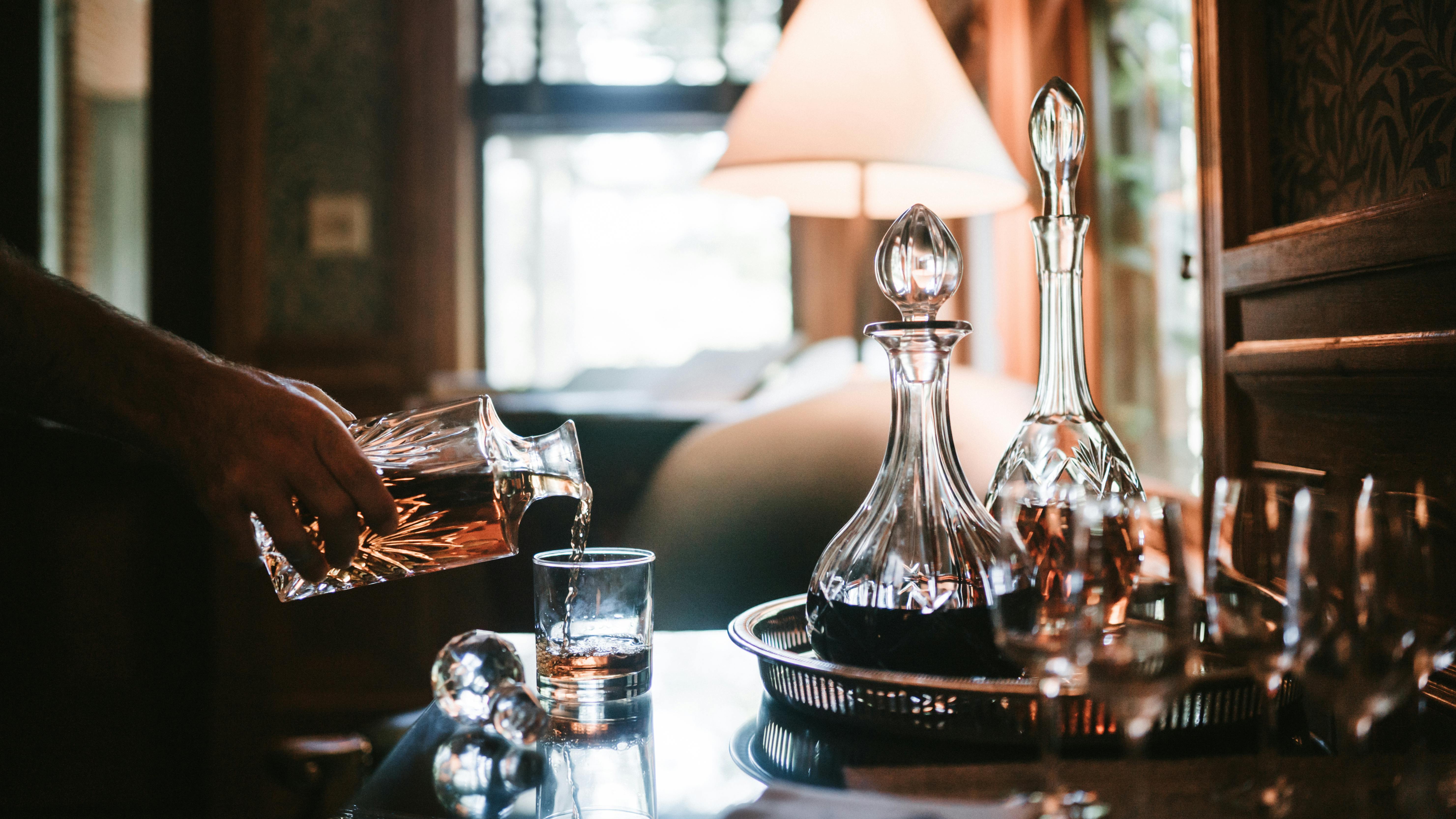
At Gustave Montclair, every decanter in the Whiskey Decanters collection meets these criteria: fine crystal, ground stopper, stable base. The Flora whiskey decanter features botanical curves for a resolutely decorative piece, while the Trench whiskey decanter boasts a more architectural line with sharp edges. Find the entire selection right after the FAQ.
Crystal or glass: what to really choose
The question always comes up when buying: is it really worth investing in crystal, or is a glass decanter sufficient? The answer depends on the intended use.
A basic glass decanter remains transparent and functional, but it doesn't interact with light in the same way: reflections remain flat, without the depth that crystal cutting provides. It is, however, lighter and generally less expensive, which can be suitable for everyday use without pretension.
Crystal, on the other hand, is for those who consider serving whiskey a moment in itself: receptions, gifts, collector's items. Its weight in hand, its sonority, and its play of light make it an object chosen as much for its appearance as for its use.
Over time, the difference is also felt in use. Low-end glass scratches more easily and loses its luster with repeated washing, while well-maintained crystal retains its transparency for years. This is an argument to keep in mind for a piece intended for daily use rather than regular replacement.
Budget also plays a role: a basic glass decanter remains affordable, while a crystal piece is more of a reasoned investment, comparable to buying fine stemware or a complete dinner service. The price difference is justified by the material, manufacturing precision, and longevity of the object.
To delve deeper into this comparison, our article Crystal Decanter vs. Glass Decanter: Which to Choose? details the differences material by material, beyond just whiskey use.
Using and maintaining your whiskey decanter
A well-chosen crystal deserves proper care to maintain its clarity and sonority over time. Contrary to popular belief, this maintenance is simple: it primarily requires regularity, not expensive specialized products.
Most flaws observed in old decanters—whitish film, sediment at the bottom, sticky stopper—result from incomplete drying or prolonged contact with tap water rather than a manufacturing defect. A few simple actions, repeated with each use, are enough to prevent them long-term.
- Rinse the decanter with lukewarm water immediately after use, without aggressive detergents that could dull the crystal's brilliance.
- Dry it upside down on a drying rack, then finish with a microfiber cloth to avoid limescale marks.
- Avoid the dishwasher: heat and abrasive products eventually weaken the stopper's grinding.
- If you store whiskey in a decanter for several weeks, keep it away from direct light to preserve its color and aromas.
Well-maintained, a crystal whiskey decanter lasts for decades without losing its brilliance or sonority—which is also what makes it a lasting gift.
A gift idea that spans generations
Few tableware items combine daily use and the symbolic value of a gift so well. A crystal whiskey decanter suits many occasions: birthdays, Father's Day, housewarmings, retirements, or a simple gesture to mark a professional achievement.
Unlike a purely decorative object, it continues to be used long after it's given: each evening's service brings it back into play, and that's precisely what makes it a gift that doesn't collect dust. A bottle of whiskey naturally pairs with a decanter, transforming a consumable gift into a lasting object.
For an occasion that calls for a more complete present, the Whiskey Sets collection combines a decanter and matching glasses in one box—an option to consider when the recipient doesn't yet own the full set.
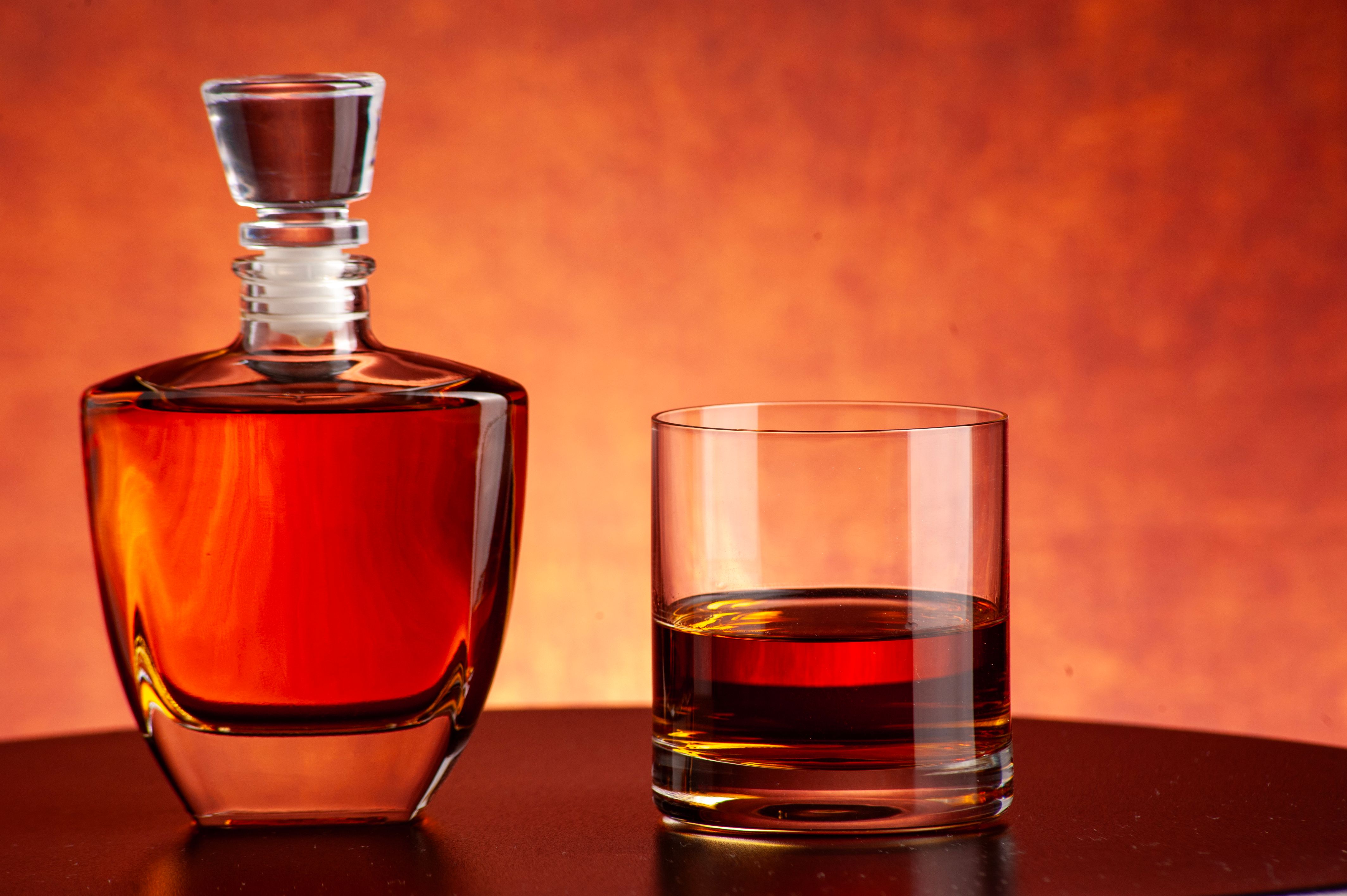
- For a connoisseur: choose an angular or cut shape, which enhances their collection of rare whiskies.
- For a first decanter: the classic shape remains a safe bet, compatible with all interiors.
- For a display piece: the spherical shape immediately draws the eye on a bar or open shelf.
FAQ — Frequently Asked Questions about the crystal whiskey decanter
Our selection of crystal whiskey decanters
Expertly selected by our team — Gustave Montclair catalog


Exclusive reader offer
−10% off the entire catalog
Valid on all our glasses, decanters, and accessories.


