

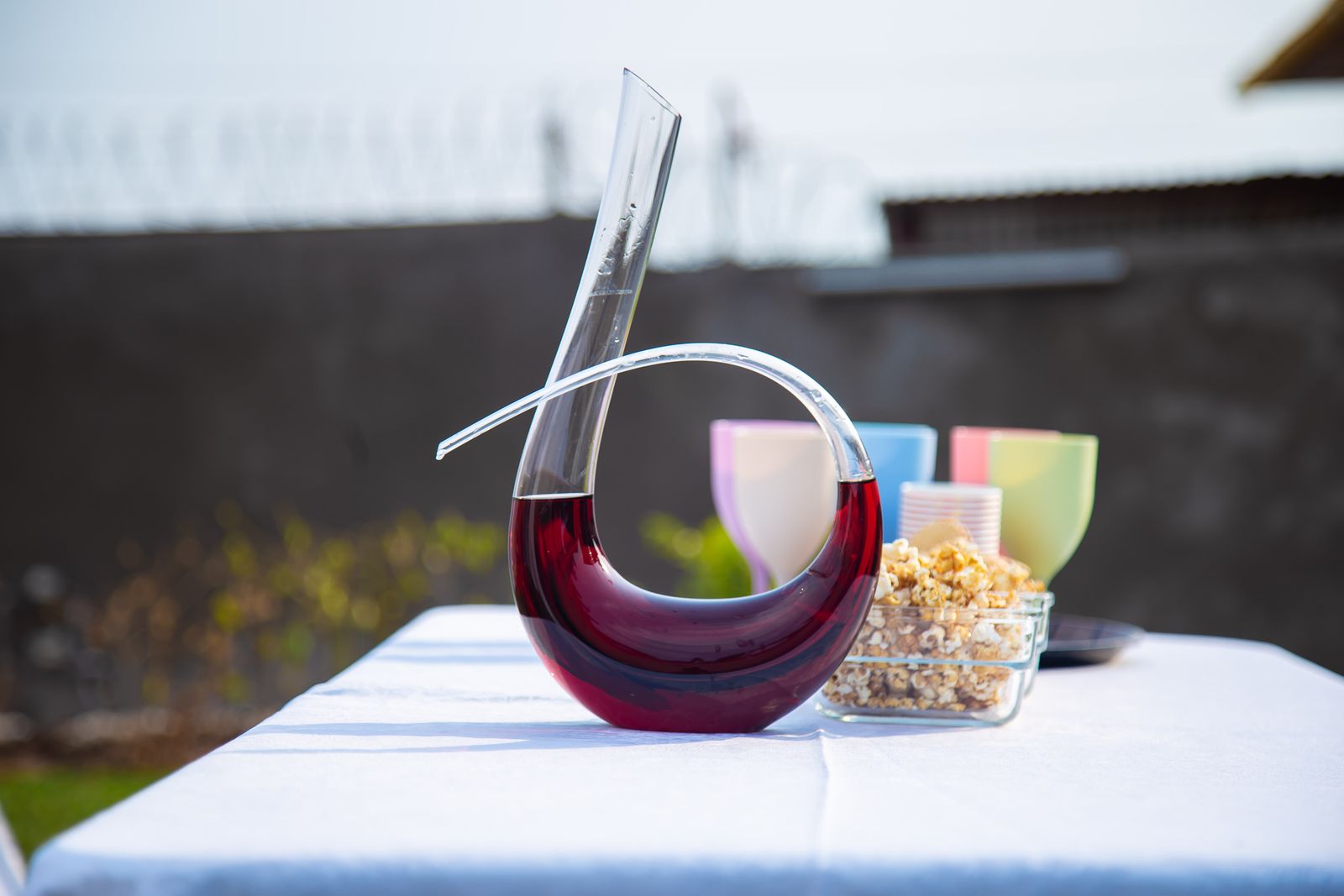
Rotating Wine Decanter: What Is It Really For and How to Choose Yours?
A rotating base, wine that breathes in minutes, and a little staging effect at the table — here's what's truly behind the object.
It always catches the eye first, even before the bottle: a decanter tilted on its base, which begins to spin gently as soon as you touch it. The rotating wine decanter has that little spectacular side that intrigues guests — but it's more than just a decorative object.
Behind the gesture, there's a real aeration principle, designed to accelerate what a classic decanter naturally does by letting it rest. This guide explains how it works, how it differs from traditional decanting, for which wines it truly makes a difference, and how to choose yours.
While the term is still little known, the rotating wine decanter is gaining ground among wine lovers who often entertain: less waiting time, more effect at the table. We'll show you why, without overselling the object or minimizing its interest.
What is a rotating wine decanter?
A rotating wine decanter is distinguished by its base: instead of a fixed, stable foot like a classic decanter, it rests on a single support point, often slightly off-center, which allows it to pivot on itself once placed on the table.
The principle of the pivoting base
The glass body is blown asymmetrically: its center of gravity is not in the middle, which makes it tilt slightly on its base and initiate a slow rotational movement as soon as it is given a small impulse. The wine inside then starts to roll against the walls instead of remaining still.
It is this particular shape, often asymmetrical or spiral, that gives the rotating decanter its visual identity — much more recognizable than a traditional decanter with a classic curve.
Continuous movement, not just a simple decanting
With a classic decanter, aeration primarily occurs when pouring the wine from the bottle: the liquid comes into contact with the air during the fall, then remains relatively static once in the decanter. With a rotating decanter, the movement continues after serving, as long as the decanter keeps spinning on its base.
The wine constantly changes position inside the container, which multiplies the contact surfaces with the air over minutes. It is this prolonged movement, not an electronic mechanism or a complex moving part, that explains the essence of its effect.
Rotating decanter vs. classic decanting: what are the concrete differences?
Both objects pursue the same goal — allowing the wine to breathe — but they achieve it differently and in different times.
The classic decanter, a matter of resting time
A traditional decanter relies entirely on time: you pour the wine into it, let it rest, and oxygenation occurs slowly, by simple contact between the liquid surface and ambient air. For a wine that truly needs it, this waiting can take tens of minutes, sometimes more depending on the wine.
It's a hands-off process once the decanter is filled, but it requires anticipation — not ideal when entertaining spontaneously or wanting to serve quickly.
The rotating decanter, continuous and controlled aeration
The rotating decanter uses a different approach: rather than waiting, it continuously multiplies the wine's movement against the air, even while the decanter remains on the table between servings. This means the wine breathes faster, without needing to rest as long as with a classic wine decanter.
The table below summarizes the most useful differences to know before choosing between the two approaches.
| Criterion | Classic Decanter | Rotating Decanter |
|---|---|---|
| Aeration Principle | Resting time, static contact with air | Continuous movement of wine on the base |
| Required action | Pour then wait | Pour, then give regular impulses |
| Table effect | Discreet | Visual, noticed by guests |
| Ideal for | Wines requiring long aeration | Young and tannic wines, quick service |
| Maintenance | Simple, generally classic shape | Careful with the base and asymmetrical shapes |
Neither is strictly "better": the rotating decanter primarily wins on speed and visual appeal, while the classic decanter remains unbeatable for its ease of use with wines that inherently require long rest.
Why it's so appealing: aeration and presentation
Two reasons explain the growing success of the rotating decanter among wine enthusiasts who regularly entertain: it saves time, and it transforms serving into a special moment.
Faster and more homogeneous oxygenation
By multiplying the movements of the wine against the walls and the air, the rotating decanter distributes aeration more homogeneously throughout the volume, rather than concentrating it only on the surface as in a classic decanter left still. This is particularly useful when you haven't anticipated serving an hour in advance.
A convivial object, designed to be seen
Placing a rotating decanter in the center of the table also creates a small ritual: you spin it in front of guests, explain the principle, and the object becomes a conversation starter. This is exactly the spirit sought for a dinner where you like the table to tell a story, without overdoing it.

Which wines to really use it for
The rotating decanter's usefulness varies depending on the wine being served. It truly makes a difference for some profiles, and much less for others.
Young and tannic wines, its best allies
This is where the rotating decanter truly shines. A young red wine, still marked by firm tannins, greatly benefits from rapid aeration: contact with air softens the texture on the palate and releases aromas that would otherwise remain subdued. This particularly applies to:
- Aged reds opened too early, before their ideal drinking window.
- Naturally tannic grape varieties, still closed in their youth.
- Young award-winning wines, served at a dinner with no possible waiting time.
When to skip it
Conversely, a light white wine, a rosé, or a red that is already supple and evolved generally do not need extensive aeration — serving them directly, or in a simple decanter for the duration of the meal, is largely sufficient. Spinning a fragile or already mature wine can even cause it to lose finesse rather than gain anything.
The rule is simple to remember: the younger and more tannic a wine, the more a rotating decanter has a role to play. The more delicate or already open with age it is, the less accelerated aeration is necessary.
How to choose your rotating wine decanter
Beyond the principle, several concrete criteria differentiate a decanter that is pleasant for daily use from a piece that stays in the cupboard.
The base: stability first and foremost
This is the most important point. The base must offer a sufficiently wide support and thick enough glass at that point for the decanter to remain stable even in motion, without risk of tipping over completely. A well-designed rotating decanter spins, but never falls.
Volume and neck shape
A volume of around 750 ml to 1 liter suits most services, with enough space for the wine to roll without overflowing at the slightest movement. The neck, meanwhile, must remain wide enough to facilitate both serving and cleaning — a detail that matters greatly in use.
Design: a piece that stays on the table
A rotating decanter is seen, placed at the center of the table, and often remains in plain sight throughout the meal: so design matters as much as function. At Gustave Montclair, the Aurora rotating decanter relies on a sleek and translucent silhouette, while the Orphée II adopts a more sculptural curve, designed to catch the light at the table.
For a more formal table, the Silver Edition opts for silver finishes, in the same spirit as the Gold Edition for gold. The Majesté and Solstice models complete the range to vary atmospheres depending on the occasion.

Using and maintaining your decanter daily
The object remains simple to live with, provided you adopt a few habits from the first uses.
How to decant with a rotating decanter
- Pour the wine slowly along the side, never all at once, to avoid splashes related to the base's movement.
- Fill approximately two-thirds of the volume, to leave enough space for the wine to roll freely.
- Give a gentle impulse on the widest edge, then let the decanter spin on its own for a few minutes.
- Taste regularly: depending on the wine, a few minutes of rotation are often enough to achieve the desired result.
- Serve directly from the decanter once aeration is deemed sufficient.
Cleaning and drying
Rinse the decanter with clear, lukewarm rather than hot water, immediately after use — dried wine residue is always harder to remove than fresh residue. For the interior, a little raw rice or cleaning beads combined with soapy water, gently agitated, can reach the bottom without forcing the glass. Avoid the dishwasher, whose heat and movements can weaken the asymmetrical base over time.
For drying, turn the decanter upside down on a drying rack, tilting it slightly so that water does not pool at the bottom, then finish with a lint-free microfiber cloth to avoid streaks on the glass, which are particularly visible once the decanter is placed back on the table.
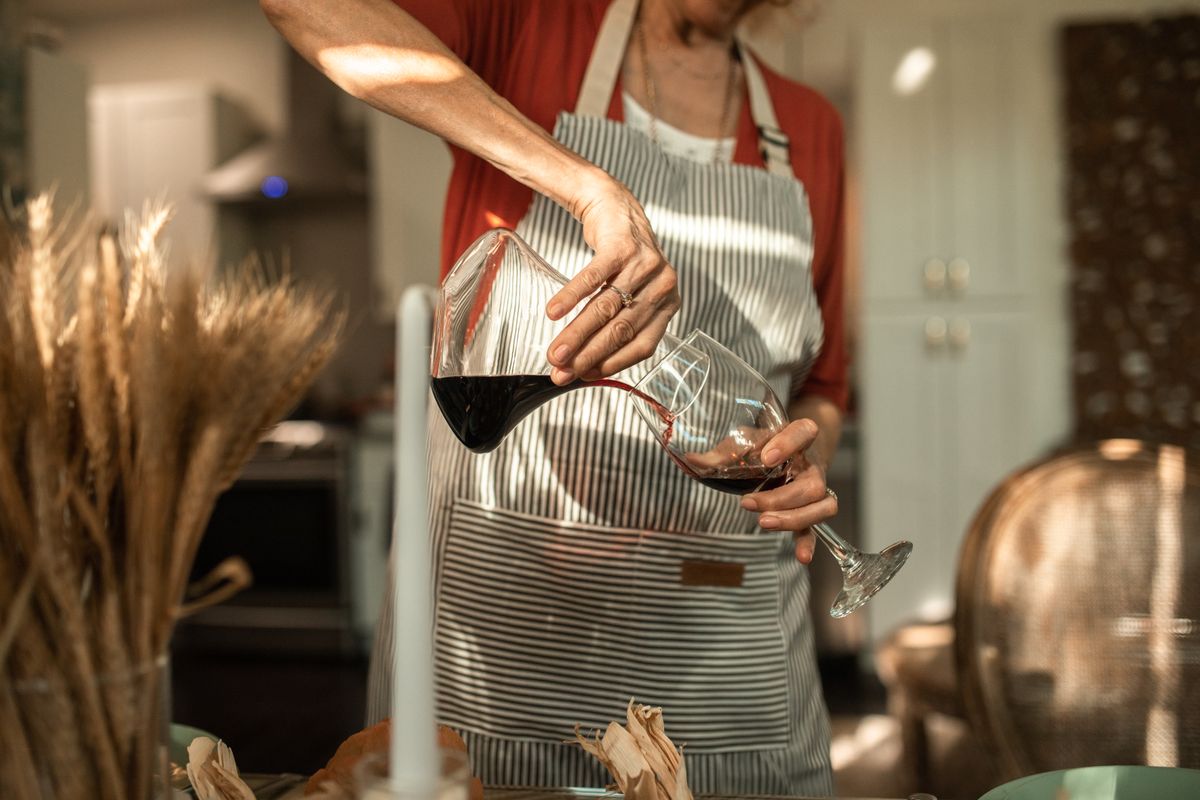
If you're new to the subject of decanting, our article why decant wine: decantation vs. aeration lays the useful groundwork before delving into the specific case of the rotating decanter. And to choose between glass and crystal across all our wine decanters, our comparison crystal decanter vs. glass decanter perfectly complements this guide.
FAQ — Frequently Asked Questions about the rotating wine decanter
Our Rotating Wine Decanters
Expertly selected by our team — Gustave Montclair catalog


Exclusive reader offer
10% off the entire catalog
Valid on all our glasses, decanters, and accessories.


