


Crystal or Glass Wine Decanter: A Complete Guide to Choosing the Right Model
Lead-free crystal or blown glass: our experts decipher the real differences to help you choose the decanter that suits you.
You've just invested in a beautiful bottle of red wine — a structured Bordeaux, a powerful Côte-Rôtie, a characterful Barolo. You've decided to decant it. And then the question arises: which wine decanter to choose? Crystal or ordinary glass? The distinction is not purely aesthetic. It concerns the composition of the material, its optical and thermal properties, and the overall sensory experience it generates during tasting.
This guide gives you the keys to definitively answer this question — taking into account your actual use, your budget, and the importance you place on the aesthetics of the service. Whether you are looking for a wine decanter for daily red wine decanting or an exceptional model for special occasions, you will find a suitable answer here.
Crystal vs. Glass: The Real Differences in Composition
We commonly use the terms "crystal" and "glass" as if they designated two distinct worlds. In reality, the line is more nuanced, and understanding the composition of these materials allows for a better appreciation of their concrete differences.
Ordinary Glass: Silica, Soda, and Lime
So-called "ordinary glass" (or soda-lime glass) is composed mainly of silica (sand), soda, and lime. It is the most widely used material in the industrial manufacturing of decanters, glasses, and food containers. It is relatively light, resistant to moderate thermal shocks, and easy to mass-produce. Its transparency is satisfactory, but its brilliance remains inferior to that of crystal — notably because it has a lower refractive index.
Traditional Lead Crystal: Exceptional Brilliance, Usage Precautions
Traditional crystal contains lead oxide, which gives it its characteristic density, crystalline sound, and incomparable brilliance. European legislation has progressively regulated the use of lead in food containers, and this type of crystal is tending to disappear in favor of lead-free formulas.
Lead-Free Crystal: The Best of Both Worlds
Today, the vast majority of high-end decanters and glasses presented as "crystal" are made of lead-free crystal, also called barium-zinc crystal. In this formula, lead oxide is replaced by barium or zinc oxide, which have optical properties very similar to traditional crystal — brilliance, clarity, high refractive index — without the health risks associated with lead.

Crystal Wine Decanter: What it Really Brings to Tasting
Visual Clarity that Enhances the Wine's Hue
The primary quality of high-quality crystal is its almost total transparency and natural brilliance. When you pour a great Bordeaux into a crystal decanter, the ruby hue of the wine takes on a depth and sparkle that is incomparable to what you get in an ordinary container. This dimension also makes a crystal decanter particularly attractive as a gift idea for an oenophile.
Wall Thinness that Changes the Mouthfeel
A wall thickness of less than a millimeter at the pouring spout imperceptibly but truly alters the sensation of the wine as it touches the lips. The wine flows more smoothly, the contact is more delicate, and the overall experience is refined.
Decanting as a Show
Decanting wine is also a gesture performed in front of guests. A crystal decanter is as much a display object as it is an oenological tool. To better understand when and how to decant, our article on why decant wine will give you all the answers.
An Asset for Whisky Decanters as Well
The crystal vs. glass question is not only about wine. For a crystal whisky decanter, the same arguments apply: the brilliance of the crystal enhances the amber hue of the spirit. Our whisky decanter collection offers models in both materials to suit all uses.
Glass Decanter: Why it's Often the Best Choice
Decantation Remains Fully Effective
The oxygenation of wine in a decanter is a phenomenon that depends on the contact surface between the wine and the air, and thus on the shape of the decanter — not its material. A blown glass wine decanter with a wide base offers exactly the same aeration performance as a crystal decanter of identical shape.
Robustness and Dishwasher Compatibility
Good quality soda-lime glass is more resistant to shocks, thermal variations, and dishwasher cycles than fine crystal. If you use your decanter several times a week, a glass decanter is clearly more suitable. For everything concerning the maintenance of your decanters, our guide on how to clean a wine decanter details the best methods depending on the material.
Unbeatable Value for Money
A quality blown glass decanter generally costs between €20 and €60. Our selection of glass wine decanters offers models starting from €20 that will impress as much on the table as in the glass.
Comparative Table and Choice Guide Based on Your Use
| Criterion | Lead-Free Crystal | Ordinary Blown Glass |
|---|---|---|
| Brilliance / Clarity | Exceptional — high refractive index | Good — slightly less luminous |
| Wall Thinness | < 1 mm possible | 2 to 4 mm generally |
| Decanting Performance | Identical — depends on shape | Identical — depends on shape |
| Shock Resistance | Fragile — careful handling | Robust — intensive use possible ★ Daily |
| Maintenance | Hand wash only — dishwasher not recommended | Often dishwasher compatible |
| Price | €60 to €300+ | €20 to €80 |
| Ideal for | Special occasions, gifts, collectors | Regular use, families, controlled budget |
Which profile suits a crystal decanter?
You are a passionate oenophile, you regularly open great bottles, and the presentation of the service is part of your pleasure. You host dinners for occasions that deserve every detail to be perfect. Or you are looking for a memorable gift for a demanding wine lover. In all these cases, a crystal decanter is the natural choice.
Which profile suits a glass decanter?
You love wine, you regularly decant your reds during the week, and you prefer not to stress with every manipulation. You have children, or you host in a relaxed atmosphere. A beautiful quality blown glass will provide exactly what you need. To help you maximize this investment, our guide to choosing your wine glasses usefully complements this article.
The Rotary Decanter: A Third Angle to Consider
Beyond the crystal vs. glass question, there is a third dimension often overlooked in choosing a decanter: the wine's kinetics. Rotary base models allow the wine to be swirled in a simple motion, accelerating oxygenation. Our guide to the best decanter reviews the highest performing models in our catalog.
Maintenance: How to Preserve Brilliance and Longevity
Golden Rules for a Crystal Decanter
Crystal is sensitive to detergents, thermal shocks, and microscopic scratches. Always hand wash with lukewarm water and little to no dish soap. Rinse thoroughly with clear water, then dry immediately with a lint-free microfiber cloth, using gentle circular motions without ever pressing on the thin walls. Never use a dishwasher for a crystal decanter.
For stubborn red wine deposits, fill the decanter with lukewarm water and a handful of coarse salt, and gently swirl to create a mild abrasive effect.
Rules for a Glass Decanter
Ordinary glass tolerates detergents and temperature variations much better. You can usually put it in the dishwasher, although hand washing is still preferable. Store your decanter upright, stopper removed, in a dry and ventilated place. Our complete article on the care and cleaning of a wine decanter guides you step-by-step for both materials.
The Decanter as a Set: Glasses, Accessories, and Service Cohesion
A decanter does not live alone on the table. If you want complete cohesion, prioritize investing in a crystal decanter (the central piece of wine service), and compensate with quality glass wine glasses. Our selection of sommelier sets offers coordinated sets including decanter, glasses, and accessories.
FAQ — Frequently Asked Questions about Crystal and Glass Decanters
Our Selection of Wine Decanters
Expertly selected by our team — Gustave Montclair catalog
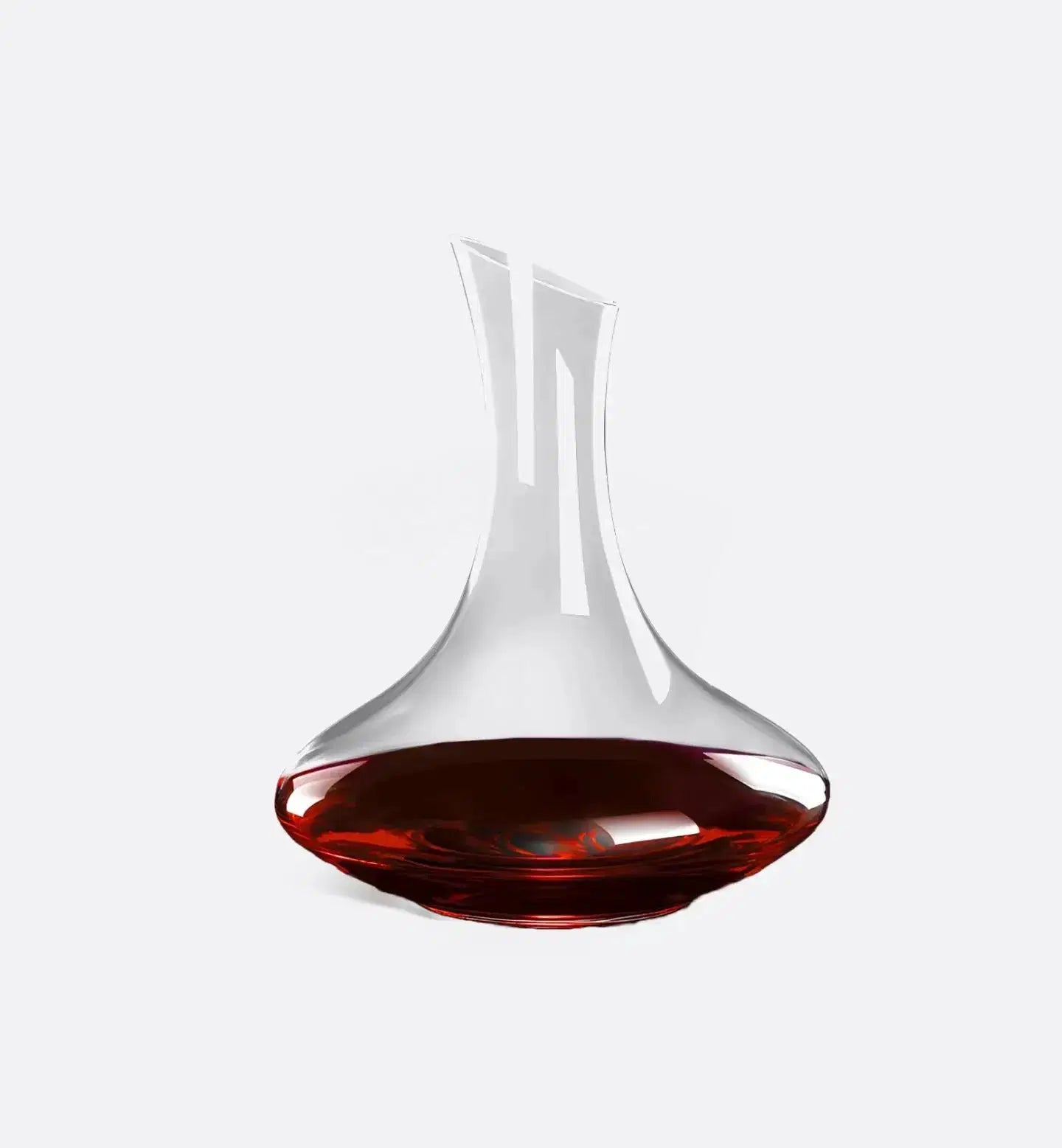
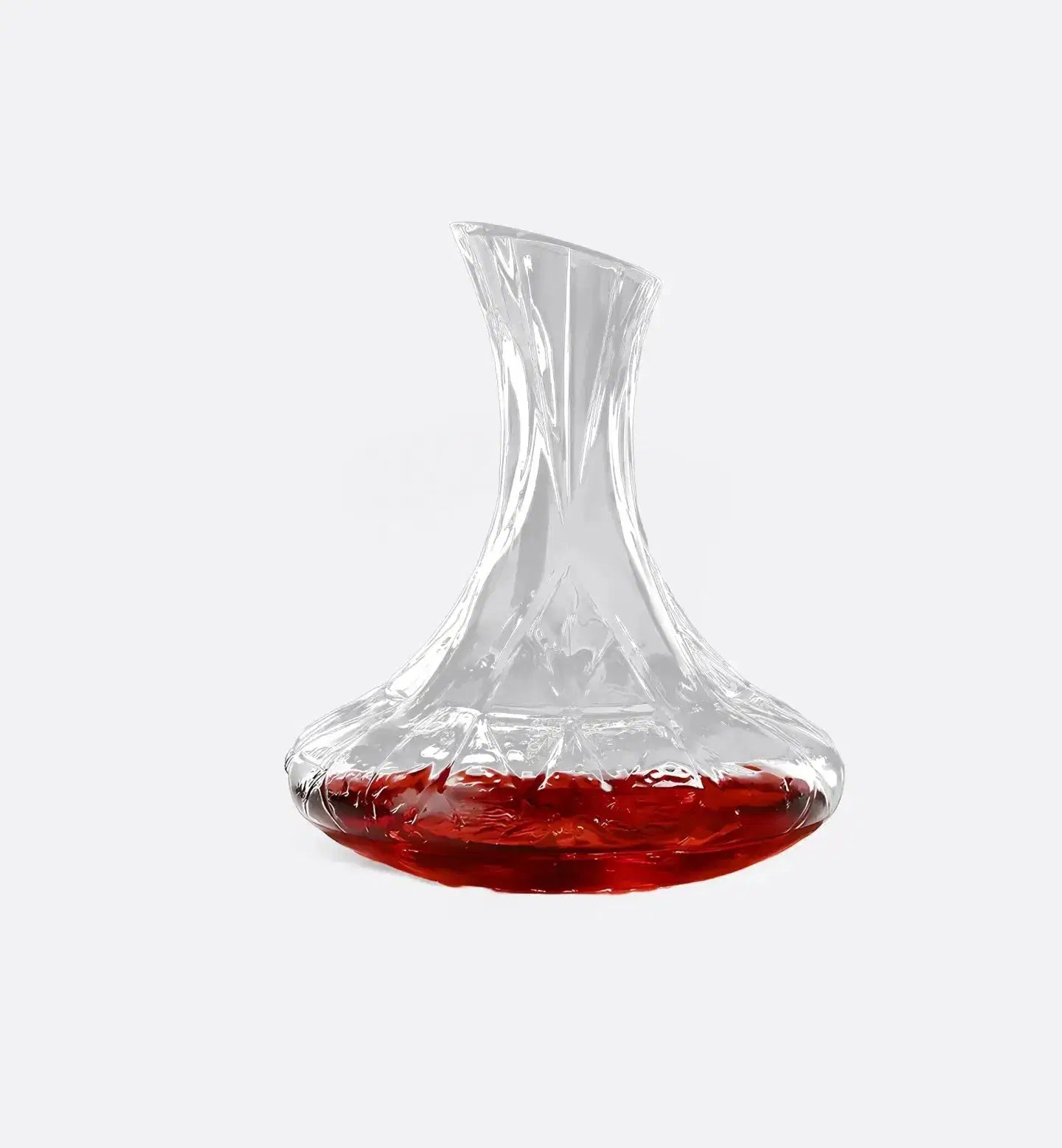

Exclusive reader offer
−10% on the entire catalog
Valid on all our decanters, glasses, and accessories.
Sources
- OIV — International Organisation of Vine and Wine, Recommendations on service and decanting — oiv.int — 2024
- BIVB — Burgundy Wine Board, Guide to wine service materials — bivb.com — 2023
- Union des Sommeliers de France, Selection and use of decanters — sommelier-france.org — 2023


