


Wine and Cheese Pairing: The Complete Guide to the Best Combinations
Ten classic pairings, their secrets, and everything you need to know to compose a platter that leaves nothing to chance.
It is often wrongly assumed that wine and cheese pairing boils down to a simple rule: red with cheese, white with fish. This is one of the most persistent misconceptions in French dining. In reality, a cheese platter is one of the most demanding exercises for a wine, much more so than a cooked dish where cooking softens raw flavors.
Cheese arrives at the table raw, with all its fat, salt, and acidity intact. The wine must complement this raw material rather than dominate it. This guide details the principles that explain why certain pairings always work, ten classic combinations to know, and the mistakes that ruin an otherwise well-composed platter.
The Principles Governing a Good Wine and Cheese Pairing
Three criteria help build a solid pairing, whether starting with a specific cheese or an already chosen bottle: acidity, the balance between salt and sugar, and the interplay of textures. Once these three axes are understood, it becomes easy to improvise a suitable pairing even with an unknown cheese.
Acidity, the backbone of the pairing
A cheese rich in fat — Brie, Camembert, creamy goat cheese — needs a sufficiently acidic wine to cut through this fat and cleanse the palate between bites. This is the whole principle explaining why a crisp Chablis works so well with a crottin de chèvre: its acidity cuts through the cheese's creaminess instead of getting lost in it.
Conversely, a round, low-acid wine is literally crushed by a fatty cheese, leaving a heavy and flat sensation in the mouth.
Salt and sweet, a formidable and effective duo
Salty cheeses — Roquefort, Bleu d'Auvergne, well-aged Comté — naturally call for a sweet or slightly mellow response in the glass. This is the principle that makes Sauternes the absolute partner for Roquefort: the sweetness of the wine softens the saltiness of the cheese instead of accentuating it, as a dry, tannic wine would.
Salt and tannins, however, violently oppose each other: when combined, they bring out a metallic bitterness that spoils both products.
The interplay of textures, from crunchy to runny
A sparkling wine like Champagne creates a textural contrast with a pressed cheese like Comté, whose slightly crunchy texture responds to the bubbles. A runny cheese, on the contrary, calls for a wine with a more enveloping texture, capable of accompanying this creaminess without being overshadowed.
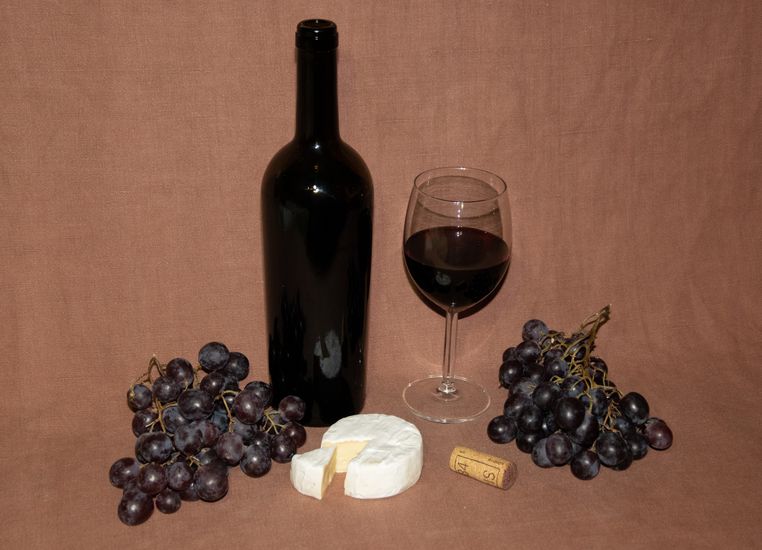
Ten Classic Pairings to Know by Heart
Here are ten associations that have proven themselves for generations, each built on one or more of the principles above. They form a solid foundation, which you can then adapt according to your tastes and the bottles available in your cellar.
Sauternes and Roquefort
The most famous pairing, and undoubtedly the most spectacular. The lusciousness of Sauternes, with its notes of candied fruit and honey, absorbs and enhances the powerful saltiness of Roquefort. No other wine style achieves such a clear result with this cheese.
Burgundy Red (Pinot Noir) and Époisses
Époisses is a soft, washed-rind cheese, powerful in aroma but relatively mild on the palate once the rind is past. A light Burgundy red, with fine tannins, doesn't fight with this aromatic power — it accompanies it without ever overpowering it.
Brut Champagne and Comté
The fine bubbles of Champagne and the slightly grainy texture of an 18 to 24-month aged Comté create a formidable textural contrast. The acidity of the Champagne perfectly balances the hazelnut and caramel notes of well-aged Comté.
Riesling and Munster
Munster is one of the most powerful cheeses there is, and few wines can stand up to it. A dry Alsatian Riesling, with its high acidity and slightly spicy notes, is one of the few that can face this cheese without being dominated.
Chablis and Fresh Goat Crottin
A Chablis, a quintessential dry, mineral white wine, cuts through the already present acidity of fresh goat cheese while providing complementary freshness. A classic from the Loire and Burgundy combined in the same bite.
Vin Jaune du Jura and Extra-Old Comté
Two products from the same terroir, built on the same nutty and controlled oxidation aromas. Vin Jaune, with its high alcohol content and notes of fresh walnuts, finds an almost perfect echo in a Comté aged over 24 months.
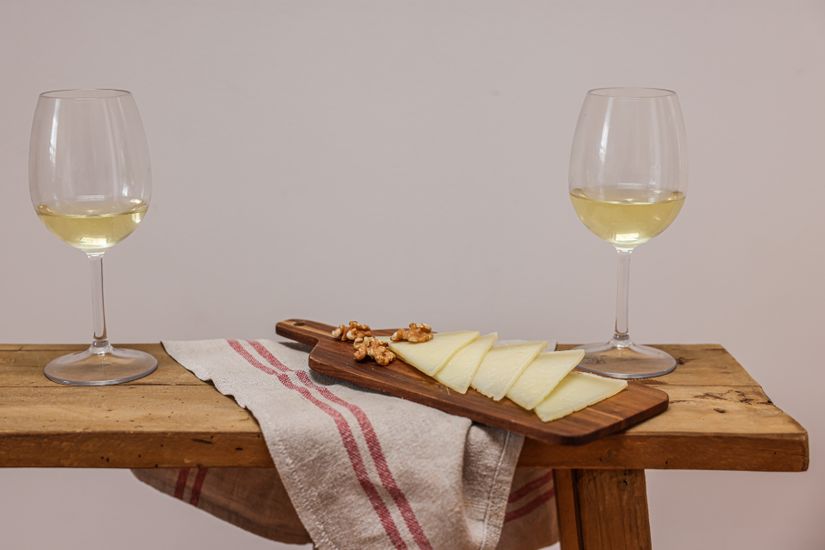
Tawny Port and Stilton or Bleu d'Auvergne
Same logic as Sauternes and Roquefort: the sweetness and dried fruit notes of Tawny Port neutralize the powerful saltiness of a blue cheese. This is the classic English pairing, as solid as the previous one.
Bordeaux and 18-month Comté or Aged Cheddar
A structured and tannic Médoc Bordeaux needs a firm, fatty enough cheese to absorb its tannins without creating bitterness. An aged Comté or an aged Cheddar perfectly plays this role.
Oaked Chardonnay and Brie de Meaux or Camembert
An oak-aged Chardonnay, rounder and richer than an unoaked Chardonnay, pairs well with the creamy texture of Brie or Camembert ripened to the core. The buttery notes of the wine echo those of the cheese.
Beaujolais and Saint-Nectaire
A light, fruity, and low-tannin Beaujolais never seeks to overpower a Saint-Nectaire with its soft, slightly nutty paste. A simple regional pairing, perfect for an everyday platter.
Summary Table of the Best Pairings
To quickly find your way, here are the ten pairings presented above, condensed into a table to keep handy when composing your next platter.
| Cheese | Recommended Wine | Why it works |
|---|---|---|
| Roquefort | Sauternes | The wine's sweetness softens the cheese's saltiness |
| Époisses | Burgundy Red (Pinot Noir) | Fine tannins, doesn't overpower strong aromas |
| Comté 18-24 months | Brut Champagne | Texture contrast, balancing acidity |
| Munster | Dry Riesling | Strong acidity capable of standing up to the cheese |
| Fresh Goat Crottin | Chablis | Mineral freshness that cuts through the goat cheese's acidity |
| Extra-Old Comté | Vin Jaune du Jura | Same aromatic family, common nutty notes |
| Stilton / Bleu d'Auvergne | Tawny Port | Sweetness and dried fruits neutralize the salt |
| Aged Comté / Cheddar | Bordeaux (Médoc) | The fat of the cheese absorbs the wine's tannins |
| Brie de Meaux / Camembert | Oaked Chardonnay | Roundness and buttery notes in echo |
| Saint-Nectaire | Beaujolais | Light and fruity wine, regional pairing |
Mistakes to Avoid at All Costs
While good pairings are easy to remember, certain habits consistently ruin an otherwise well-composed platter. Here are the most common pitfalls.
- Serving a single tannic red wine for the entire platter — no single wine suits all cheeses; it's better to plan for a white and a red, or even a sweet wine.
- Taking cheeses out of the refrigerator at the last minute — a cold cheese loses much of its aroma; take it out 30 to 45 minutes before serving.
- Serving wine at an unsuitable temperature; a red that's too warm or a white that's too cold masks some of its aromas (see our guide to ideal serving temperatures).
- Forgetting neutral bread between each cheese, to avoid mixing flavors from one bite to the next.
- Having too many very strong cheeses (Munster, Époisses, Roquefort) on the same platter without a wine capable of standing up to each one.
- Pouring wine into a glass unsuitable for its structure — the shape of the glass truly changes the perception of aromas.
Composing and Serving a Platter Like a Professional
The choice of bottles and cheeses is not enough: the way they are served matters just as much to the success of the pairing. A great tannic Bordeaux served in an unsuitable glass, without having been decanted, will lose much of its appeal when paired with an aged Comté platter.
The Right Glass for Each Wine
Each wine style has a suitable wine glass shape. A crisp white like Riesling or Chablis is served in a narrow glass, which concentrates delicate aromas. A structured red, on the other hand, benefits from a wider glass, which allows the wine to breathe and softens its tannins upon contact with air. Our article on how to choose the right wine glass details each shape according to the grape variety, and our guide by appellation goes even further.
Decant a Tannic Red Before Serving
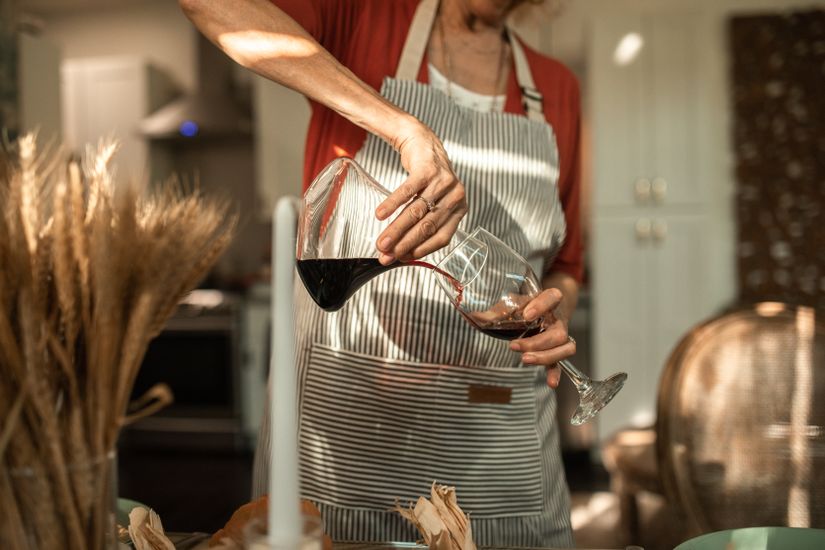
To appreciate these pairings according to the rules of the art, a young and tannic Bordeaux always benefits from spending an hour in a wine decanter before being served. Oxygenation softens the tannins and releases aromas that remain closed in the bottle, a valuable asset when paired with an aged cheese platter. Our Era decanter is perfectly suited for this purpose. To delve deeper into the subject, our article why decant wine explains the difference between decantation and simple aeration.
Tasting Order, From Mildest to Most Pungent
- Always start with the mildest cheese and the lightest wine.
- Follow with pressed cheeses like Comté or Saint-Nectaire, accompanied by a medium-bodied wine.
- Finish with the strongest cheeses (Munster, Roquefort, Époisses) with a powerful or sweet wine.
- Provide neutral bread and water between each cheese to reset your palate.
How Much Wine and Cheese to Plan Per Person
For a cheese platter at the end of a meal, allow about 150 to 200 grams of cheese per person, varying textures and intensities rather than multiplying wheels of the same type. For wine, a 75 cl bottle serves about six glasses — a frequent question ("how many glasses in a bottle of wine?") whose answer directly guides the number of bottles to plan according to the number of guests.
For a dinner of six to eight people with a platter of three to four cheeses, two bottles are usually sufficient: one white and one red, or one white and one sweet wine if the platter leans towards blue cheeses. Remember to provide a decanter for the red if you serve it at the end of the meal, and feel free to reread our guide on how to read a wine label if you are selecting your wine in a store.
FAQ — Frequently Asked Questions about Wine and Cheese Pairing
Our Essentials for a Successful Wine and Cheese Board
Expert selection by our team — Gustave Montclair catalogue


Exclusive Offer for Readers
−10% off the entire catalog
Valid on all our glasses, decanters, and accessories.


