


Rosé and BBQ Pairing: The Best Wines and Glasses for Summer
Provence, Languedoc, Bandol — discover which rosé to choose for your grilled dishes, at what temperature to serve it, and in which glass to reveal all its freshness.
As soon as the first heat arrives, the smell of charcoal mixes with the setting sun, and the desire for a barbecue becomes irresistible. In this familiar and festive scene, a bottle almost systematically sits on the table: rosé wine. However, behind this obvious choice lie much more nuanced decisions than it seems. Not all rosés behave the same way with a smoky ribeye or marinated chicken skewers. The region of origin, grape varieties, wine structure — every detail matters for the pairing to be truly successful, not just acceptable.
This guide was designed to give you the keys to an informed selection: which rosé for which grilled dishes, at what temperature to serve it when the thermometer rises, and especially in which glass to enjoy it so that every sip lives up to the moment. Because the choice of wine glass is as crucial as the choice of the bottle itself.
Why Rosé is the Natural Ally of Barbecue
Rosé wine was long considered a secondary wine, falling between red and white. This unfair reputation is now fading in favor of growing recognition of its complexity and gastronomic versatility. At a barbecue, in particular, it possesses several structural advantages that neither red nor white wines simultaneously offer.
Freshness and Lightness: Qualities Made for Summer
A well-chosen rosé combines aromatic freshness and lightness on the palate, two valuable qualities when summer temperatures rise. Where a tannic red wine can feel heavy in mid-summer — its tannins expressing themselves differently in the heat — rosé remains pleasant throughout the meal, from aperitif to grilled dishes, without ever overwhelming the palate.
Its pink hue, obtained by a short maceration of red grape skins, gives it an aromatic palette that oscillates between the fruitiness of red wines (red berries, cherry) and the liveliness of whites (citrus, white flowers). It is precisely this balance that makes it so adaptable to the varied world of barbecue: poultry, fish, vegetables, marinated meats — each preparation finds its echo in the glass.
Rosé's Acidity Against Smoke and Marinades
Barbecue introduces two major taste characteristics into dishes: the smoky and caramelized notes from charcoal cooking, and the intense flavors of marinades (herbs, spices, lemon, soy sauce). These two dimensions require a wine with enough acidity to cleanse the palate between each bite, without being overwhelmed by the aromatic intensity of the grilled dishes.
A good dry rosé exhibits a lively acidity that plays precisely this role of gustatory pivot. It cuts through the fat of meats, refreshes the palate after spices, and extends the flavors of the marinade rather than erasing them. This is a combination that red wine, often more concentrated, does not always achieve as elegantly in this relaxed context.
Avoid semi-dry or sweet rosés at a barbecue: their residual sugar clashes with smoky flavors and creates an unpleasant imbalance. Always opt for a dry rosé, defined by less than 4 g/l of residual sugar.
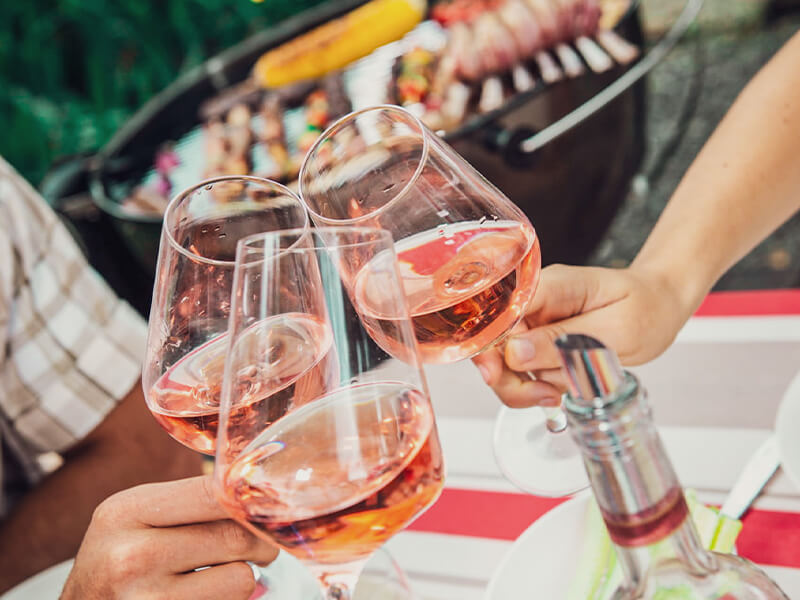
Which Rosé to Choose for Your Grilled Dishes?
Barbecue is an invitation to diversity: rarely is only one type of food grilled, and the table often mixes white meats, red meats, fish, and vegetables. The question is not to find THE perfect rosé, but to understand which family of rosés best suits each type of grilled dish, in order to make a choice that will satisfy the largest number of people.
Provence Rosé: Delicate and Floral for White Meats
Provence rosé — whether AOC Côtes de Provence, Coteaux d'Aix-en-Provence, or Coteaux Varois — is undoubtedly the most emblematic of French summer rosés. Made primarily from Grenache, Cinsault, and Syrah, it is distinguished by its pale, almost transparent color and its aromas of white flowers, peach, strawberry, and a characteristic mineral touch.
It is the ideal partner for light barbecue preparations:
- Chicken skewers marinated with Herbs de Provence — the pairing is classic and always successful
- Grilled whole fish (sea bream, sea bass, mackerel) — the Provençal minerality matches iodine flavors
- Grilled vegetables (zucchini, peppers, eggplants) — the lightness of the rosé does not overpower their delicate aromas
- Fresh cheeses, tapas, and mezze — perfect for an extended aperitif
Its aromatic freshness is preserved provided it is served well chilled. If you want to know more about selecting glasses suitable for this type of light wine, our guide how to choose your wine glass well gives you all the keys.
Structured Rosés (Languedoc, Côtes du Rhône) for Red Meats
When the grill hosts red meat dishes — ribeyes, lamb chops, beef skewers, caramelized pork ribs — a rosé with more body and structure is needed. Rosés made from Grenache and Syrah in Languedoc-Roussillon or the Côtes du Rhône perfectly meet this requirement.
More colorful, sometimes in pale cherry tones, they offer more assertive red fruit aromas (wild strawberry, redcurrant, raspberry) accompanied by a slight spice and a roundness on the palate that envelops the fat of the meats. Their acidity remains present but less sharp, allowing for a more embracing accompaniment to the caramelized flavors of cooking.
Bandol rosé — with Mourvèdre as the leading grape — deserves special mention for grilled lamb with herbs: the encounter between the intense fruit of Mourvèdre and the dry herbal flavors of lamb constitutes one of the most memorable pairings in Provençal summer cuisine.
Loire or Bordeaux Rosé for Grilled Fish and Seafood
Loire rosés (Anjou rosé, Sancerre rosé, Chinon rosé) and certain Bordeaux rosés based on Merlot or Cabernet offer a tauter, more mineral profile, ideal for grilled fish and seafood. Their naturally lively acidity and citrus notes perfectly complement marine flavors without overpowering them.
For grilled shrimp, whole sardines, or a seared tuna steak, a Sancerre rosé or a dry Anjou rosé will bring remarkable aromatic precision. It's the quintessential Mediterranean pairing, which is also happily served in a champagne glass for sparkling rosés during a seafood aperitif.
Table of Rosé — Barbecue Food Pairings
To help you quickly remember the best pairings, here is a summary table classifying major grilled food categories with the most suitable rosé profile:
| Type of Grilled Food | Recommended Rosé | Region / Grape Varieties | Serving Temperature |
|---|---|---|---|
| Chicken, poultry skewers | Dry Provence Rosé Ideal | Côtes de Provence — Grenache, Cinsault | 10–12°C |
| Grilled whole fish | Mineral Loire or Provence Rosé | Sancerre rosé, Coteaux Varois | 8–10°C |
| Grilled seafood | Fresh and crisp Rosé | Côtes de Provence, Anjou rosé | 8–10°C |
| Ribeye, sirloin steak | Structured Rosé based on Grenache/Syrah | Languedoc, Côtes du Rhône | 10–12°C |
| Grilled lamb, lamb chops | Bandol rosé, Tavel Favorite | Bandol — Mourvèdre, Grenache | 10–12°C |
| Merguez, chipolatas sausages | Fruity and slightly spicy Rosé | Languedoc, Corsica — Nielluccio | 10–12°C |
| Grilled vegetables, mezze | Light and floral Rosé | Côtes de Provence, IGP du Var | 8–10°C |
This table is, of course, just a starting guide. Marinades, accompanying sauces, and spices used can significantly alter the pairings. For example, smoked paprika chicken requires a slightly more full-bodied rosé than simply lemon-grilled chicken. Don't hesitate to experiment — the world of rosé is vast enough to offer beautiful surprises.
Serving Temperature and Tips for Keeping Rosé Chilled at a Barbecue
Rosé is a wine that particularly suffers from heat. Served too warm, its aromas fade, its alcohol becomes more prominent, and its acidity loses its vivacity. At a barbecue, maintaining the bottle's coolness is almost as important as the choice of rosé itself.
The Right Temperature According to Rosé Style
The ideal serving range is between 8°C and 12°C for the vast majority of rosés. This range is not insignificant: below 7°C, the aromas are blocked, and only freshness is perceived. Above 14°C — easily reached in the full summer sun — the wine appears flat and tired.
- Light and mineral rosés (Provence, Loire): 8 to 10°C — they maintain their aromatic vivacity at this low temperature
- Structured rosés (Bandol, Tavel, full-bodied Languedoc): 10 to 12°C — too cold, their complex aromas are masked
- Sparkling and effervescent rosés: 7 to 9°C — the freshness of the bubbles is highlighted
To maintain these temperatures in summer conditions, a few simple habits make a difference. A well-filled ice bucket effectively keeps the bottle below 10°C for several hours. You can also refrigerate your glasses for about fifteen minutes before serving — a simple trick that significantly extends the freshness of each sip.
The Rule of Small Quantities: Serve in Small Doses
In an outdoor dining context where temperatures can exceed 28–30°C, it is better to pour little into each glass (around 10–12 cl) and refill often. A brim-filled glass warms up much faster than a partially filled one. This serving discipline allows each guest to enjoy the rosé at the right temperature throughout the meal.
If you're looking for ideas to accompany your rosé with suitable equipment, our guide on the best glasses for an aperitif on the terrace this summer will give you excellent leads for the summer.
Should Rosé Be Decanted?
The question is less common for rosé than for red, but it's worth addressing. In the vast majority of cases, rosé does not require decanting. Unlike a tannic red wine that benefits from gradually opening up when exposed to air, rosé is a wine structured to be drunk young, fresh, and fruity — qualities that excessive aeration would only degrade by accelerating oxidation.
Notable exception: certain Bandol rosés or aged Tavels, vinified with longer aging, may benefit from a very brief passage of 10 to 15 minutes in a wine decanter to open up slightly. But this is truly an exception, and even in these cases, the rosé must then be kept chilled in an ice bucket. To better understand the difference between decanting and aeration, you can consult our dedicated article: why decant wine.
Which Glass to Choose for Serving Rosé at a Barbecue?
The glass is often the overlooked element in food and wine pairings, especially in the relaxed context of a barbecue. However, the shape of the glass directly influences the perception of aromas and the pleasure of tasting. Serving an excellent Provence rosé in a mustard glass or a plastic cup is spoiling half the experience even before the first sip.
The Slender Tulip Shape: Rosé's Best Ally
Rosé is ideally served in a wine glass with a moderate and slender bowl, similar to a white wine glass. This shape offers several fundamental advantages for this type of wine:
- The slightly narrowed rim concentrates floral and fruity aromas towards the nose without dispersing them
- The stem's height keeps the hand away from the bowl and limits the wine's warming by contact
- The moderate volume (between 250 and 400 ml) allows for serving in small quantities, maintaining freshness
- The thin wall enhances the perception of rosé's silky texture on the palate
It is not recommended to use a very large bowl, like a Burgundy glass (500 ml and more), for rosé: its too wide evaporation surface accelerates warming and aromatic loss. Champagne flutes, on the other hand, are too narrow and restrict the diffusion of aromas too much — save them for sparkling rosés and crémants.
To delve deeper into the subject, our guide what is the best wine glass details in depth the selection criteria according to wine types.
Colored and Iridescent Glasses: Summer Aesthetics
Rosé is an inherently visual wine: its color, ranging from pale, almost transparent pink to deep salmon, is an invitation to contemplation. Serving rosé in glasses that play with light — models with iridescent reflections, amber hues, or colored nuances — adds an aesthetic dimension that transforms the moment into a true summer staging.
Designer wine glasses, catching the late afternoon light and reflecting changing hues, are perfect for a carefully set barbecue table. Aesthetics become an extension of gastronomic pleasure, and every serving becomes a gesture of style. To explore this decorative and summery dimension, our wine gift ideas guide offers a selection of glasses particularly suited for these occasions.
For a barbecue, opt for versatile glasses that can accommodate rosé, white, and even light red wines in the evening. A good wine glass with a capacity of 270 to 400 ml and a moderate bowl is the Swiss Army knife of the summer table — it works with 80% of the wines you'll serve from May to September.
Care and Practicality: Common Sense at the Barbecue
In an outdoor dining setting, practicality also comes into play. Choose glasses with a sturdy enough stem to withstand tipping on a garden table, and whose shape does not trap odors between servings. After the meal, a simple rinse with lukewarm water without detergent is sufficient to maintain quality glasses — soap often leaves a film that alters aromas with the next serving. To go further, our article wine glass gift: complete guide discusses the quality criteria to evaluate before investing in a beautiful set of glasses.
FAQ — Frequently Asked Questions About Rosé and Barbecue Pairings
Our wine glasses to enhance your summer rosé
Expertly selected by our team — Gustave Montclair catalog


Exclusive Reader Offer
−10% off the entire catalog
Valid on all our glasses, carafes, and accessories.
Sources
- Château de Berne — chateauberne-vin.com — 2021
- Accords Mets & Vins — accords-mets-vins.fr — 2024
- Portail Vins — portail-vins.com — 2026


